Navigating Los Angeles City Permitting for Unpermitted Garage Water Heaters
Replacing an older, unpermitted garage water heater doesn't have to trigger massive penalties. We handle the LADBS compliance process to safely bring your system up to code.

Replacing an older, unpermitted garage water heater doesn't have to trigger massive penalties. We handle the LADBS compliance process to safely bring your system up to code.
The Late-Summer Crisis of the 'Under-the-Table' Garage Water Heater
The puddle spreading across your garage floor is bad enough, but the real panic sets in when you realize your failing water heater has no permit history. Navigating Los Angeles City Permitting for Unpermitted Garage Water Heaters is a challenge many homeowners face when an older, "under-the-table" installation finally gives out. Often, these rogue units were installed quickly by a previous owner or an unlicensed handyman to save a few dollars, completely bypassing critical safety codes. You are left holding the bag, dealing with a broken appliance and a sudden legal headache.
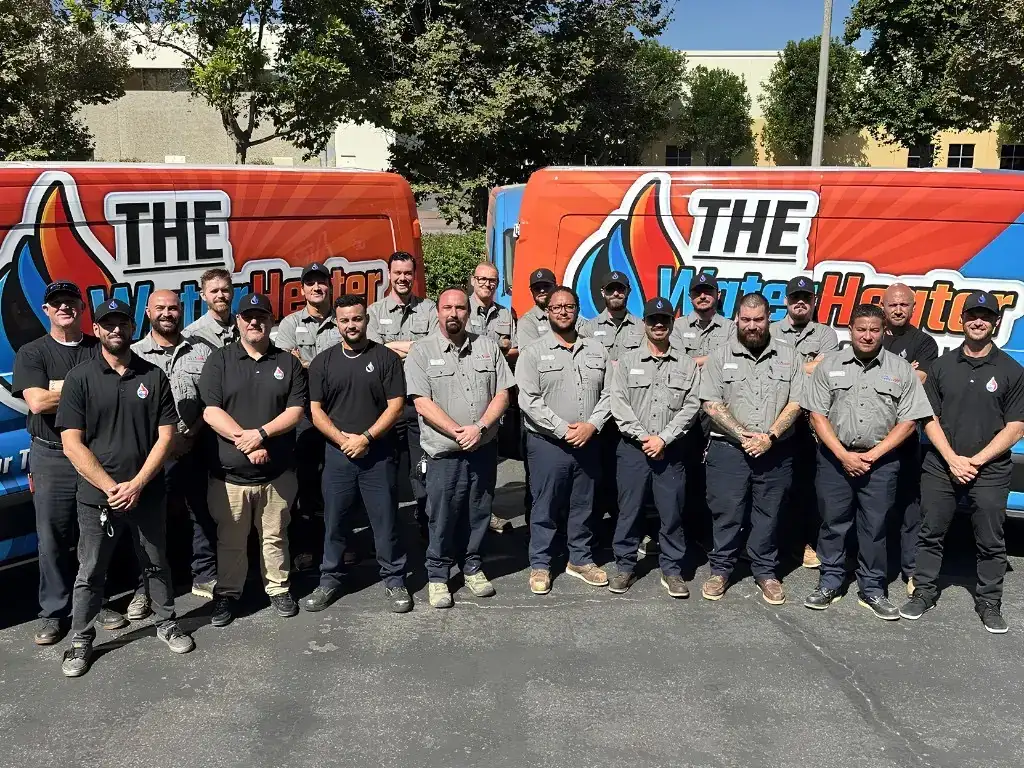
If you need reliable water heater replacement services, trust our expert team at The Water Heater Company, a dedicated Los Angeles water heater company, to handle the job correctly.
In our years serving Southern California, we see a distinct pattern: by the time late summer rolls around, the intense August heat trapped in poorly ventilated garages puts enormous thermal stress on aging tanks. This end-of-season temperature spike frequently causes these improperly installed, weakened units to finally rupture or fail just as families are busy with the back-to-school transition. When that happens, you face a critical decision point: do you hire someone to swap it out quietly again, or do you hire a professional to navigate the retroactive permitting process and fix the setup legally? Choosing to bring the system up to code is the only way to genuinely protect your home's value, your family's safety, and your peace of mind.
The Hidden Risks of Inheriting Unpermitted Work in Los Angeles City Garages
Many homeowners unknowingly inherit unpermitted plumbing work when they purchase a property. A water heater tucked away in the corner of a garage might look perfectly fine to the untrained eye, but beneath the surface, our technicians frequently find that it lacks the crucial safety components required by modern building codes. Ignoring these "under-the-table" jobs does not make the problem disappear; it only compounds the eventual cost of compliance and increases the daily risk to your household.
Safety Hazards of Ignored Standards
Rogue installations are notorious for cutting corners. When an installer operates outside the oversight of city inspectors, they frequently omit essential safety mechanisms that protect the home from catastrophic failure. We see the consequences of this poor workmanship regularly. Just recently, during the late-summer back-to-school rush, our team visited a local home where the previous installation was not meticulous and lacked a crucial part designed to keep the thermocouple clean. This lack of thoroughness not only created a functional hazard but also led to premature system failure that could have easily been avoided with professional, permitted work.
Common safety hazards our team spots in unpermitted setups include:
- Missing Temperature and Pressure (T&P) relief valves: Without a properly routed discharge pipe, a pressurized tank can literally explode if the internal temperature spikes.
- Improper exhaust venting: Incorrectly sloped or disconnected flue pipes can allow deadly carbon monoxide gas to spill directly into your garage and seep into your living spaces.
- Inadequate gas line sizing: Undersized gas lines cause the burner to starve, creating excessive soot buildup and increasing the risk of a fire.
- Lack of expansion tanks: Without a way to absorb thermal expansion, the excess pressure destroys the tank's internal glass lining, leading to severe water damage.
Financial Penalties and Real Estate Roadblocks
Beyond the physical dangers, illegal installations carry heavy financial and legal risks. Unpermitted work severely complicates home appraisals and insurance claims. If a rogue water heater floods your garage and destroys your belongings, your homeowner's insurance provider has grounds to deny the claim entirely once they discover the unit was never legally permitted. Furthermore, when it comes time to sell your home, savvy buyers and their inspectors will flag the unpermitted work, forcing you into sudden, stressful negotiations or causing the sale to fall through entirely. There is also the looming threat of municipal fines; if the city discovers the violation during an unrelated inspection, you could face steep penalties until the unit is brought up to code.
LADBS Code Compliance Requirements: Why the Rules Exist
The Los Angeles Department of Building and Safety (LADBS) enforces some of the strictest plumbing and building codes in the country. While these regulations might seem overly demanding at first glance, every single rule is written in response to real-world disasters. At The Water Heater Company, we always emphasize that understanding LADBS code compliance requirements helps clarify why a professional installation is non-negotiable.
Strict Dual-Strapping for Seismic Safety
Los Angeles sits on highly active fault lines, making severe seismic activity a constant reality. A standard 50-gallon water heater weighs well over 400 pounds when full of water. During an earthquake, an unanchored tank of that size can easily tip over, snapping the rigid gas line and creating an immediate, massive fire hazard. To prevent this, LADBS strictly mandates dual seismic strapping for all tank water heaters.
The code requires two heavy-gauge metal straps securing the tank directly to the wall framing. One strap must be located within the upper one-third of the tank, and the second strap must be placed within the lower one-third. We often encounter flimsy plumber's tape or a single strap wrapped loosely around the middle of the unit on illegal jobs—these will instantly fail an inspection. The hardware must be robust enough to keep that 400-pound cylinder completely stationary during violent ground movement.
Elevation Rules and FVIR Compliance
Garages are common storage areas for lawnmowers, paint thinners, and spare gasoline. These flammable liquids emit heavy vapors that naturally sink and pool along the garage floor. If a traditional gas water heater with an open pilot light sits directly on the floor, those pooling fumes can easily ignite, causing a flash fire.
| Safety Feature | Common Unpermitted Setup | LADBS Compliant Standard |
|---|---|---|
| Tank Elevation | Sitting directly on the concrete floor | Elevated 18 inches above the floor (for non-FVIR units) |
| Seismic Anchoring | Missing, or single flimsy metal band | Dual heavy-gauge straps (upper and lower third) |
| Venting Material | Corrugated or mismatched piping | Rigid, properly sloped, approved B-vent piping |
| Gas Connectors | Old, reused, or kinked flexible lines | New, correctly sized, approved appliance connectors |
To combat this, LADBS enforces an 18-inch elevation rule. Historically, all gas water heaters in garages had to sit on a stand at least 18 inches high to keep the burner safely above the vapor pooling zone. Today, modern units feature Flammable Vapor Ignition Resistant (FVIR) technology. FVIR units use a specialized flame arrestor plate that prevents flames from escaping the combustion chamber even if vapors are drawn inside. While FVIR technology often exempts the unit from the 18-inch stand requirement, the specific interaction between your unit's design and local codes must be carefully evaluated by a professional.

The Protective Bollard Mandate for Garage Installations
One of the most frequently missed safety features our inspectors find in unpermitted Los Angeles City garages is the protective bollard. When a handyman rushes an under-the-table job to save time and materials, they almost always skip this critical—and labor-intensive—requirement.
Defining the Vehicle Impact Zone
A safety bollard is a heavy-duty physical barrier designed to protect your water heater from being struck by a car. In a residential garage, backing up just a few inches too far can result in your bumper crushing the water heater's gas valve, leading to an immediate and highly dangerous gas leak.
LADBS rules dictate that if a water heater is located in the "normal path of a vehicle," it must be protected by a compliant bollard. City inspectors determine this by looking at the layout of the garage doors, the parking area, and the turning radius required to pull a car inside. If there is any reasonable chance a vehicle could roll into the unit, a bollard is mandatory.
A fully compliant safety bollard setup typically requires:
- Heavy-duty materials: Usually a 3-inch or 4-inch diameter steel pipe.
- Solid reinforcement: The hollow steel pipe must be completely filled with concrete for maximum impact resistance.
- Deep anchoring: The bollard cannot just be bolted to the surface; it must be embedded deep into a dedicated concrete footing beneath the garage floor.
- Proper spacing: It must be positioned far enough in front of the water heater to absorb an impact without transferring the force into the appliance.
Our Methodology: Shielding Homeowners During Retroactive Permitting
Discovering that your garage setup is illegal can be incredibly stressful, but at The Water Heater Company, we do not hide from LADBS inspectors. We frequently replace under-the-table water heaters and have the specific expertise to bring them up to LADBS code legally and safely, shielding homeowners from massive city fines. We approach retroactive permitting with a clear, proven methodology that takes the burden entirely off your shoulders.
Assessing Current Code Violations
The first step in our process is a comprehensive site assessment. We evaluate the existing illegal installation to identify every single missing safety feature, from incorrect venting slopes to missing bollards and inadequate strapping. We document the site thoroughly, taking precise measurements and noting exactly what modifications are required to satisfy LADBS code compliance requirements. This proactive approach ensures there are no surprises when the city inspector eventually arrives.
Liaising with LADBS Inspectors
Navigating the bureaucracy of retroactive permits requires professional communication and a deep understanding of municipal processes. Our team drafts a clear compliance plan and pulls the necessary retroactive permits on your behalf. Because we understand exactly what LADBS inspectors look for, we construct the new system to meet or exceed every standard. We manage the final inspection scheduling and stand by our work, providing the inspector with all the documentation they need for a smooth sign-off. Our expertise ensures the setup is brought up to code legally, transforming a major liability into a safe, fully documented asset.
Replacing a Failing Unit While Correcting Code Violations
When an unpermitted unit fails, you are suddenly racing against the clock. You need hot water restored immediately, but you also need to correct years of code violations. Balancing this urgency with the strict requirements of retroactive permitting is where our professional experience at The Water Heater Company truly matters.
Timing the Replacement
Consider a recent situation where a local homeowner discovered they had no hot water late on a Friday evening during an intense August heatwave, with a desperate need to have the system running by Saturday morning before hosting a back-to-school event. Our technician arrived promptly the next day, educated the customer on their compliance options, and fully replaced the water heater with a safe, code-compliant unit, leaving the workspace spotless. We understand that downtime is highly disruptive. Even when dealing with retroactive compliance rules, we work efficiently to remove the old, illegal unit and install the new system quickly, minimizing your household's disruption while we handle the ongoing permit approvals in the background.
For more insights into how regional standards impact your project, you can review the specifics of water heater installation in Southern California.
Ensuring Complete Compliance from Day One
We do not take shortcuts. Before the city inspector ever sets foot on your property, we perform our own rigorous final checks. We verify that the dual seismic straps are perfectly positioned, the FVIR technology is functioning, the venting is flawless, and the required bollards are firmly set. By the time late-summer heat waves roll around next year, you can rest easy knowing your new system is robust, safe, and fully capable of handling the thermal stress without failing. Doing it right the first time prevents future functional headaches and ensures your home remains protected.
Frequently Asked Questions About Los Angeles Garage Water Heater Permits
What happens if my water heater was installed without a permit?
If your water heater was installed without a permit, it is considered an illegal installation by the city. This can lead to denied homeowner's insurance claims if the unit causes water or fire damage. Additionally, unpermitted work can hold up the sale of your home, and you may face municipal fines if the city discovers the violation. Our team can help you pull a retroactive permit to legalize the setup.
What are the LADBS requirements for garage water heaters?
LADBS code compliance requirements mandate several strict safety features for garage installations. These include dual seismic strapping (anchored in the upper and lower thirds of the tank), proper exhaust venting, and correctly sized gas lines. Depending on the unit's technology, it may also require an 18-inch elevation stand to prevent the ignition of flammable vapors pooling on the garage floor.
Does a water heater in a garage need a bollard?
Yes, if the water heater is located in the normal path of a vehicle, LADBS strictly requires a protective safety bollard. This bollard must be made of heavy-duty steel pipe, filled with concrete, and embedded into the floor. It serves as a physical barrier to prevent a car from accidentally backing into the unit and severing the gas line.
How do I get a retroactive permit in Los Angeles?
Getting a retroactive permit involves assessing the current unpermitted installation, identifying all code violations, and submitting a compliance plan to LADBS. It is highly recommended to hire a licensed professional to handle this process. At The Water Heater Company, we pull the necessary permits, upgrade the installation to meet current codes, and schedule the final city inspection on your behalf.
Can I be fined for a previous owner's unpermitted plumbing work?
Yes, once you purchase a property, you assume responsibility for its current condition, including any unpermitted work done by previous owners. If the city discovers an illegal water heater installation, they can issue a notice of violation and impose fines until the unit is brought up to code. Addressing the issue proactively with a retroactive permit is the best way to avoid these penalties.
Legalizing Your Garage Water Heater with Confidence
Navigating Los Angeles City Permitting for Unpermitted Garage Water Heaters doesn't have to be a nightmare. While discovering an illegal installation in your home can be overwhelming, the path to compliance is clear when you have the right team on your side. An unpermitted unit can absolutely be replaced and brought up to code legally, completely removing the looming threat of denied insurance claims or real estate roadblocks.
By ensuring your new system meets all LADBS requirements—from dual seismic strapping to proper vehicle impact protection in Los Angeles City garages—you protect your family and your investment. Do not wait for an old, illegal unit to fail and flood your home. Reach out to our licensed professionals at The Water Heater Company today for an expert assessment of your current garage setup, and let us handle the permitting process from start to finish.
About the Author

Anthony Hamilton
Co-Founder & CEO, THE Water Heater Company
Co-Founder and CEO of THE Water Heater Company, a water heater specialty company built on one clear mission: to be THE trusted name in water heating across Southern California.
Our story started with a simple idea: combine industry-leading expertise with a passion for people. Today, that idea has grown into a company recognized as Your Trusted Water Heater Authority, serving homeowners across Los Angeles, Ventura, Orange County, and Santa Barbara with unmatched quality, care, and transparency.
We believe excellence is not an act. It is a habit. Every member of our team lives by our Core Values: People First, Genuine Care, Raise the Bar, Total Transparency, and Better Every Day.
As a leader, I am driven by growth: of people, of teams, and of impact. My role is to create clarity, alignment, and opportunity so great people can do their best work and live their best lives.
Keep Reading
Related Articles


Ready for hot water?
Ready to Get Started?
Whether you need a repair, maintenance, or new installation — our experts are here to help.