Tankless Water Heater Maintenance: Diagnosing and Preventing Scale Buildup

Losing Efficiency? The Hidden Impact of Scale on Tankless Systems
You turn on the shower expecting an endless supply of hot water, but instead, you are greeted by a lukewarm stream that barely cuts the chill. Or worse, the system shuts down entirely right when your household needs it most. When diagnosing these sudden temperature drops, relying on local service expertise and area tips provides the clearest path to restoring your system’s efficiency. At our business, we’ve seen firsthand that while tankless water heaters are engineering marvels designed to provide on-demand comfort, they possess a hidden vulnerability: their internal heat exchangers are highly susceptible to mineral scale buildup.
Unlike traditional tank-style heaters that heat a large reservoir of water slowly, tankless systems operate by forcing cold water through a series of extremely narrow, highly heated metallic passages. This rapid heat transfer is what gives you endless hot water, but it also creates the perfect environment for mineral separation. When scale coats these internal pathways, the efficiency of your unit drops significantly. The system is forced to burn more fuel and work twice as hard just to heat the water to your set temperature.
The Mechanics of Heat Transfer and Mineral Blockage
To understand the general local service requirements and process for maintaining these units, our technicians often explain that you have to look inside the heat exchanger. The passages inside a tankless unit are often no wider than a pencil. As water flows through, the heat source rapidly raises its temperature. However, if that water contains dissolved minerals, those minerals bake onto the walls of the heat exchanger.
Ignoring the early signs of this scale buildup is a costly mistake. The mineral crust acts as an insulator between the heat source and the water. The unit’s internal sensors will detect that the water is not reaching the target temperature and will command the burner to fire hotter and longer. Eventually, the scale can become so thick that it completely restricts water flow, leading to a total system lockout. Understanding when you can safely monitor your system’s performance and when it is time to schedule a professional diagnostic with our team is critical for any homeowner looking to protect their investment.
How Local Water Hardness Accelerates Heat Exchanger Wear
Generic maintenance timelines often fail because they do not account for the specific chemistry of the water flowing into your home. The primary driver of scale buildup is water hardness, which is measured in grains per gallon (GPG). When evaluating your system’s needs, anything above 7 GPG is considered hard water and requires a fundamentally different approach to preventative maintenance.
The Chemistry of Scale Formation
When hard water enters your tankless water heater, it carries high concentrations of dissolved calcium and magnesium. Under normal, cold conditions, these minerals remain suspended in the liquid. However, when the water is subjected to the intense, rapid heat of a tankless burner, a chemical reaction occurs. The heat causes the calcium and magnesium to separate from the water and precipitate out as a solid. This solid material binds tightly to the metallic surfaces of the heat exchanger, forming a hard, chalky crust known as scale.
This process happens every single time you turn on a hot water tap. Over months of regular household use, the microscopic layers of scale compound into a thick barrier. Without regular flushing to dissolve this barrier, the mineral crust severely disrupts the unit’s energy efficiency. The burner runs longer, fuel consumption spikes, and the internal components are subjected to excessive thermal stress.
Adjusting Timelines Based on Municipal Data
Standard manufacturer guidelines often suggest a baseline 12-month maintenance interval for tankless water heaters. However, this is a generic recommendation designed for ideal conditions. In our years of experience serving the local area, municipal water quality reports frequently indicate high calcium and magnesium concentrations that mandate a shift from standard 12-month to accelerated 6-month descaling schedules.
If your property is located in an area with highly elevated GPG levels, waiting a full year between service appointments allows scale to harden to a point where standard descaling solutions may struggle to dissolve it completely. Proactively adjusting your maintenance calendar based on documented local water quality reports is the most effective way to prevent premature heat exchanger wear and keep your utility bills predictable.
Warning Signs Your Tankless Water Heater Needs Attention
Because the internal components of a tankless water heater are completely hidden from view, scale buildup often progresses silently. However, the system will begin to exhibit specific performance symptoms before a total failure occurs. Learning to identify these warning signs early allows for a standard, straightforward descaling service rather than an expensive, emergency heat exchanger replacement.
Key Symptoms of Mineral Buildup
Pay close attention to how your system behaves during peak usage times. If you notice any of the following symptoms, the internal pathways are likely beginning to narrow:
- Fluctuating water temperatures: If the shower alternates between hot and cold without anyone touching the dial, the heat exchanger is struggling to transfer heat consistently through a layer of scale.
- Sudden drops in hot water pressure: As scale thickens inside the narrow copper or stainless steel passages, it physically restricts the volume of water that can pass through. If your cold water pressure is strong but the hot water pressure is weak, internal blockage is the likely culprit.
- Extended heating cycles: If the unit runs noticeably longer or sounds louder than usual (often a rumbling or “kettling” noise caused by water boiling against scale deposits) to reach the desired temperature, the system is overworking.
- Digital error codes: Modern systems are equipped with internal sensors that monitor flow rates and exhaust temperatures. Specific error codes flashing on the digital diagnostic panel often indicate flow restriction or combustion issues caused by scale.
Noticing these signs early is your best defense against sudden breakdowns. If you see error codes flashing or experience inconsistent temperatures, it is highly recommended to look into how to troubleshoot your Noritz tankless water heater or similar brand-specific guidelines to understand the severity of the alert before the system locks you out entirely.
The Professional Tankless Maintenance Process: Beyond Basic Flushing
There is a significant difference between simply running a cleaning solution through a unit and performing a comprehensive professional diagnostic. When a qualified technician arrives to service a tankless water heater, the standard local service requirements and process involve a meticulous, multi-step procedure designed to verify the integrity of the entire system, not just the heat exchanger.
For example, our team recently helped a local homeowner who experienced a sudden spring failure, with the system completely locking out. One of our technicians arrived to diagnose the problem, provided exact quotes for various options, and ultimately repaired the unit by performing a deep descaling and component reset. This thorough professional intervention fully restored the system, completely avoiding a costly replacement.
Step-by-Step Professional Diagnostic and Descaling
- Isolating the unit: The technician begins by completely shutting off the main electrical power, the gas supply line, and the hot and cold water isolation valves. This ensures the unit is entirely disconnected from the home’s active plumbing and energy grids.
- Connecting the specialized equipment: Using the built-in service ports on the isolation valves, the technician connects heavy-duty hoses attached to a specialized submersible pump sitting in a bucket of descaling solution.
- Circulating the descaler: A commercial-grade descaling solution or undiluted food-grade white vinegar is pumped through the cold water service port, forced through the heat exchanger, and flushed out the hot water service port. This circulation runs continuously for 45 to 60 minutes, giving the mild acid enough time to chemically dissolve the hardened calcium deposits.
- Cleaning internal filters: While the pump is running, the technician removes and manually cleans the in-line water filter (which catches sediment before it enters the unit) and the air intake filter (which ensures proper oxygen flow for clean combustion).
- System restoration and testing: Once the descaling is complete, the unit is flushed heavily with fresh water to remove any lingering acid. Power and gas are restored, and the technician tests the flow rate, gas pressure, and temperature output to verify that the unit has returned to peak factory efficiency.

DIY Descaling vs. Professional Diagnostics: Understanding the Limits
With the rise of online tutorials, many property owners ask our technicians if they can handle tankless maintenance themselves. While there are several safe, proactive steps homeowners can take, a full descaling and diagnostic service requires specific technical knowledge and equipment. Understanding the limits of DIY maintenance is crucial for keeping your system safe and your warranty intact.
Comparing Maintenance Approaches
| Maintenance Task | DIY Homeowner Scope | Professional Technician Scope |
|---|---|---|
| Error Code Monitoring | Can safely monitor the digital panel and look up basic codes in the manual. | Uses diagnostic tools to trace error codes to specific failing sensors or gas valves. |
| Filter Cleaning | Can safely wipe down the external air intake screen and check the accessible external water filter. | Removes and deep-cleans internal in-line screens and inspects the combustion chamber for debris. |
| Descaling the Heat Exchanger | Often lacks the correct pump pressure, risking incomplete scale removal or sensor damage. | Uses calibrated submersible pumps to ensure the exact required flow rate for 45-60 minutes. |
| System Calibration | Cannot safely test or adjust internal gas pressure or combustion elements. | Checks gas pressure, inspects flame rods, and verifies safe internal venting. |
| Warranty Compliance | DIY flushing may void manufacturer warranties if damage occurs during the process. | Provides documented proof of professional maintenance required by major manufacturers. |
The primary risk of DIY descaling is using the wrong equipment. Professional descaling requires specific pump pressures. If a pump is too weak, the solution will not reach the upper ridges of the heat exchanger, leaving hardened scale behind. If a pump is too strong, it can damage sensitive internal flow sensors. Furthermore, manufacturers like Noritz and Rinnai often require documented proof of professional maintenance to keep their highly valuable heat exchanger warranties valid. A professional diagnostic also includes checking gas pressure, flame rods, and internal venting, which fall completely outside the scope of a basic DIY flush.
Protecting Your Investment: Long-Term Efficiency Strategies
Reacting to error codes is stressful; preventing them is simple. Protecting the long-term efficiency of your tankless water heater requires a proactive approach that addresses water quality before it ever reaches the heat exchanger. By implementing a few strategic upgrades and establishing a reliable routine, you can significantly extend the lifespan of your unit.
Addressing Water Quality at the Source
The most effective way to prevent scale buildup inside your tankless unit is to stop the minerals from entering it in the first place. Consider installing a pre-filter or a dedicated water softening system on the main water line feeding the heater. A water softener uses ion exchange to remove calcium and magnesium, drastically reducing the grains per gallon (GPG) of the water. When soft water flows through a tankless unit, scale formation is virtually eliminated, allowing the heat exchanger to operate at peak efficiency year-round.
Establishing a Proactive Routine
Beyond water treatment, establishing a proactive maintenance calendar is essential. This calendar should not be based on generic advice, but rather on your specific household water usage volume and the precise data from local water reports. The more hot water your household consumes, the faster scale will accumulate.
Additionally, keep the physical area around the unit clean. Tankless heaters require a constant supply of fresh air for combustion. Keeping the surrounding space free of dust, pet dander, and debris prevents the air intake filter from clogging, which ensures the burner fires cleanly and efficiently. Partnering with a dedicated team like ours at our business is highly recommended here; we understand the specific local infrastructure and common failure points, ensuring your maintenance schedule is perfectly calibrated to the area’s unique water conditions.
Ensure Consistent Hot Water with Proactive Maintenance
Tankless water heaters are highly efficient appliances that offer unparalleled comfort, but they only deliver that performance when kept free of mineral scale and internal debris. Staying ahead of your maintenance schedule prevents sudden system lockouts, lowers your monthly energy consumption, and significantly extends the life of the heat exchanger.
If you are unsure of your local water hardness levels, or if you cannot remember when your unit was last flushed, scheduling a professional diagnostic is the safest and most effective next step. Reach out to our expert team to assess your system’s current condition and help you establish a reliable, proactive maintenance routine that keeps your hot water flowing consistently.
Frequently Asked Questions
How often should a tankless water heater be serviced?
Most manufacturers recommend servicing a tankless water heater at least once every 12 months. However, if your home has hard water (above 7 grains per gallon), we typically recommend scheduling a descaling service every 6 months. Regular servicing ensures the heat exchanger remains clear of scale and operates at peak efficiency.
What happens if you don’t flush your tankless water heater?
Failing to flush the unit allows calcium and magnesium scale to build up inside the narrow heat exchanger passages. This mineral crust acts as an insulator, forcing the unit to burn more fuel to heat the water. Eventually, the scale will restrict water flow entirely, causing the system to overheat and trigger a total safety lockout.
Can I descale a tankless water heater myself?
While it is physically possible for a homeowner to pump vinegar through the unit, our team generally advises against it. Professional descaling requires specific pump pressures to safely remove scale without damaging internal flow sensors. Additionally, DIY maintenance often voids manufacturer warranties that require proof of professional service.
How do you maintain a tankless water heater?
Maintaining a tankless unit involves a combination of regular internal descaling and external upkeep. The process includes isolating the unit, circulating a descaling solution for 45 to 60 minutes, and cleaning the in-line water and air intake filters. Homeowners can help by keeping the physical area around the unit free of dust and debris to ensure proper airflow.
Does local water hardness affect my tankless water heater warranty?
Yes, local water hardness plays a major role in warranty claims. Most major manufacturers stipulate that damage caused by excessive scale buildup due to hard water is not covered under the standard warranty. Providing proof of regular, professional descaling is usually required to keep the heat exchanger warranty valid.
What is the difference between a standard flush and a full professional diagnostic?
A standard flush simply circulates a cleaning solution through the heat exchanger to remove scale. A full professional diagnostic goes much further, including testing the internal gas pressure, inspecting the flame rods, checking the exhaust venting, and verifying that all digital sensors are reading accurately.
About the Author

Anthony Hamilton
Co-Founder & CEO, THE Water Heater Company
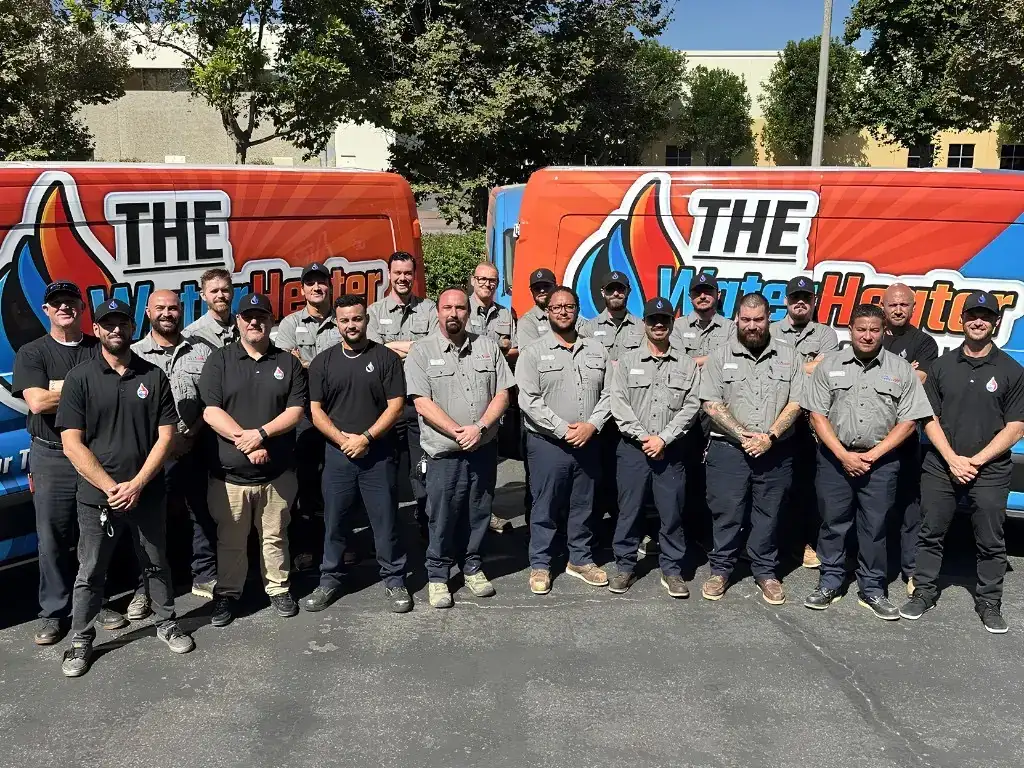
Co-Founder and CEO of THE Water Heater Company, a water heater specialty company built on one clear mission: to be THE trusted name in water heating across Southern California.
Our story started with a simple idea: combine industry-leading expertise with a passion for people. Today, that idea has grown into a company recognized as Your Trusted Water Heater Authority, serving homeowners across Los Angeles, Ventura, Orange County, and Santa Barbara with unmatched quality, care, and transparency.
We believe excellence is not an act. It is a habit. Every member of our team lives by our Core Values: People First, Genuine Care, Raise the Bar, Total Transparency, and Better Every Day.
As a leader, I am driven by growth: of people, of teams, and of impact. My role is to create clarity, alignment, and opportunity so great people can do their best work and live their best lives.
Keep Reading
Related Articles


Ready for hot water?
Ready to Get Started?
Whether you need a repair, maintenance, or new installation — our experts are here to help.