Water Heater Replacement Options: Comparing Tank vs. Tankless Systems

Evaluating Your Next Water Heater: Which System Fits Your Home?
Are you tired of running out of hot water halfway through your morning shower, or is your current system simply struggling to keep up with your household's daily demands? The average home relies on hot water for bathing, cooking, cleaning, and laundry, making water heating responsible for roughly 20% of a home's total energy usage. If you are evaluating a replacement, reviewing objective options comparisons for homeowners is the best way to ensure you make the right long-term investment. Upgrading your equipment is a significant household decision that impacts both your daily comfort and your monthly utility bills.
The primary decision point for most homeowners comes down to choosing between a traditional storage tank and a modern on-demand system. While recognizing what to do if your water heater is leaking is the first step in addressing a failure, carefully selecting the right replacement architecture ensures decades of reliable performance.
Understanding the Basics: Standard 50-Gallon Tanks vs. Whole-Home Tankless Units
To make an informed decision, you first need to understand the mechanical differences between the two primary systems on the market. A standard 50-gallon tank vs. whole-home tankless unit comparison reveals two entirely different approaches to heating water. Traditional storage tanks operate by drawing cold water into a large cylindrical reservoir and continuously heating it to a set temperature, usually around 120°F. Because the water sits in the tank waiting to be used, the system must periodically turn on to reheat the water as it naturally cools down. This phenomenon is known as standby heat loss, and it occurs 24 hours a day, whether you are home or on vacation.
In contrast, a whole-home tankless unit eliminates the storage tank entirely. Instead, it relies on a high-powered heat exchanger. When you turn on a hot water tap, cold water travels through a pipe into the unit. A gas burner or electric element rapidly heats the water as it flows through the heat exchanger, delivering hot water on demand. Because there is no stored water, there is zero standby heat loss. Both systems offer distinct engineering advantages depending on your home's layout, your utility setup, and your specific hot water requirements.
| Feature | Standard 50-Gallon Tank | Whole-Home Tankless Unit |
|---|---|---|
| Heating Method | Continuous heating of stored water | On-demand heating via heat exchanger |
| Standby Heat Loss | Yes (continuous energy draw) | No (energy used only when active) |
| Physical Footprint | Requires significant floor space in a garage or closet | Compact, wall-mounted design saves space |
| Hot Water Supply | Limited to the 50-gallon capacity | Continuous supply (as long as flow rate is maintained) |

Matching Household Hot Water Demand to System Capacity
Energy ratings and efficiency percentages are helpful, but the most critical factor in choosing a replacement is matching the system to your household's specific usage patterns. A highly efficient unit that cannot keep up with your morning routine will only lead to frustration. Sizing a system requires looking beyond the physical dimensions of the unit and analyzing how your family consumes hot water during peak hours.
Calculating Peak Demand
When professionals evaluate a home for a replacement, they look at concurrent fixture usage. This means calculating exactly how much hot water is needed if multiple appliances are running at the exact same time. Here is how that process generally works:
- Identify peak usage times: Determine the busiest hour of the day for hot water in your home (often the morning).
- Count simultaneous fixtures: Note if you regularly run two showers at once, or if the dishwasher runs while someone is bathing.
- Calculate Flow Rate (GPM): Each fixture has a Gallons Per Minute (GPM) rating. A standard showerhead uses about 2.5 GPM, while a kitchen sink uses about 1.5 GPM. Running both requires a system capable of delivering 4.0 GPM simultaneously.
- Determine Temperature Rise: This measures how much the unit needs to heat the incoming cold ground water to reach the desired output temperature (usually 120°F).
The primary benefit of a tankless system is the promise of endless hot water, meaning you will never run out during a long shower. However, that endless supply is limited by the unit's maximum flow rate. If a large family attempts to run three showers and a washing machine simultaneously, a tankless unit might struggle to maintain water pressure and temperature. Conversely, a standard 50-gallon tank provides a massive, ready-to-use volume of hot water that can easily handle multiple fixtures at once—but once those 50 gallons are depleted, the household must wait for the entire tank to reheat. The right choice scales directly with your home's specific daily routines.
Energy Efficiency and Long-Term Lifecycle Differences
Comparing the energy usage and expected lifespan of a standard 50-gallon tank vs. whole-home tankless unit helps justify the initial installation investment. While standard tanks have a lower upfront cost, their long-term operational costs are generally higher due to the mechanics of how they store water.
The Efficiency Advantage
According to data from the Department of Energy, tankless water heaters can be 24% to 34% more energy efficient for homes that use 41 gallons or less of hot water daily. For larger households using around 86 gallons per day, tankless units still hold an efficiency advantage of 8% to 14%. This efficiency stems entirely from the elimination of standby heat loss. Because a traditional tank must keep 50 gallons of water hot around the clock, your gas or electric meter is constantly ticking, even while you sleep. A tankless unit only fires its burners when a hot water tap is physically opened, meaning you only pay to heat the water you actually consume.
Lifecycle Expectations
Beyond monthly utility efficiency, the lifecycle of the equipment plays a major role in the overall value of the investment. Traditional standard 50-gallon tanks typically have an expected lifespan of 8 to 12 years. Over time, the constant presence of water and heat causes the steel tank to corrode from the inside out. Once a traditional tank develops a structural leak, it cannot be repaired and must be fully replaced.
Tankless models, on the other hand, have a potential lifespan of 20 years or more. Because they do not store water, they are far less susceptible to internal rust and structural corrosion. Furthermore, nearly every component inside a tankless unit is replaceable. If a sensor or heat exchanger fails in year 15, that specific part can be swapped out, extending the life of the unit without requiring a total system replacement. This extended lifecycle often offsets the higher initial installation investment over time.
Hidden Infrastructure Upgrades for Tankless Retrofits
Switching from a traditional storage tank to an on-demand system is not a simple swap. It requires a complete reassessment of your home's plumbing and gas infrastructure. Many homeowners are surprised to learn that their existing setup cannot safely support a high-efficiency on-demand unit without significant modifications.
The infrastructure checklist for a tankless retrofit includes:
- Gas Line Sizing: A standard 50-gallon tank typically requires around 40,000 BTUs of gas power. A whole-home tankless unit can demand upwards of 199,000 BTUs to rapidly heat water on demand. This often means the existing half-inch gas line must be upgraded to a three-quarter-inch line to safely deliver the required fuel volume.
- Venting Modifications: Traditional tanks usually vent exhaust gases vertically through a standard metal flue. High-efficiency tankless units require specialized venting. Non-condensing units need Category III stainless steel venting to handle highly acidic exhaust, while condensing units can often use PVC pipes, but they may need to be routed horizontally through an exterior wall.
- Electrical Requirements: Even gas-powered tankless units require a dedicated electrical connection to power the digital control board, sensors, and electronic ignition system. A traditional gas tank operates with a standing pilot light and often requires no electricity at all.
- Condensate Drains: High-efficiency condensing units produce acidic wastewater as a byproduct of the heating process. This condensate must be safely neutralized and routed to a dedicated drain.
Because these retrofits involve complex gas, electrical, and venting requirements, this installation is an engineering and plumbing infrastructure choice. Working with specialists who focus exclusively on water heaters means your installation is handled by technicians who understand these complex gas and venting retrofits, ensuring a code-compliant, safe, and efficient system, rather than relying on a general plumber who may overlook the BTU load requirements.
The Impact of Local Water Quality on System Performance
One of the most overlooked factors in choosing a replacement system is the quality of the water flowing through your pipes. Water quality dictates the frequency of required maintenance and directly impacts the longevity of both system types.
The Problem with Scale and Sediment
With Southern California's notoriously hard water often exceeding 120 mg/L, local plumbing appliances are subjected to incredibly harsh conditions. Hard water contains high concentrations of dissolved minerals, primarily calcium and magnesium. When hard water is heated, these minerals separate and solidify into scale.
In a standard 50-gallon tank, this scale settles to the bottom of the cylinder as heavy sediment. Over time, this sediment layer grows thicker, displacing the water volume (meaning your 50-gallon tank only holds 40 gallons of water) and creating an insulating barrier between the gas burner at the bottom and the water above it. The system has to work harder and burn more fuel to heat the water through the sediment rock, drastically reducing efficiency and eventually causing the tank to overheat and rupture.
In a whole-home tankless unit, hard water presents a different challenge. Tankless units rely on extremely narrow, intricate copper or stainless steel heat exchangers to transfer heat rapidly. When hard water flows through these narrow passages, scale builds up on the internal walls. This scaling chokes off the water flow and forces the heat exchanger to run hotter than intended. If left unchecked, the heat exchanger will eventually crack or fail entirely. Therefore, assessing your local water quality is a mandatory step before choosing a system, as it determines exactly how much ongoing care your new equipment will require.
Maintenance Requirements: Keeping Your System Efficient
Protecting your investment requires ongoing upkeep, regardless of which system you choose. Comparing a standard 50-gallon tank vs. whole-home tankless unit reveals two very different maintenance protocols.
Standard Tank Maintenance:
- Annual Flushing: To combat the sediment buildup at the bottom of the tank, the system must be drained and flushed annually. This involves attaching a hose to the drain valve and allowing the water to carry out the loose mineral deposits before they harden into a solid mass.
- Anode Rod Inspection: Traditional tanks contain a sacrificial anode rod—a long piece of magnesium or aluminum suspended in the water. This rod is designed to attract corrosive elements, rusting away so the steel tank itself does not. The anode rod must be checked every few years and replaced when depleted to prevent the tank from rusting out.
- T&P Valve Testing: The temperature and pressure relief valve must be tested annually to ensure it can safely release excess pressure, preventing catastrophic tank failure.
Tankless System Maintenance:
- Annual Descaling: Because of the narrow heat exchangers, tankless units require a strict descaling process. A professional will isolate the unit from the home's plumbing and use a submersible pump to circulate a specialized descaling solution (often food-grade white vinegar) through the system for 45 to 60 minutes. This dissolves the mineral buildup inside the heat exchanger.
- Filter Cleaning: Tankless units have cold water inlet filters and air intake filters that must be removed and cleaned to ensure proper water flow and oxygen supply to the burner.
It is critical to understand that the impressive 20-year lifespan of a tankless unit is strictly dependent on adherence to this annual descaling schedule. Skipping maintenance in a hard water area will lead to premature failure in a matter of years.
Frequently Asked Questions About Water Heater Replacement
Which is better: tank or tankless water heater?
Neither system is universally better; the right choice depends entirely on your household demand, existing infrastructure, and willingness to perform maintenance. A tankless unit offers superior efficiency and endless hot water, making it ideal for long-term investments. A traditional tank offers a lower upfront cost and a massive reserve of ready-to-use hot water, making it a reliable choice for homes that frequently run multiple fixtures at once.
Does hard water affect tankless water heaters?
Yes, hard water has a significant impact on tankless water heaters. The dissolved minerals in hard water cause rapid scaling inside the unit's narrow heat exchanger. If this scale is not removed through regular maintenance, it restricts water flow, reduces efficiency, and can cause the heat exchanger to overheat and fail prematurely.
How do I choose the right size water heater for my home?
Sizing depends on the type of system you choose. For a traditional tank, you must calculate your peak hour demand to ensure the tank holds enough volume for your busiest time of day. For a tankless system, you must calculate the maximum flow rate (GPM) and temperature rise required to run all your simultaneous fixtures without a drop in water pressure or heat.
Is it worth switching to a tankless water heater?
Switching to a tankless system is worth the investment if you plan to stay in your home long-term and value the benefits of endless hot water and space savings. The monthly utility savings and extended 20-year lifespan help offset the higher initial installation costs, provided you keep up with the required annual descaling.
What are the downsides of a tankless water heater?
The primary downsides are the higher upfront installation investment and the necessary infrastructure upgrades. Retrofitting a home for a tankless unit often requires upsizing the gas lines, modifying the exhaust venting, and adding a dedicated electrical circuit. Additionally, they require strict annual maintenance to prevent scale buildup.
How often do I need to flush or descale my replacement water heater?
Both standard tanks and tankless units should be serviced once a year. Traditional tanks require an annual flush to remove sediment from the bottom of the cylinder, while tankless units require an annual chemical descaling flush to dissolve mineral buildup inside the heat exchanger. In areas with exceptionally hard water, tankless units may require descaling every six to eight months.
Making the Right Choice for Your Household
Ultimately, the ideal water heater balances your household's daily hot water demand, the realities of local water conditions, and your home's infrastructure readiness. Reviewing options comparisons for homeowners ensures you understand the long-term implications of your choice, helping you avoid buyer's remorse down the road. Whether you prefer the straightforward reliability and lower upfront cost of a traditional 50-gallon tank, or the endless supply and high efficiency of a whole-home tankless unit, making an informed decision protects your comfort and your wallet. To ensure your new system meets all safety codes and perfectly matches your family's needs, consult with a specialized expert who can evaluate your home's specific plumbing and gas requirements.
About the Author

Anthony Hamilton
Co-Founder & CEO, THE Water Heater Company
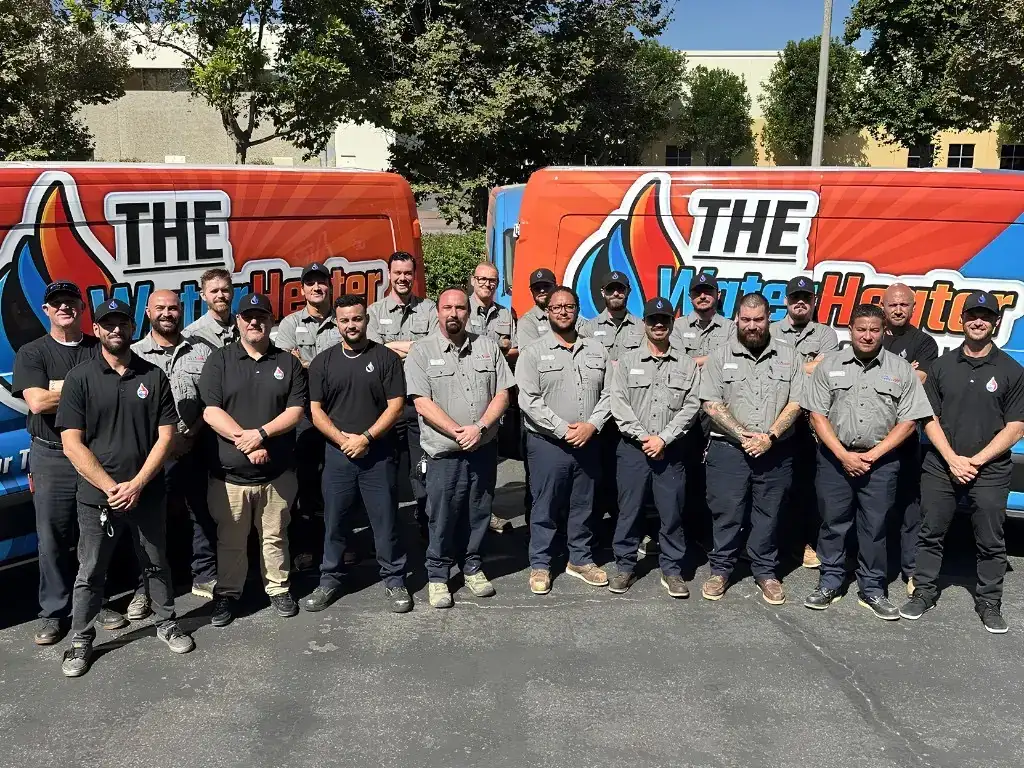
Co-Founder and CEO of THE Water Heater Company, a water heater specialty company built on one clear mission: to be THE trusted name in water heating across Southern California.
Our story started with a simple idea: combine industry-leading expertise with a passion for people. Today, that idea has grown into a company recognized as Your Trusted Water Heater Authority, serving homeowners across Los Angeles, Ventura, Orange County, and Santa Barbara with unmatched quality, care, and transparency.
We believe excellence is not an act. It is a habit. Every member of our team lives by our Core Values: People First, Genuine Care, Raise the Bar, Total Transparency, and Better Every Day.
As a leader, I am driven by growth: of people, of teams, and of impact. My role is to create clarity, alignment, and opportunity so great people can do their best work and live their best lives.
Keep Reading
Related Articles


Ready for hot water?
Ready to Get Started?
Whether you need a repair, maintenance, or new installation — our experts are here to help.