Water Heater Installation Options: Evaluating Capacity and Infrastructure Requirements

Facing an Unexpected Water Heater Failure
You step into the garage to grab a tool, only to find a growing puddle of water spreading across the floor—a clear sign that your water heater has failed. When you are suddenly dealing with a broken system, finding objective options comparisons for homeowners is the most critical first step before committing to a major plumbing overhaul. At The Water Heater Company, we know that waking up to a leaking tank or an unheated shower immediately forces a stressful decision: do you replace the broken unit with a similar model, or is this the right time to upgrade your Camarillo home to a tankless system?
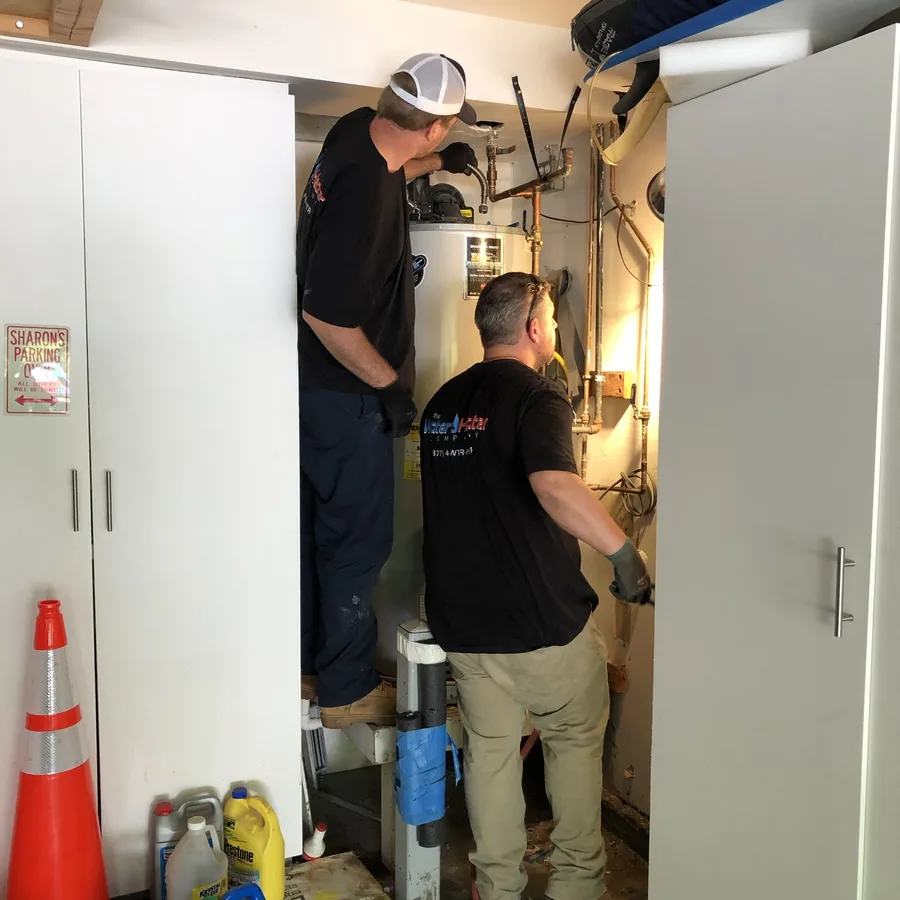
To help you navigate this sudden challenge, exploring professional water heater installation in Southern California provides a solid baseline for your next steps. In our years of service, our team frequently responds to calls just like this. Recently, one of our Camarillo clients came home from work to find their ten-year-old water heater leaking heavily. Our technician arrived within two hours, quickly stopped the leak, and walked them through their replacement choices, ultimately installing a new premium unit with an extended warranty to restore their hot water the same day. This highlights the primary decision point during an emergency: determining if your property's current infrastructure justifies the time and investment of a tankless upgrade.
Many marketing materials focus heavily on generic energy-saving claims, but they often gloss over the actual structural readiness required for a major upgrade. Understanding the estimated baseline cost variance between a like-for-like tank swap and a tankless retrofit is essential. A direct replacement utilizes your existing plumbing, gas, and electrical connections, whereas a retrofit often requires significant modifications. By looking past the sales pitches and focusing on your home's physical capabilities, you can make a rapid, informed choice that restores your hot water safely and efficiently.
Calculating Your Household Peak Hot Water Demand
Before deciding on any specific water heating technology, you must understand your household's actual usage patterns. Gallons Per Minute (GPM) is the standard measurement used to determine how much hot water a system can deliver at any given moment. Properly calculating your GPM flow rate requirements for simultaneous fixture use ensures that your new unit will not leave you with an unexpected drop in water temperature when you need it most.
Follow these steps to calculate your home's peak hot water demand:
- Identify simultaneous usage: Think about the busiest time of day in your home. Are two showers running at the same time while the dishwasher is operating?
- Determine individual fixture flow rates: A standard showerhead typically uses about 2.5 GPM. A kitchen sink faucet uses around 1.5 GPM, and a dishwasher requires roughly 1.5 GPM.
- Calculate the peak total: If you run two showers (5.0 GPM) and the dishwasher (1.5 GPM) concurrently, your peak demand is 6.5 GPM.
- Factor in seasonal routines: During the peak heat of summer, households often experience a surge in water usage. More frequent showers after outdoor activities or hosting summer houseguests can temporarily push your peak demand to its absolute limit during the intense July heat.
Why GPM Matters More Than Tank Size
Our technicians frequently explain that while many homeowners are drawn to the promise of "endless hot water" provided by tankless systems, endless does not mean limitless. While a tankless unit will not run out of hot water, it is strictly limited by its maximum flow rate. If your household demands 7 GPM but your unit is only rated for 5 GPM, the system will restrict the water flow, resulting in noticeable pressure drops and temperature fluctuations. Undersized tankless units lead to what the industry calls "cold water sandwiches," where the water temperature rapidly shifts from hot to cold and back again during peak use.
Hidden Infrastructure Requirements for Tankless Retrofits
In our experience upgrading plumbing systems across Camarillo, transitioning from a traditional storage tank to a modern tankless system is rarely a simple plug-and-play operation. The estimated baseline cost variance between a like-for-like tank swap and a tankless retrofit is largely driven by hidden structural and utility upgrades. Because tankless units heat water on demand, they require a massive, instantaneous burst of energy, which means your home's existing utility lines must be able to handle the load.
Gas Line Upsizing: A standard 40- or 50-gallon traditional gas water heater typically requires about 40,000 BTUs of energy and runs on a standard 1/2-inch gas line. A high-efficiency tankless unit, however, can demand up to 199,000 BTUs to heat water instantly. This massive jump in energy consumption almost always requires upgrading the gas supply line to a 3/4-inch pipe. Rerouting and upsizing gas lines through walls or attics is a major factor in retrofit timelines.
Venting Modifications: Traditional atmospheric draft tanks vent exhaust gases naturally up a vertical metal flue. High-efficiency condensing tankless units operate differently. Because they extract so much heat from the combustion process, their exhaust gases are cooler and highly acidic. This requires the installation of dedicated, corrosion-resistant venting materials (like specific grades of PVC or CPVC) that often must be routed horizontally out the side of the house.
Electrical Panel Upgrades: Standard gas tanks rely on a simple standing pilot light or a basic electronic ignition, requiring little to no external electricity. Modern tankless systems are essentially large computers attached to heat exchangers. They require a dedicated 120-volt electrical outlet to power the digital display, internal sensors, and freeze-protection mechanisms. If there is no outlet near the installation site, an electrician must run a new circuit from your main breaker panel.
Objective Disqualification Criteria
During an emergency failure, you need hot water restored quickly. Sometimes, a home's current infrastructure makes a rapid tankless retrofit impossible. Here is a quick breakdown of structural limitations that might disqualify an immediate upgrade:
| Current Infrastructure Constraint | Tankless Requirement | Impact on Emergency Replacement |
|---|---|---|
| 1/2-inch gas line embedded in concrete | 3/4-inch gas line for 199k BTUs | Requires extensive demolition; delays installation by days. |
| Shared metal B-vent through the roof | Dedicated PVC/CPVC side-wall venting | Requires cutting new exterior penetrations; prolongs downtime. |
| Maxed-out electrical breaker panel | Dedicated 120V circuit and nearby outlet | Requires an electrician and potential panel upgrade before installation. |

Traditional Tank Replacements: When Like-for-Like Makes Sense
While tankless technology receives a lot of attention, our installation team often recommends traditional storage tank water heaters as the most practical and efficient solution for millions of homes. When retrofitting is impractical, or when you need your hot water restored the very same day, a like-for-like replacement is often the smartest choice. Maintaining your existing gas, electrical, and venting infrastructure minimizes the baseline cost variance and significantly expedites the installation process.
Modern traditional tanks are not the same appliances they were ten or fifteen years ago. Today's units feature vastly improved foam insulation, which drastically reduces standby heat loss—the energy wasted keeping the water hot while you are away at work or asleep. This improved energy-efficiency under load is particularly beneficial during the peak heat of summer; less ambient heat escapes from the tank into your garage or utility room, which indirectly supports your home's overall cooling performance. Many newer models also utilize advanced electronic ignition systems instead of wasteful standing pilot lights, further improving their overall efficiency ratings.
If your home has a complex layout, fully finished walls around the utility closet, or an older electrical panel, sticking with a traditional tank saves you from the disruption of structural modifications. Exploring water heater replacement services in Los Alamitos shows how quickly a standard swap can be completed. Our professional technicians can typically drain, remove, and replace a standard tank in just a few hours, getting your household back to normal without the stress of a multi-day construction project. With routine maintenance, such as annual flushing and checking the anode rod, a new traditional tank will provide reliable service for a decade or more.
Navigating California Plumbing Codes and Compliance
Installing a water heater is not just about connecting pipes; it is a highly regulated process governed by strict state and regional laws. The California Plumbing Code dictates precise requirements for venting clearances, gas line sizing, and pressure relief valve discharge lines to protect your property from fire and water damage. Attempting a DIY installation or hiring an unlicensed handyman often leads to severe code violations that can void your homeowner's insurance or stall a future home sale.
Because of Southern California's specific environmental risks, the California Health and Safety Code mandates strict seismic strapping for all traditional tank water heaters. A large tank holds 40 to 50 gallons of water, weighing over 400 pounds. During an earthquake, an unstrapped tank can easily tip over, instantly severing the gas line and creating an extreme fire hazard. State law requires heavy-duty metal straps securing both the top and bottom thirds of the tank to the wall studs.
Furthermore, local air quality regulations dictate the type of equipment you can legally install. The South Coast Air Quality Management District (SCAQMD) enforces Rule 1121, which requires all new residential gas water heaters to meet Ultra-Low NOx emission standards. These specialized units burn gas cleaner, significantly reducing nitrogen oxide emissions to help clear the region's smog. Working with a company that specializes in seamlessly navigating these strict California plumbing codes guarantees long-term safety and compliance, ensuring your new system meets every legal requirement from day one.
The Impact of Local Hard Water on Your System Choice
Regional climate and geography play a massive role in how plumbing appliances perform over time. Working extensively in Camarillo and Ventura County, our team sees firsthand that Southern California is notorious for having extremely hard water, meaning the municipal supply contains high levels of dissolved minerals, primarily calcium and magnesium. When hard water is heated, these minerals precipitate out of the water and form a hard, chalky scale inside your plumbing fixtures and appliances.
This mineral buildup uniquely impacts different types of water heaters. In a traditional storage tank, the scale tends to settle at the bottom of the tank. While this eventually reduces efficiency and can cause the bottom of the tank to overheat and leak, the sheer volume of the tank allows it to function for years before the scale becomes catastrophic. You can mitigate this by flushing the tank annually to remove the loose sediment.
Tankless systems, however, are far more vulnerable to hard water scaling. Because they heat water rapidly on demand, the water passes through very narrow, intricate heat exchangers. Scale buildup inside these narrow passages severely restricts water flow, rapidly diminishing the GPM flow rate requirements for simultaneous fixture use. If a tankless unit scales up, it will throw an error code and shut down entirely to prevent the heat exchanger from cracking. For homeowners in hard water areas, committing to a tankless system means strictly committing to annual chemical descaling maintenance. If you are considering water heater repair in Glendale or a full replacement, your technician might also recommend related plumbing interventions, such as installing a whole-home water softener or a dedicated scale inhibitor, to protect your new investment.
Making an Objective, Pressure-Free Decision
When your hot water suddenly stops, the goal at The Water Heater Company is to restore comfort to your home as quickly and safely as possible. By evaluating your actual household GPM demand, assessing your existing gas and electrical infrastructure, and understanding local regulatory requirements, you can make a decision based entirely on facts. The higher upfront infrastructure investment required for a tankless system must align with your home's physical capabilities and your budget.
Another local homeowner recently called us about a severely leaky water heater and needed fast relief. Our team arrived within a couple of hours, assessed the damage, and replaced the unit with a new traditional tank without any high-pressure upselling, leaving the area completely clean and the hot water flowing. This is the exact type of objective assessment you should seek out.
Ultimately, the right choice is the one that safely and reliably meets your household's needs without forcing unnecessary structural overhauls. By seeking out thorough options comparisons for homeowners, you can confidently choose a system that provides consistent hot water, respects your home's infrastructure, and offers lasting value for years to come.
Frequently Asked Questions
What are the structural requirements for installing a tankless water heater?
Upgrading to a tankless system typically requires three major structural changes to your home. First, the gas line usually must be upsized from 1/2-inch to 3/4-inch to handle the higher BTU demand. Second, a dedicated 120-volt electrical outlet must be installed to power the unit's computer board. Finally, new high-efficiency PVC or CPVC venting must be routed, often horizontally through an exterior wall, to safely exhaust the cooler, acidic combustion gases.
How do I calculate the GPM needed for a new water heater?
You calculate your required Gallons Per Minute (GPM) by adding up the flow rates of all the hot water fixtures you expect to run simultaneously. For example, a standard shower uses about 2.5 GPM, and a kitchen sink uses roughly 1.5 GPM. If you plan to run two showers and the sink at the exact same time, you would need a water heater capable of delivering at least 6.5 GPM to prevent noticeable pressure drops.
Do I need to upgrade my gas line for a tankless water heater?
In most retrofit situations, yes, a gas line upgrade is required. Traditional storage tanks usually operate on about 40,000 BTUs and run perfectly fine on a standard 1/2-inch gas line. Tankless units can require up to 199,000 BTUs to heat water on demand, which necessitates a larger 3/4-inch pipe to deliver the required volume of gas safely and efficiently.
Is it worth switching to a tankless water heater during an emergency replacement?
Switching to a tankless unit during an emergency depends entirely on your home's current infrastructure and your immediate budget. If your home already has an upsized gas line and an accessible electrical outlet, a tankless upgrade is an excellent long-term investment. However, if upgrading requires extensive demolition, new gas routing, and panel upgrades, a like-for-like traditional tank replacement is usually the faster, more practical way to restore your hot water immediately.
What are the current Ultra-Low NOx emission requirements for water heaters?
In Southern California, the South Coast Air Quality Management District (SCAQMD) enforces Rule 1121 for residential gas water heaters. This rule mandates that all new gas water heaters installed in the region must be Ultra-Low NOx models, meaning they emit no more than 10 nanograms of nitrogen oxides per joule of heat output. This regulation is strictly enforced to help reduce smog and improve local air quality.
How does hard water affect the lifespan of a tankless water heater?
Hard water significantly accelerates mineral scaling inside the narrow heat exchangers of a tankless water heater. As the water is rapidly heated, calcium and magnesium precipitate out and cling to the internal components, which restricts water flow and forces the unit to work harder. To maintain efficiency and prevent the heat exchanger from failing prematurely, tankless units in hard water areas must be chemically flushed and descaled at least once a year.
About the Author

Anthony Hamilton
Co-Founder & CEO, THE Water Heater Company
Co-Founder and CEO of THE Water Heater Company, a water heater specialty company built on one clear mission: to be THE trusted name in water heating across Southern California.
Our story started with a simple idea: combine industry-leading expertise with a passion for people. Today, that idea has grown into a company recognized as Your Trusted Water Heater Authority, serving homeowners across Los Angeles, Ventura, Orange County, and Santa Barbara with unmatched quality, care, and transparency.
We believe excellence is not an act. It is a habit. Every member of our team lives by our Core Values: People First, Genuine Care, Raise the Bar, Total Transparency, and Better Every Day.
As a leader, I am driven by growth: of people, of teams, and of impact. My role is to create clarity, alignment, and opportunity so great people can do their best work and live their best lives.
Keep Reading
Related Articles


Ready for hot water?
Ready to Get Started?
Whether you need a repair, maintenance, or new installation — our experts are here to help.