Why Is My Water Heater Producing Lukewarm Water? A Mechanical Diagnostic Breakdown

Diagnosing Lukewarm Water in Your Home's Plumbing System
You step into the shower expecting a blast of heat, but instead, you are greeted by a tepid stream that barely takes the chill off the morning. Having your common homeowner questions answered about sudden lukewarm water is the first step toward restoring your plumbing system's performance. A sudden drop in water temperature is rarely a random glitch; it is almost always a symptom of a specific mechanical breakdown or a maintenance deficit inside the tank. When a standard 40-50 gallon residential tank water heater stops delivering the volume or temperature of hot water you are accustomed to, the diagnostic process must be methodical to avoid unnecessary expenses.
For immediate assistance, learn more about our comprehensive water heater services.
The diagnostic tree for a water heater producing lukewarm water generally branches into three distinct categories: simple calibration errors, severe mineral accumulation, or outright component failure. Many homeowners immediately assume that a cold shower means the entire unit is permanently broken and requires a costly replacement. However, a standard 40-50 gallon residential tank water heater is built with modular components that can often be serviced or replaced independently of the main steel tank. By understanding exactly how your system heats, stores, and delivers water, you can accurately identify the root cause of the temperature drop and determine whether a quick adjustment, a thorough professional flush, or a mechanical repair is required.
How Peak Summer Heat Exposes Severe Water Heater Malfunctions
During the peak heat of summer, incoming municipal water temperatures are significantly warmer than they are during the winter months. The water traveling through underground pipes absorbs the ambient heat of the soil, meaning your water heater has to do far less work to bring that water up to a comfortable bathing temperature. If you are experiencing lukewarm water in July, you can immediately rule out ambient temperature drops or a system struggling against freezing incoming water lines.
A standard 40-50 gallon residential tank water heater is engineered to provide a specific "temperature rise"—the number of degrees it can heat incoming water within a given time frame. In the summer, the required temperature rise is relatively small. Therefore, if your system is producing lukewarm water during the hottest months of the year, it indicates a severe mechanical or sediment issue rather than a simple capacity struggle.
The implications of a summer breakdown:
- Reduced workload, identical failure: Because the burner or heating elements are working under a lighter load in the summer, a failure to produce hot water points directly to a compromised internal mechanism rather than environmental factors.
- Rapid heat loss: If the tank is heating the water but the water feels lukewarm at the tap, the system may be suffering from a broken dip tube, which mixes incoming warm summer water directly with the heated water at the top of the tank.
- Component exhaustion: Components that have been slowly failing throughout the high-demand winter months often finally give out during the summer, leaving you with a sudden lack of hot water.
Recognizing that summer incoming water temperatures should make your water heater's job easier confirms that a lukewarm shower is a definitive sign of a mechanical malfunction requiring immediate diagnostic attention.
Step 1: Verifying Thermostat Settings for Safety and Efficiency
Before assuming a major component has failed, the very first step in any diagnostic process is verifying the unit's temperature settings. Thermostats can be accidentally bumped, or they may have been incorrectly set during a previous service visit. Checking the thermostat is a straightforward process that rules out the most basic cause of lukewarm water.
- Locate the thermostat access panel: On gas water heaters, the thermostat dial is typically located on the gas control valve near the bottom of the tank, clearly visible on the exterior. On electric models, the thermostats (usually an upper and a lower) are hidden behind metal access panels screwed into the side of the tank. Note: Always turn off the power at the main breaker before removing access panels on an electric water heater, as high-voltage wires are exposed.
- Check the current reading: Inspect the dial or the setting on the internal thermostat. Many gas valves use settings like "Warm," "Hot," or "A/B/C" rather than exact numerical degrees, while electric thermostats usually feature a small dial with degree markings.
- Adjust to the recommended baseline: The U.S. Department of Energy strongly recommends 120 degrees Fahrenheit for optimal safe thermostat setting. This temperature provides plenty of heat for standard household chores and bathing while maximizing energy efficiency.
Many homeowners are tempted to crank the thermostat up to 140 degrees or higher when they experience lukewarm water, hoping to force the unit to work harder. This is a dangerous misstep. Pushing the temperature higher masks underlying mechanical problems, drastically reduces the unit's energy efficiency, and creates severe scalding risks for your household.
| Water Temperature | Time for a Third-Degree Burn to Occur | Safety Recommendation |
|---|---|---|
| 120°F (49°C) | More than 5 minutes | Optimal safe setting for all homes |
| 130°F (54°C) | About 30 seconds | High risk for young children and elderly |
| 140°F (60°C) | Less than 5 seconds | Dangerous; recommended only for commercial sanitation |
| 150°F (66°C) | About 1.5 seconds | Extreme scalding hazard |
If the thermostat is already set to 120 degrees Fahrenheit for optimal safe thermostat setting, or if adjusting it yields no improvement in water temperature after a few hours of recovery time, the diagnostic process must move on to internal tank conditions.
Step 2: Identifying Hard Water Calcification and Sediment Buildup
When the thermostat is functioning correctly but the water remains tepid, the next most common culprit is severe sediment accumulation. This is particularly relevant in areas with high mineral content in the municipal water supply. Southern California's notoriously hard water accelerates sediment buildup and tank corrosion, shortening expected lifespans in the Camarillo area if routine maintenance is neglected.
Hard water contains high levels of dissolved calcium and magnesium. When this water enters a standard 40-50 gallon residential tank water heater and is heated, a chemical reaction occurs that forces these minerals to precipitate out of suspension. Over months and years, these solid mineral particles drift to the bottom of the steel tank, where they settle and bake into a hardened, calcified layer.
The barrier effect and its consequences:
In a gas water heater, the burner is located at the very bottom of the tank. The heat must transfer through the steel bottom and into the water. When a thick layer of calcified sediment covers the bottom of the tank, it acts as a highly effective insulator. The burner fires up, but instead of heating the water, it wastes massive amounts of energy heating the layer of rock-hard sediment. This barrier prevents the heat from reaching the water efficiently, resulting in lukewarm showers despite the burner running constantly.
In an electric water heater, the lower heating element can become completely buried in this mineral sludge. When the element is encased in sediment, it cannot transfer its heat to the surrounding water. Worse, the trapped heat causes the element itself to overheat and eventually burn out prematurely.
Signs of severe sediment buildup:
- Kettling noises: A loud popping, rumbling, or banging sound coming from the tank when it is heating. This is the sound of water trapped beneath the sediment layer boiling into steam and violently escaping through the mineral crust.
- Long recovery times: The unit takes significantly longer than normal to reheat after a shower.
- Fluctuating temperatures: Bursts of hot water followed rapidly by lukewarm water.
Flushing the tank to remove this loose sediment is a critical maintenance step. However, once the sediment has fully calcified into a solid block, standard flushing is often ineffective, and professional descaling or component assessment is required before assuming a full replacement is necessary.
Step 3: Evaluating Heating Elements and Thermocouples
If the tank is free of severe sediment and the thermostat is correctly calibrated, the diagnostic focus shifts to the specialized components responsible for generating and regulating heat. The failure of a single, highly specific part is often the direct cause of lukewarm water, and understanding these components differentiates a minor repair from a major replacement.
Electric Water Heaters: The Dual Element System
A standard electric 40-50 gallon residential tank relies on two distinct heating elements: an upper element and a lower element. These elements do not operate simultaneously; they work in a coordinated sequence. When the tank is filled with cold water, the upper thermostat activates the upper element to quickly heat the top portion of the water, ensuring you have hot water available rapidly. Once the top is heated, power is transferred to the lower element to heat the remaining volume of the tank.
If the lower heating element burns out—often due to sediment encasement or simple electrical fatigue—the upper element will still heat the top third of the tank. As a result, you will get a very short burst of hot water followed immediately by a lukewarm or cold stream. The system cannot maintain the 120 degrees Fahrenheit for optimal safe thermostat setting throughout the entire 50-gallon volume because half of its heating capability is dead.
Gas Water Heaters: The Thermocouple and Gas Valve
Gas units rely on a different set of mechanical components. The most critical safety and operational component is the thermocouple. This small probe sits directly in the path of the pilot light flame. As the flame heats the thermocouple, it generates a tiny electrical current (millivolts). This current travels up a copper wire to the main gas control valve, signaling that a flame is present and it is safe to keep the gas flowing.
If the thermocouple fails, becomes coated in carbon buildup, or is knocked out of alignment, the electrical signal drops. The gas valve, acting on its safety protocol, instantly shuts off all gas flow to both the pilot and the main burner to prevent a dangerous gas leak. Without the main burner firing, the water in the tank slowly cools down to room temperature, resulting in lukewarm water. Replacing a faulty thermocouple is a precise but standard repair that restores full functionality without requiring a new tank.

When to Replace: Specialized Diagnostics vs. General Plumbing Advice
The ultimate goal of a mechanical diagnostic is to draw a clear line between an isolated component failure and a structural compromise of the tank itself. As specialized water heater experts rather than general plumbers, the focus is exclusively on expert diagnosis and optimal solutions, preventing premature replacements. A generalist might look at a ten-year-old tank producing lukewarm water and immediately suggest throwing it away. A specialist will test the millivolt output of the thermocouple, check the resistance of the heating elements, and inspect the structural integrity of the tank lining before making a recommendation.
A standard 40-50 gallon residential tank water heater features a glass-lined interior designed to protect the outer steel shell from the corrosive nature of water. Over time, the constant expansion and contraction of heating cycles cause microscopic cracks in this glass lining. Once the water breaches the lining and reaches the raw steel, the tank will begin to rust from the inside out. This is a structural failure. There is no patch, epoxy, or weld that can safely repair a rusted, leaking internal tank.
However, if the tank's integrity is intact, the decision becomes an economic one. Replacing a $30 heating element or a $50 thermocouple makes perfect financial sense on a unit that is six years old and otherwise well-maintained. If you are struggling with this choice, learning more about deciding whether to repair or replace your water heater can help clarify the tipping point where accumulated repair costs outweigh the benefits of investing in a new, high-efficiency system.
Common Homeowner Questions About Water Heater Diagnostics
Why is my water heater running out of hot water faster than usual?
Running out of hot water faster than usual is often caused by a broken dip tube or severe sediment buildup inside the tank. The dip tube is a long plastic pipe that directs incoming cold water to the very bottom of the tank so it can be heated. If this tube breaks off near the top, cold water dumps directly into the heated water waiting at the top of the tank, instantly cooling it down and sending lukewarm water to your shower. Alternatively, if a standard 40-50 gallon residential tank water heater is filled with 15 gallons of solid calcified sediment, its effective capacity is drastically reduced. Both scenarios require immediate professional inspection to restore your home's hot water capacity.
How do I check my water heater thermostat setting?
To check your water heater thermostat setting, locate the access panel on the side of the tank or the gas control valve near the bottom. For gas units, the dial is externally visible on the front of the control valve box. For electric models, you must first turn off the power at the main breaker, then unscrew the metal access panels on the side of the tank and fold back the insulation to reveal the dial. Verify the dial is set to the recommended 120 degrees Fahrenheit for optimal safe thermostat setting. If the settings are correct but the water is still lukewarm, the issue lies deeper within the mechanical components.
Can sediment in a water heater cause lukewarm water?
Yes, calcification creates an insulating layer at the bottom of the tank that directly causes lukewarm water. When dissolved minerals settle and bake onto the bottom of the steel tank, they form a barrier that prevents the heating element or gas burner from properly warming the water. The system expends massive amounts of energy heating a rock-hard layer of sediment instead of the water above it. This issue can often be resolved with a thorough professional flush, provided the sediment has not yet solidified completely into a solid block.
What are the definitive signs my water heater is failing?
The definitive signs that a water heater is fundamentally failing include visible rust or corrosion on the tank exterior, loud popping or rumbling noises during operation, and inconsistent water temperatures despite proper thermostat settings. Rust on the outside of the tank, particularly near the bottom seams, indicates that the internal glass lining has failed and the steel is corroding through. Loud rumbling, known as kettling, points to severe, irreversible sediment calcification. When these symptoms appear alongside constantly lukewarm water, the structural integrity of the tank is likely compromised, moving the conversation from repair to replacement.
Should a water heater be set to 120 or 140 degrees?
A residential water heater should be set to 120 degrees Fahrenheit, as it is the safest standard to prevent scalding and reduce standby heat loss. At 140 degrees, water can cause third-degree burns on human skin in less than five seconds, posing a severe risk to children and the elderly. Higher temperatures also drastically increase energy consumption because the tank loses heat to the surrounding environment much faster. Only specific medical or sanitation needs, such as certain commercial dishwashing applications, require 140 degrees. For everyday home use, 120 degrees provides the perfect balance of safety, comfort, and efficiency.
Schedule a Professional Water Heater Diagnostic Today
When your daily routine is disrupted by lukewarm showers, guessing at the cause only leads to frustration and wasted money. A standard 40-50 gallon residential tank water heater relies on precise mechanical coordination to deliver the comfort you expect. Securing an accurate, specialist-level diagnosis provides the peace of mind that you are only fixing what is actually broken. If you are searching for a water heater replacement near me, trust local specialists to provide an honest assessment of your system's health. Schedule a professional inspection today before a minor component failure turns into a complete plumbing emergency.
About the Author

Anthony Hamilton
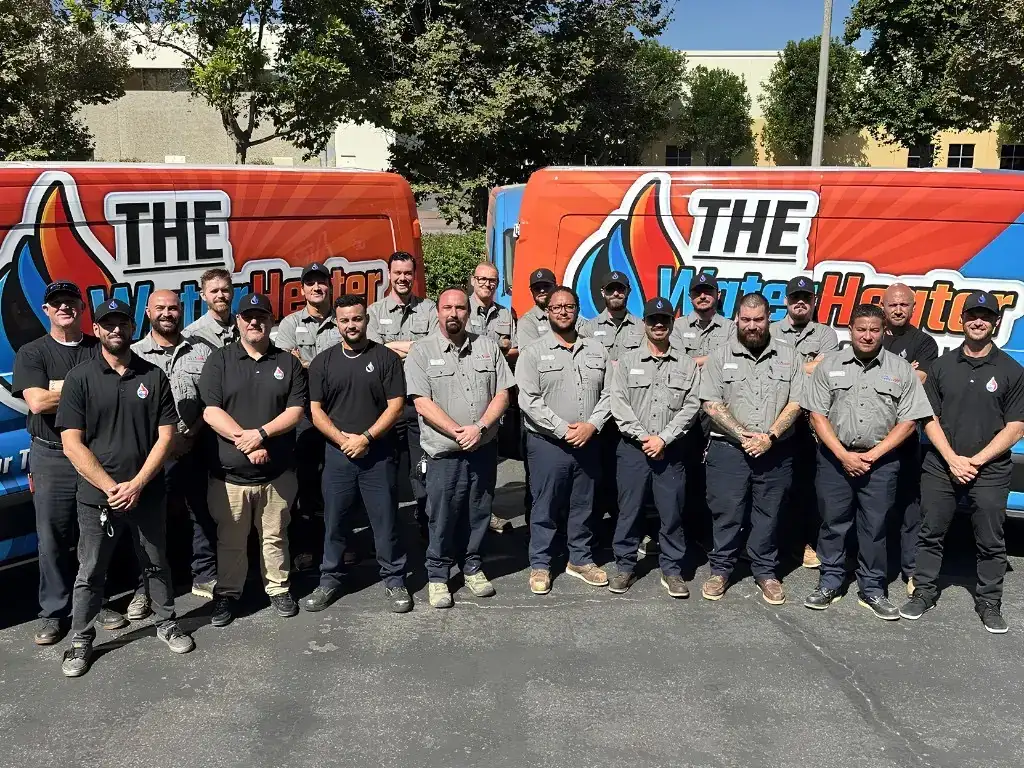
Co-Founder & CEO, THE Water Heater Company
Co-Founder and CEO of THE Water Heater Company, a water heater specialty company built on one clear mission: to be THE trusted name in water heating across Southern California.
Our story started with a simple idea: combine industry-leading expertise with a passion for people. Today, that idea has grown into a company recognized as Your Trusted Water Heater Authority, serving homeowners across Los Angeles, Ventura, Orange County, and Santa Barbara with unmatched quality, care, and transparency.
We believe excellence is not an act. It is a habit. Every member of our team lives by our Core Values: People First, Genuine Care, Raise the Bar, Total Transparency, and Better Every Day.
As a leader, I am driven by growth: of people, of teams, and of impact. My role is to create clarity, alignment, and opportunity so great people can do their best work and live their best lives.
Keep Reading
Related Articles


Ready for hot water?
Ready to Get Started?
Whether you need a repair, maintenance, or new installation — our experts are here to help.