Your Water Heater Won’t Last Forever — Here’s What to Expect
How long does a water heater last depends on the type you have, how well it’s maintained, and where you live — but here’s a quick answer to get you oriented:
| Water Heater Type | Average Lifespan |
|---|---|
| Conventional tank (gas) | 8–12 years |
| Conventional tank (electric) | 10–15 years |
| Tankless (gas) | 15–20 years |
| Heat pump / hybrid | 10–15 years |
| Solar | 15–20+ years |
Most homeowners don’t think about their water heater until something goes wrong — a lukewarm shower, a puddle on the floor, or a strange rumbling from the utility closet. By then, the unit may already be past its prime. The good news? Knowing what to expect from your system puts you in control, so you can plan ahead instead of scrambling for an emergency replacement.
For Southern California homeowners especially, factors like hard water, coastal air, and local installation codes can all affect how long your system actually holds up — sometimes shortening its life by years if left unchecked.
I’m Anthony Hamilton, Co-Founder and CEO of THE Water Heater Company, and after years of inspecting, repairing, and replacing water heaters across Southern California, I’ve seen how dramatically lifespan varies based on maintenance, water quality, and unit type — which is exactly what this guide on how long does a water heater last is designed to help you navigate. Let’s break it all down so you can make a confident, informed decision about your home’s hot water system.
How Long Does a Water Heater Last?
When we talk about the service life of a water heater, we are looking at a range rather than a fixed expiration date. While the table above gives you a solid baseline, the “real world” results we see in homes from Santa Barbara down to Irvine vary quite a bit.
Conventional Storage Tanks
Traditional tank-type water heaters are the most common systems we encounter. These units work by keeping a large volume of water (usually 40 to 50 gallons) hot and ready for use at all times. Because the metal tank is constantly in contact with water, it is susceptible to internal corrosion. On average, a conventional tank lasts between 8 and 12 years. If yours is approaching the decade mark, it’s officially in the “red zone” where a failure could happen at any time.
Tankless Technology
If you are looking for longevity, tankless water heaters are the clear winners. Because they heat water on demand rather than storing it, they don’t suffer from the same constant corrosive pressure as a tank. A well-maintained tankless unit can easily last 15 to 20 years, and in some cases, even longer. While they require a different maintenance routine — specifically annual descaling — the extended lifespan makes them a favorite for many of our customers.
Manufacturer Warranties vs. Functional Life
It is important to distinguish between a warranty and the actual lifespan. Most tank water heaters come with a 6, 9, or 12-year warranty. This is the manufacturer’s way of saying they are confident the unit won’t leak during that window. However, the functional life can extend past the warranty if you are diligent with maintenance. Conversely, a unit ignored for ten years might fail the day after its 6-year warranty expires.
How long does a water heater last by fuel type?
The energy source your heater uses plays a subtle but significant role in its durability.
- Gas Units: These typically last 8 to 12 years. The intense heat from the burner at the bottom of the tank can cause the metal to expand and contract frequently, which eventually stresses the glass lining of the tank.
- Electric Models: Electric heaters often last slightly longer, usually 10 to 15 years. Since they use internal heating elements rather than a flame underneath the tank, the physical stress on the bottom of the unit is reduced. However, electric elements are very sensitive to sediment buildup.
- Heat Pump Hybrids: These high-efficiency units generally last 10 to 15 years. They are more complex, featuring a compressor and fan assembly on top of the tank, which means there are more mechanical parts that may eventually require service.
- Solar Collectors: The solar panels themselves can last 20 to 25 years, but the storage tank used in a solar system usually follows the standard 10 to 15-year rule.
How long does a water heater last in Southern California?
Living in Southern California is great for us, but it can be tough on our appliances. Our regional environment presents three unique challenges:
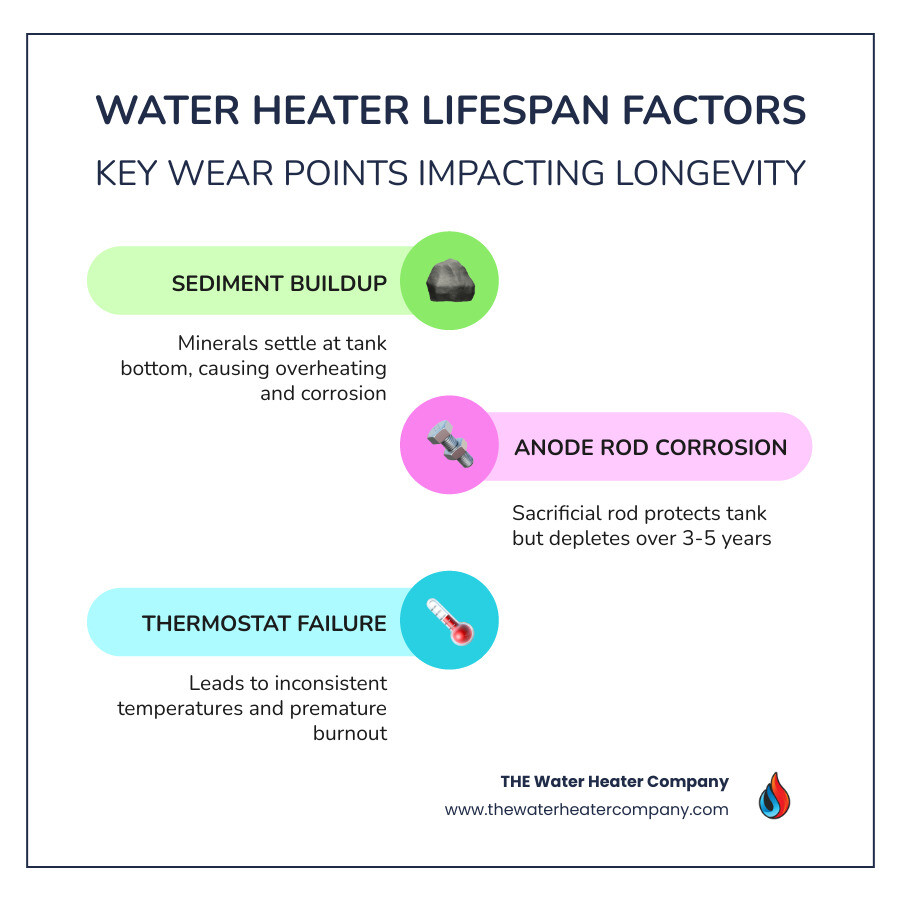
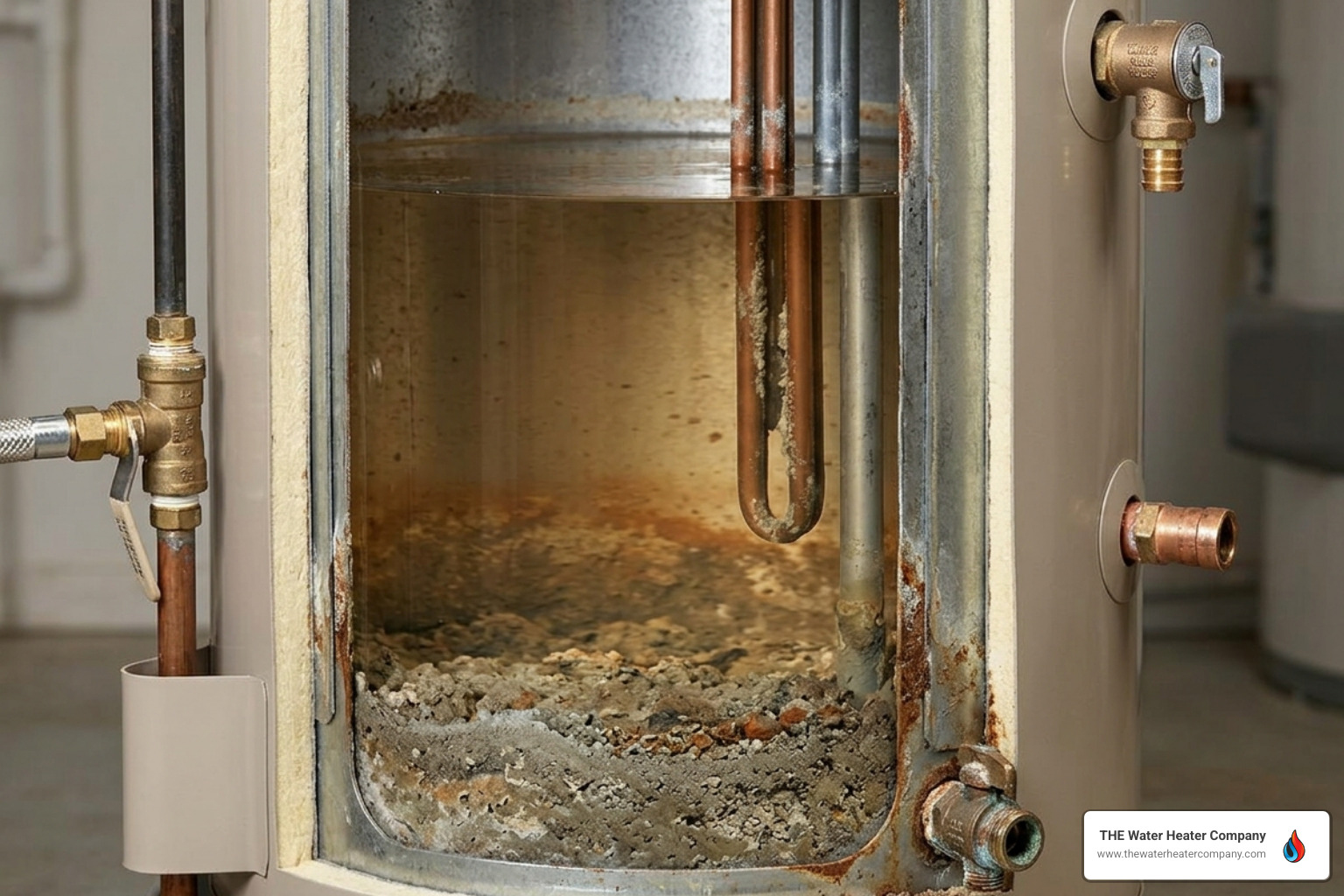
- Hard Water: Much of the water in Los Angeles, Santa Ana, and surrounding areas is “hard,” meaning it’s high in minerals like calcium and magnesium. These minerals settle at the bottom of the tank, creating a thick layer of scale that acts as an insulator, forcing the heater to work harder and eventually overheat the tank bottom.
- Coastal Corrosion: For our neighbors in Santa Barbara and Irvine, the salty coastal air can accelerate the corrosion of external components and fittings.
- Seismic Requirements: In Southern California, proper installation isn’t just about function; it’s about safety. Units must be double-strapped to the wall studs to prevent tipping during an earthquake. We also highly recommend earthquake valves to automatically shut off the gas supply if a significant tremor occurs, protecting your home from fire even if the heater is damaged.
Critical Factors Influencing Unit Longevity
If you’ve ever wondered why your neighbor’s water heater lasted 15 years while yours gave out at 7, the answer usually lies in one of these four categories.
Water Quality and Mineral Deposits
Hard water is the number one “silent killer” of water heaters in Southern California. When hard water is heated, the minerals solidify into sediment. This sediment creates a barrier between the burner and the water, causing the tank to “hot spot” and eventually crack. To combat this, many homeowners invest in water filtration and conditioning systems. By removing or neutralizing these minerals before they enter the heater, you can significantly extend the life of the unit.
Usage Patterns
A water heater in a home with two people will naturally last longer than one in a high-demand household with five people and back-to-back showers. The more water that passes through the system, the more frequently it has to cycle on and off, and the more “fresh” oxygenated water (which promotes rust) is introduced into the tank.
Thermal Expansion and Pressure
Water expands when it is heated. If your plumbing system is “closed,” that expansion has nowhere to go, putting immense pressure on the tank’s inner lining. We often find that homes without functioning pressure regulators see their water heaters fail prematurely due to constant pressure spikes. Keeping your home’s PSI (pounds per square inch) within a safe range (usually 50–70 PSI) is vital for your heater’s health.
Installation Environment
Where the unit is located matters. A water heater in a damp, unventilated crawl space will rust from the outside in much faster than one located in a clean, dry garage in Camarillo or Pasadena. Proper ventilation is also crucial for gas units to prevent the buildup of corrosive combustion byproducts.
Recognizing the Signs of an Aging System
You don’t want the first sign of a failing water heater to be a flooded garage. Keep your eyes (and ears) open for these warning signals.
Unusual Noises
If your water heater sounds like it’s boiling a pot of rocks, that’s a sign of heavy sediment buildup. The “popping” or “rumbling” occurs when steam bubbles struggle to escape through the layer of crust at the bottom of the tank. This “kettle effect” is a clear indicator that the unit is being overworked.
Discolored Water or Metallic Taste
If your hot water looks rusty or has a distinct metallic tang while the cold water remains clear, the inside of your tank is likely corroding. Once the internal glass lining is breached and the steel begins to rust, it’s only a matter of time before a leak develops.
Inconsistent Temperatures
Are your showers getting shorter? Are you constantly adjusting the dial just to get lukewarm water? This often points to a broken dip tube (the pipe that sends cold water to the bottom) or failing heating elements. While some of these issues can be addressed through water heater repair, if the unit is over 10 years old, these inconsistencies usually signal the end is near.
Visible Leaks and Moisture
Any sign of water pooling around the base of the tank is an emergency. While a leak from a valve might be fixable, a leak from the tank itself cannot be repaired. If you see moisture, rust streaks, or “pitting” on the tank, call us immediately.
How to Determine the Age of Your Current Water Heater
If you aren’t sure how old your unit is, look for the manufacturer’s label (the rating plate). Find the serial number. Usually, the first two digits represent the year, or the serial starts with a letter (A for January, B for February, etc.) followed by the year. For example, a serial number starting with “D26” would indicate the unit was manufactured in April 2026.
Proactive Maintenance to Maximize Service Life
We often tell our customers that a water heater is like a car — you can’t expect it to run forever if you never change the oil. Here is the “maintenance trifecta” to keep your system running as long as possible.
Annual Flushing
Flushing your tank once a year is the best way to remove the sediment we mentioned earlier. By opening the drain valve and letting the water carry out the accumulated minerals, you keep the heat transfer efficient and prevent the tank from overheating. For tankless units, this involves a “descale” flush with a food-grade solution to clear the heat exchanger.
The Sacrificial Anode Rod
Every tank water heater has a “sacrificial” anode rod. Its sole job is to be more “attractive” to corrosion than the steel tank. The water’s corrosive elements attack the rod instead of the tank. However, these rods eventually dissolve completely. We recommend checking the anode rod every 3 to 5 years. Replacing a depleted rod is one of the most cost-effective professional services we offer to double the life of a tank.
Temperature Settings and Safety Valves
Keeping your thermostat at the recommended 120-degree threshold reduces the rate of scale accumulation and prevents scalding. To ensure the water reaches distant bathrooms quickly without wasting energy, many of our clients install hot water recirculating systems. Additionally, you should manually test your Temperature and Pressure (T&P) relief valve once a year to ensure it isn’t “frozen” shut by mineral deposits.
Deciding Between Repair and Full Replacement
When a problem arises, the big question is always: “Should I fix it or replace it?” We generally use the 50% Rule. If the cost of the repair is more than 50% of the cost of a new unit, and the heater is in the last third of its expected life, replacement is almost always the smarter financial move.
When to Repair
- The unit is less than 6 years old.
- The problem is a simple component like a thermocouple, pilot assembly, or heating element.
- The tank itself is not leaking.
When to Replace
- The tank is leaking (this is non-negotiable).
- The unit is over 10 years old and requires a major repair.
- You have seen a significant spike in your utility bills.
- You want to upgrade to more efficient professional products that offer better recovery rates and lower operating costs.
Choosing water heater replacement also allows you to bring your home up to current safety codes, which often change over the years. This includes updated venting requirements, proper expansion tanks, and modern seismic strapping.
Frequently Asked Questions
Can a water heater last 20 years?
It is rare for a conventional tank to last 20 years, though we occasionally see it in areas with exceptionally soft water and homeowners who are meticulous about maintenance. However, for tankless systems, 20 years is a very realistic and expected lifespan.
Does hard water shorten water heater life?
Absolutely. In Southern California, hard water is the primary cause of premature failure. Without a water softener or regular flushing, hard water can shorten a tank’s life by 2 to 4 years due to sediment-induced overheating and corrosion.
How do I find the age of my water heater?
Check the serial number on the manufacturer’s label. If you can’t decode it, you can usually type the brand and serial number into the manufacturer’s website, or give us a call — we can help you identify it in seconds.
Conclusion
At THE Water Heater Company, we believe that a little knowledge goes a long way in protecting your home’s comfort. Whether you are in Van Nuys, Santa Clarita, or Pasadena, understanding how long does a water heater last helps you stay ahead of the curve.
If your unit is nearing the end of its life, or if you’ve noticed any of the warning signs we discussed, don’t wait for a cold morning to take action. Our family-owned team is here to provide expert diagnostics and reliable solutions tailored to the unique water conditions of Southern California.
Ready to ensure your home stays in hot water? Contact us today for a professional inspection or to schedule a water heater quote in Santa Barbara, Camarillo, Santa Clarita, Pasadena, Van Nuys, Los Angeles, Santa Ana, or Irvine.

The Essential’s
Call THE Water Heater Company today to get immediate help with your water needs.
“
-

“Fair Pricing & Expert Service”
Their technician Gonzo, was clearly very competent and more importantly, he took the time and effort to do a really fantastic job.
-
“Fantastic Service!”
THE Water Heater Company understood the situation I was going through. They were able to help me out and get the job done quickly.
-
“Reasonable Pricing”
Kevin did a great job on replacing my old leaky yet still working water heater. He answered all my questions and explained all the details. -
“Quick Response Time”
He was very informative and responsive to my questions and when I am making a huge investment in my home I want to be sure I am going with a company I could count on and would not cut corners. -
“Real Professionals”
Communication was great with the owner and they were very responsive, ensuring a first-class installation and experience.
-
“Great Service”
Not only did he do the service we needed, but checked the whole unit in addition to other waterline components. -
“Professional and Responsive”
They have repaired my water heater, installed a hot water recirculating pump, and now installed a new water heater. -
“Real Professionals”
It took a little over three hours but no management was necessary as the guys were very competent and clearly have been doing this for a long time.