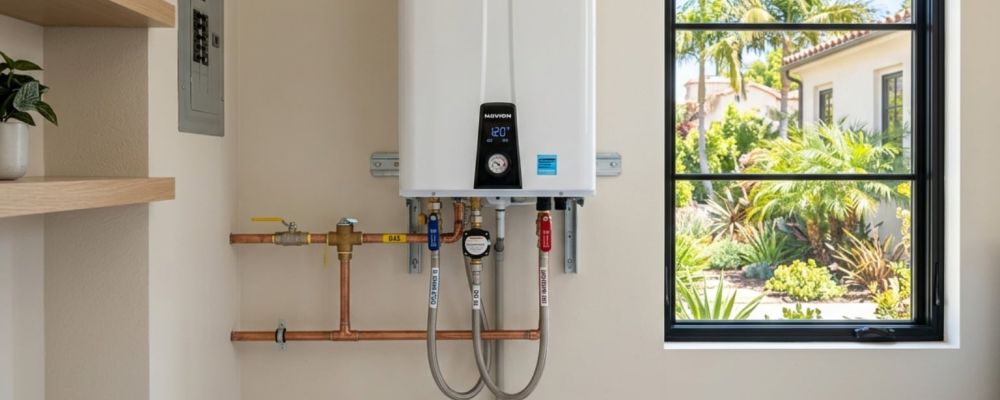
Why Tankless Maintenance Tips for Southern California Homes Matter
Tankless maintenance tips for Southern California homes are something every local homeowner with an on-demand water heater needs to understand — because the conditions here make regular upkeep more critical than almost anywhere else in the country. Southern California is well known for its hard water, with elevated levels of calcium and magnesium dissolved in the supply. Over time, those minerals quietly build up inside your tankless water heater’s heat exchanger, restricting water flow, forcing the unit to work harder, and chipping away at both efficiency and lifespan. Left unchecked, that buildup is one of the leading causes of premature tankless water heater failure in the region.
Here is a quick overview of the core maintenance tasks SoCal homeowners should know:
| Maintenance Task | Recommended Frequency (Hard Water Areas) |
|---|---|
| Flush and descale heat exchanger | Every 6-9 months |
| Clean inlet water filter | Every 6 months |
| Inspect air intake and venting | Annually |
| Test pressure relief valve | Annually |
| Check for leaks and corrosion | Every 3-6 months |
| Professional inspection | Annually |
The good news is that most of this is manageable with the right knowledge and a consistent schedule. This guide walks you through exactly what to do, how often to do it, and when to call in a licensed professional.
I’m Anthony Hamilton, Co-Founder and CEO of THE Water Heater Company, and after years of servicing tankless systems across Southern California, I’ve seen how the region’s hard water accelerates wear on these units — which is why I put together this practical guide on tankless maintenance tips for Southern California homes to help you protect your investment and keep hot water flowing reliably. Let’s get into everything you need to know.
In home appliances, tankless water heaters are the high-performance sports cars. They are sleek, incredibly efficient, and provide endless hot water on demand. However, just like a high-performance engine needs regular oil changes to avoid a breakdown, your tankless unit requires specific care to handle the unique environmental challenges of Southern California.
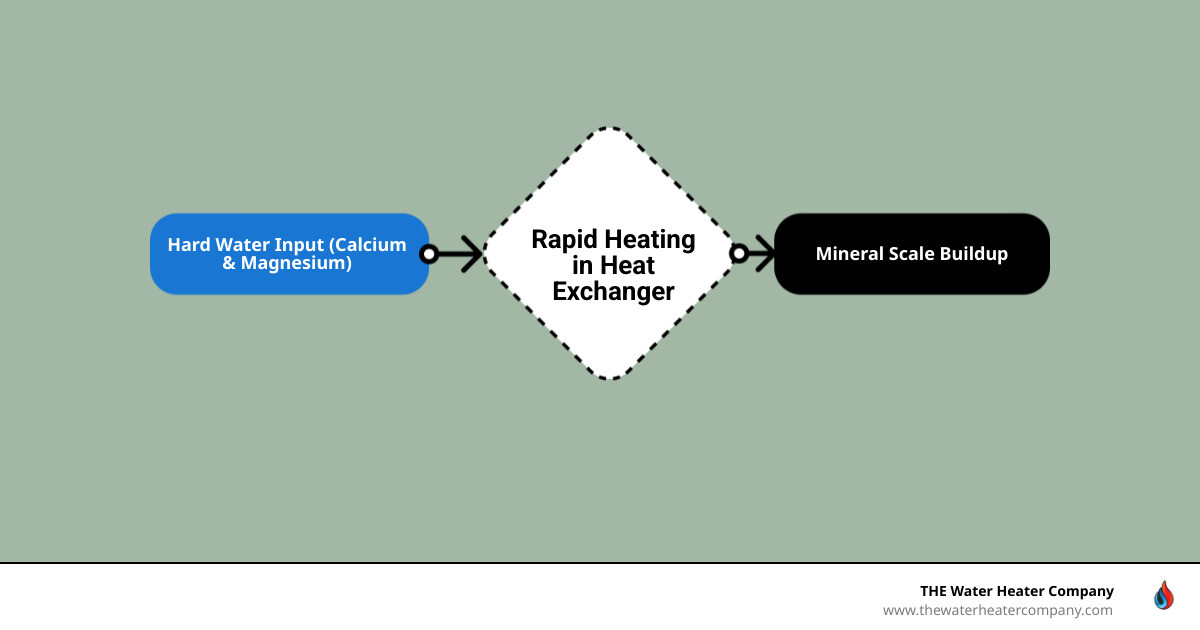
The primary “villain” in our local story is mineral buildup. While our water is safe to drink, it is packed with dissolved calcium and magnesium. When this water is heated rapidly inside the narrow copper or stainless steel pipes of your heat exchanger, these minerals solidify. They create a “scale” that acts like a layer of insulation between the burner and the water. This means your unit has to burn more gas and run longer just to reach the same temperature.
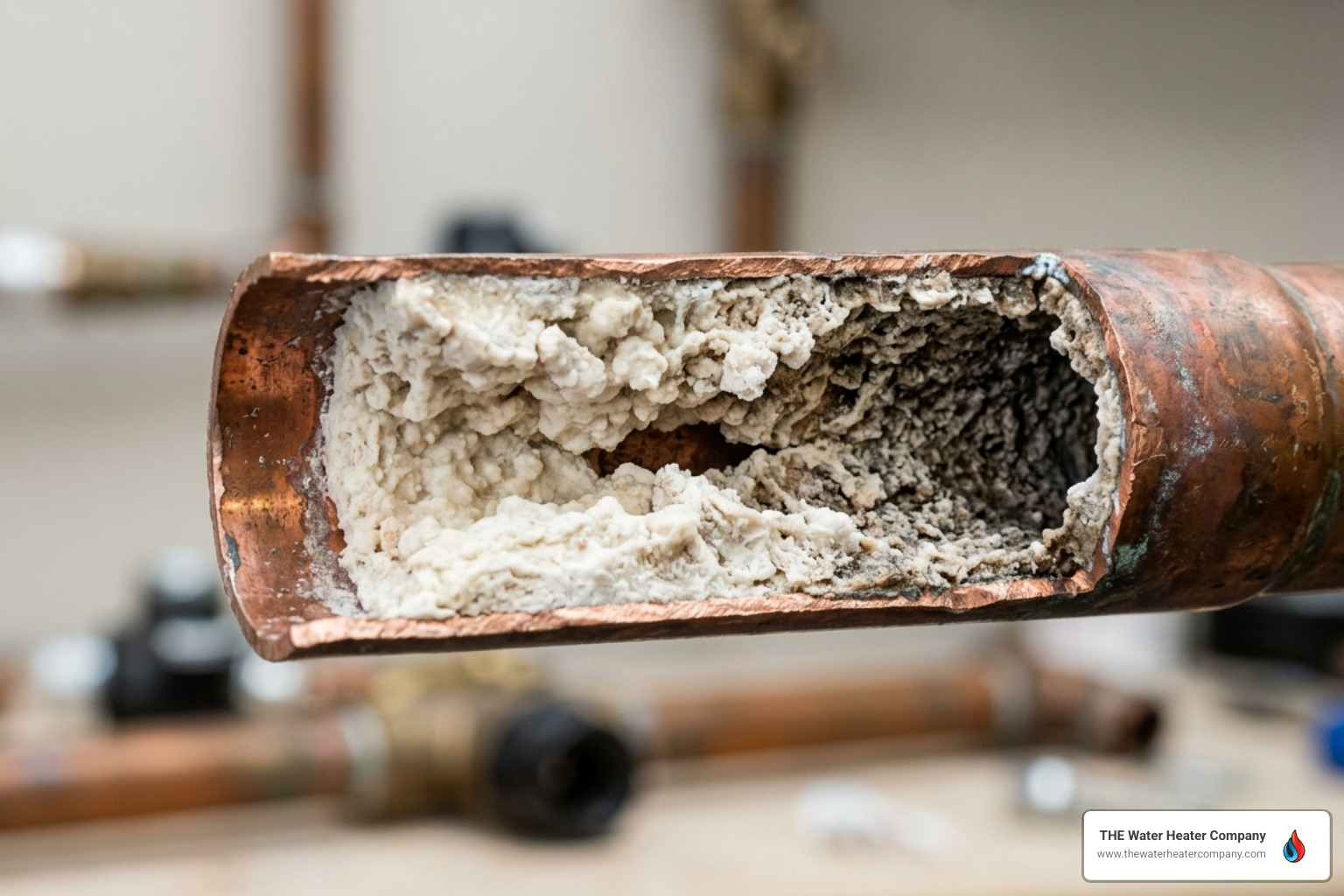
Without following proper tankless maintenance tips for Southern California homes, you may notice your energy bills creeping up. Even worse, the scale can cause the heat exchanger to overheat, leading to cracks, leaks, or total system failure. By staying on top of maintenance, you ensure your system operates at peak energy efficiency, providing the “green” benefits you bought it for in the first place. For more details on how these systems work, check out our page on tankless water heaters.
The Impact of Local Water Quality
Water hardness is measured in “grains per gallon” (GPG). In many parts of Southern California, including Los Angeles, Santa Clarita, and Riverside, the water is classified as “hard” or even “very hard,” often exceeding 10 GPG.
When scale accumulation reaches a critical point, it doesn’t just reduce efficiency—it creates physical flow restriction. You might notice your shower pressure dropping or the water taking longer to get hot. In extreme cases, the unit’s internal sensors will detect the overheating caused by the scale and trigger a “nuisance shutdown,” leaving you with a face full of soap and a cold shower. To mitigate these issues at the source, many homeowners look into water filtration and conditioning systems to soften the water before it ever reaches the heater.
Lifespan and Warranty Protection
A well-maintained tankless water heater can easily last 15 to 20 years, whereas a neglected one in a hard-water area might fail in as little as 7 to 10 years. That is a massive difference in your return on investment.
Furthermore, as of April 2026, manufacturer requirements for warranties have become quite strict. Most major brands—such as Rheem, Navien, and Noritz—explicitly state that damage caused by scale buildup is not covered under warranty. If your heat exchanger fails and you cannot provide proof of regular professional descaling, you could be looking at a repair bill that costs nearly as much as a new unit. Regular maintenance is essentially an insurance policy for your equipment.
The Recommended Maintenance Schedule for SoCal Residents
Consistency is the secret to a long-lasting unit. While some manuals suggest “annual” maintenance, the reality in Southern California is that our water hardness often demands a tighter schedule.
| Water Hardness Level | GPG Rating | Recommended Flush Frequency |
|---|---|---|
| Soft | 0–3.5 GPG | Every 2 years |
| Moderately Hard | 3.5–7 GPG | Annually |
| Hard | 7–10.5 GPG | Every 6–9 months |
| Very Hard | 10.5+ GPG | Every 3–6 months |
For most homes in Pasadena, Irvine, and Santa Ana, we recommend a 6-month interval for a quick check and an annual flushing as the absolute minimum. This ensures that sediment and scale never get the chance to harden into a rock-like substance that is nearly impossible to remove. If you aren’t sure where your home falls on this scale, our maintenance services include water testing to help set the perfect schedule for your specific neighborhood.
Adjusting for High-Usage Households
The more water you use, the more minerals pass through your system. If you have a large family, multiple bathrooms running simultaneously, or a high-demand laundry schedule, your “mineral throughput” is much higher than a single-person household.
This is also a critical consideration for property management and rental property care. Landlords in areas like Van Nuys or Camarillo should never leave tankless maintenance to the tenants. Because these units are more complex than traditional tanks, a “set it and forget it” mentality can lead to expensive emergency calls. We recommend property managers schedule professional service flushes as part of their semi-annual property inspections to keep tenants happy and protect the property’s infrastructure.
Step-by-Step Guide to Descaling and Flushing
Descaling is the process of circulating a cleaning solution through the unit to dissolve mineral deposits. Think of it as a “spa day” for your water heater.
To perform this, your unit must be equipped with service valves (also called isolation valves or purge ports). These are two sets of valves (usually color-coded red and blue) that allow us to shut off the house’s plumbing and create a “closed-loop” for the cleaning solution. If your unit doesn’t have these, you’ll need a professional to install them before maintenance can occur. For help with installations or repairs, see our water heater repair section.
DIY Tankless Maintenance Tips for Southern California Homes
If you are a handy homeowner and want to tackle the flush yourself, here is the general process:
- Safety First: Turn off the power supply (unplug the unit) and the gas supply valve.
- Isolate the Unit: Close the main cold water inlet and hot water outlet valves to the house.
- Connect the Gear: Attach two chemically resistant hoses to the service ports. Connect one hose to a small submersible pump placed inside a 5-gallon bucket. The other hose should lead from the heater back into the bucket.
- The Solution: Fill the bucket with about 4 gallons of food-grade white vinegar or a manufacturer-approved descaling solution.
- Circulate: Open the service port valves and turn on the pump. Let the vinegar circulate through the heat exchanger for 45 to 90 minutes. The harder your water, the longer you should let it run.
- Rinse: After the time is up, turn off the pump, discard the vinegar, and flush the unit with fresh water for 5 minutes to ensure no acidic residue remains.
Common Mistakes to Avoid
While DIY is possible, it’s easy to make mistakes that lead to bigger headaches:
- Incomplete Rinsing: If you don’t flush the vinegar out thoroughly, it can continue to eat away at the copper pipes, leading to pinhole leaks.
- Unapproved Chemicals: Never use harsh drain cleaners or bleach. Only use white vinegar or solutions specifically labeled for tankless water heaters.
- Ignoring the Power: Forgetting to turn off the power or gas can cause the unit to try and fire up while there is no water flow, potentially damaging the internal sensors.
- Cross-Contamination: Ensure your service valves are fully closed so you don’t accidentally pump vinegar into your home’s drinking water lines!
Cleaning Filters and Inspecting Critical Components
Flushing the heat exchanger is only half the battle. There are several other components that need attention to keep the unit running safely.
Most tankless units have a water inlet filter (usually a small screen) designed to catch pebbles or sediment from the city water lines. If this screen gets clogged, your water pressure will drop significantly. Simply unscrew it, rinse it under a faucet, and pop it back in.
Similarly, the air intake and venting system must be clear. In Southern California, it’s common for spiders, birds, or even wind-blown debris from Santa Ana winds to block these vents. A blocked vent can lead to carbon monoxide buildup or cause the unit to shut down due to poor combustion. If you suspect your venting is compromised, it may be time to discuss a water heater replacement or a professional vent reconfiguration.
Professional Tankless Maintenance Tips for Southern California Homes
While a homeowner can clean a filter, a professional inspection goes much deeper. When we visit a home in Santa Barbara or Santa Clarita, we perform a multi-point safety check:
- Pressure Relief Valve (PRV): We test this valve to ensure it will open in an emergency to prevent the unit from exploding due to over-pressurization.
- Gas Line Inspection: We check for tiny leaks and ensure the gas pressure is correct for the unit’s high-BTU demand.
- Combustion Chamber: We inspect the burners for proper flame color and clean out any dust or carbon buildup.
- Sensor Calibration: We verify that the flame sensors and thermistors are reading accurately so the unit doesn’t work harder than necessary.
Monitoring for Warning Signs
Your water heater is “smart”—it will often try to tell you when something is wrong. Pay attention to these red flags:
- Error Codes: If you see a flashing number on your digital display, don’t ignore it. Look it up in your manual or call us for diagnostic services.
- Temperature Fluctuations: If you experience a “cold water sandwich” (hot water, then a burst of cold, then hot again), it’s a sign of scale buildup or a failing flow sensor.
- Strange Noises: Popping, banging, or screeching sounds usually indicate that mineral scale is breaking off or that the fan is struggling.
- Discolored Water: Rusty or “milky” water during a flush is a sign that the unit is heavily scaled or the internal components are corroded.
Frequently Asked Questions about Tankless Upkeep
How often should I flush my tankless water heater in Los Angeles?
Because Los Angeles has notoriously hard water, we recommend flushing your unit every 6 to 9 months. If you have a whole-home water softener installed, you can likely stretch this to once a year.
Can I use regular vinegar for descaling?
Yes, standard food-grade white vinegar is effective for most routine maintenance. However, for units that haven’t been serviced in years, a professional-grade descaling solution may be required to break through heavy “stone” buildup.
Will skipping maintenance void my manufacturer warranty?
In many cases, yes. Most manufacturers require proof of annual maintenance to honor warranty claims on the heat exchanger. Keep your service receipts!
Conclusion
A tankless water heater is a fantastic investment for any Southern California home, but it isn’t a “set and forget” appliance. By following these tankless maintenance tips for Southern California homes, you can enjoy endless hot water, lower utility bills, and the peace of mind that comes with a reliable system.
At THE Water Heater Company, we pride ourselves on being the local experts in Santa Barbara, Santa Clarita, Pasadena, Los Angeles, and beyond. Whether you need a professional flush, a complex repair, or a brand-new installation, our family-owned team is here to provide dependable, expert service. Don’t wait for an error code to ruin your morning—view our current specials for Southern California homes and schedule your maintenance visit today!

The Essential’s
Call THE Water Heater Company today to get immediate help with your water needs.
“
-

“Fair Pricing & Expert Service”
Their technician Gonzo, was clearly very competent and more importantly, he took the time and effort to do a really fantastic job.
-
“Fantastic Service!”
THE Water Heater Company understood the situation I was going through. They were able to help me out and get the job done quickly.
-
“Reasonable Pricing”
Kevin did a great job on replacing my old leaky yet still working water heater. He answered all my questions and explained all the details. -
“Quick Response Time”
He was very informative and responsive to my questions and when I am making a huge investment in my home I want to be sure I am going with a company I could count on and would not cut corners. -
“Real Professionals”
Communication was great with the owner and they were very responsive, ensuring a first-class installation and experience.
-
“Great Service”
Not only did he do the service we needed, but checked the whole unit in addition to other waterline components. -
“Professional and Responsive”
They have repaired my water heater, installed a hot water recirculating pump, and now installed a new water heater. -
“Real Professionals”
It took a little over three hours but no management was necessary as the guys were very competent and clearly have been doing this for a long time.