Same-Day Service Available 7 Days a Week*

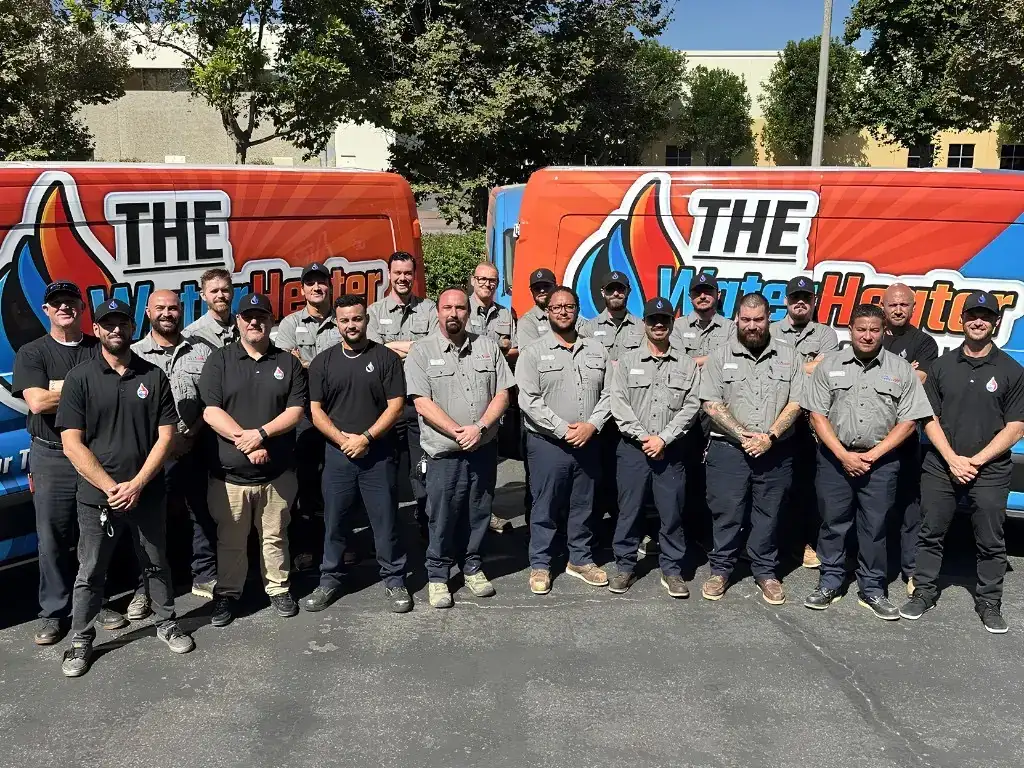
THE Water Heater Company team

How Does a Water Heater Work?

Spin it, cut it open, and watch it run. Explore working 3D models of a tank and a tankless water heater — every major part explained in plain English, from the anode rod to the heat exchanger.

  • CA Contractors License #1045699
  • 4.9★ across 3,270+ verified reviews
  • $25,000 Good Contractors List guarantee

By the THE Water Heater Company team, reviewed by Anthony Hamilton, Co-Founder (CA Contractors License #1045699) · Published July 15, 2026 · Based on the tank and tankless systems our specialists install and service across Los Angeles, Orange & Ventura Counties every day.

A water heater works by transferring heat from a gas flame (or electric element) into your home's water — either by keeping a storage tank of water hot around the clock, or by heating water instantly as it flows through a copper heat exchanger. Those are the two machines living in American homes today: the storage tank, which wins on simplicity and upfront cost, and the tankless, which wins on endless supply and efficiency.

Reading about it is one thing — seeing inside is another. Below you can orbit both units in 3D, slide the cutaway open, switch the burner and water flow on, and tap any numbered part to learn what it is, what it does, how it fails, and what keeps it alive. When a part in your own garage starts misbehaving, you'll know exactly what you're looking at.

Explore in 3D

Take One Apart Without Flooding the Garage

Drag to orbit, pinch or scroll to zoom, and tap the numbered hotspots — or use the parts list, which works with or without the 3D viewer.

Tank Water Heater — labeled cutaway

Tank water heater cutaway diagram

Tankless Water Heater — labeled cutaway

Tankless water heater open-cabinet diagram140

Tank Water Heater

A tank water heater stores water in an insulated, glass-lined steel vessel and keeps it hot around the clock. Cold water enters through the dip tube and sinks to the bottom, the gas burner underneath heats it, exhaust rises through a central flue that doubles as a heat exchanger, and finished hot water floats to the top where the hot outlet draws it off the moment you open a tap.

15 parts — select one to explore

Outer steel jacket

What it is
The painted steel skin you actually see — the cylinder that gives the unit its shape.
What it does
It protects the insulation and tank inside, carries the labels and ratings plate, and gives the seismic straps something rigid to grip.
How it fails
The jacket itself mostly suffers cosmetic rust and dents — but rust streaks or damp spots on it are usually a message from a fitting or the tank inside. Water tracks show up on the jacket first.
Maintenance & service
Keep the area around it clear and dry, and treat any new rust streak as a reason to look deeper. If water is weeping from under the jacket, the inner tank has usually failed — that is a replacement, not a repair.

Insulation layer

What it is
A thick foam blanket injected between the jacket and the inner tank.
What it does
It keeps the heat you already paid for inside the tank, so the burner relights less often while the water sits ready (what the industry calls standby loss).
How it fails
Insulation doesn't break — it's simply thinner on older units. A tank from the 2000s loses noticeably more heat sitting still than a current unit, which shows up on the gas bill.
Maintenance & service
Nothing to service — but poor standby efficiency is one of the quiet reasons replacing a 12-year-old heater often pays for part of itself.

Glass-lined inner tank

What it is
The actual pressure vessel: a welded steel tank with a thin vitreous glass coating fused to the inside.
What it does
It holds 40–75 gallons of hot water at full household pressure, around the clock, for years. The glass lining is what keeps the water from touching bare steel.
How it fails
Heating and cooling cycles open hairline cracks in the glass, and rust starts wherever water finds steel. Once the tank wall rusts through it leaks — and a leaking tank cannot be patched or relined in the field.
Maintenance & service
You can't service the lining directly; you protect it by keeping the anode rod alive and the sediment flushed. A tank that's leaking from the vessel itself is end-of-life — plan the replacement before it decides the timing for you.

Anode rod

What it is
A magnesium or aluminum rod threaded into the top of the tank, hanging down into the water.
What it does
It corrodes on purpose. Because the rod's metal gives up electrons more readily than steel, corrosion attacks the rod instead of the tank — it is the single part most responsible for how long the tank lives.
How it fails
It gets consumed — often down to a bare wire in three to five years, faster in softened water. Once the rod is gone, the tank itself becomes the anode, and the countdown starts. A rotten-egg smell in hot water is often anode chemistry talking.
Maintenance & service
Have it inspected when the tank is flushed and replace it when it's mostly consumed — a rod costs a fraction of a tank. Our $99 flush visit is the natural time to check it.

Dip tube

What it is
A plastic tube that runs from the cold-water inlet at the top of the tank down to near the bottom.
What it does
It delivers incoming cold water to the bottom of the tank, where the burner is, so it doesn't dilute the hot water already floated at the top. That's why a tank can serve hot water while it's still reheating.
How it fails
Old dip tubes turn brittle, crack, or snap off. Cold water then short-circuits straight across the top to the hot outlet — the classic symptom is showers that turn lukewarm far too fast even though the burner runs fine.
Maintenance & service
A failed dip tube is a genuinely worthwhile repair on a younger tank. If yours is already 10+ years old, it's worth pricing the repair against replacement before spending the money.

Hot water outlet

What it is
The pipe that draws finished hot water from the very top of the tank.
What it does
Hot water rises, so the outlet skims the hottest water in the vessel and sends it to your fixtures the moment a tap opens.
How it fails
The usual trouble is at the connection: galvanic corrosion where copper meets steel without dielectric protection, or weeping threads. Corroded fittings choke flow long before they leak outright.
Maintenance & service
White or green crust on the top fittings is worth a professional look — it's far cheaper to renew a fitting than to let it seize to the tank.

T&P relief valve & discharge pipe

What it is
The temperature & pressure relief valve on the side or top of the tank, with a pipe running down toward the floor.
What it does
It is the heater's last-resort safety. If the tank ever reaches 210°F or 150 psi, the valve opens and dumps water before pressure can build to a dangerous level. The discharge pipe routes that scalding release safely down to near the floor — California code is specific about its size, material, and termination.
How it fails
Mineral deposits can seize the valve shut (the dangerous failure) or hold it slightly open so it drips constantly (the annoying one). A discharge pipe that's missing, capped, or reduced is an automatic code violation.
Maintenance & service
Never, ever cap a dripping T&P valve. Constant dripping can also signal house pressure that's too high — that's a diagnosis visit, not a plug. Every installation we do gets the T&P and discharge piped to current code.

Drain valve

What it is
The spigot near the bottom of the jacket, usually brass or plastic.
What it does
It's the service door for the tank: flushing sediment, draining for repairs, and emptying the tank at end of life all happen here.
How it fails
Cheap plastic drain valves crack and won't reseal, and any drain valve can clog solid with the very sediment it's supposed to release — often discovered at the worst possible time.
Maintenance & service
Opening it once a year as part of a proper flush keeps it working and proves it still seals. That's exactly what our $99 flush visit does.

Gas control valve & thermostat

What it is
The control box on the lower front of the tank with the temperature dial and pilot controls.
What it does
Its thermostat probe reads the water temperature through the tank wall and meters gas to the burner to hold your set point, while its safety circuit shuts gas off if the pilot or igniter can't prove a flame.
How it fails
Classic symptoms: a pilot that won't stay lit, a status light blinking an error pattern, or no hot water with gas clearly on. When the control valve fails it's generally replaced as a unit, not repaired.
Maintenance & service
Set it warm enough for comfort but remember scald risk climbs quickly past 120°F. If the pilot drops repeatedly, stop relighting it hourly and get it diagnosed — that's a safety circuit doing its job.

Burner assembly

What it is
The ring burner that lives in the combustion chamber under the tank, behind the little inspection window.
What it does
It's the engine room: gas and air mix and burn here, and the flame heats the steel tank bottom directly. A healthy burner runs a steady, mostly-blue flame.
How it fails
Dust, lint, and pet hair starve it of air — flames go lazy and yellow, soot builds, and ignition gets rough. Sediment on the other side of the tank bottom makes the burner work longer against a rock blanket.
Maintenance & service
Combustion problems are not a DIY zone: flame color, sooting, or a burner that rumbles deserve a professional the same day you notice them.

Central flue & baffle

What it is
A chimney that runs straight up through the middle of the tank, with a twisted metal baffle hanging inside it.
What it does
Hot exhaust rises through the flue and the baffle slows and stirs it, so the gases give up more heat to the water surrounding the flue on the way out. It's a second heat exchanger hiding in plain sight.
How it fails
A blocked or disconnected flue is the serious one — combustion gases (including carbon monoxide) can spill into the room instead of drafting outside. That's an immediate shut-it-down problem.
Maintenance & service
Any sign of melting, staining, or corrosion where the flue exits the heater deserves a same-day professional visit. Draft is checked on every installation and diagnostic we run.

Exhaust draft hood

What it is
The open metal collar that sits on top of the heater where the flue meets the vent pipe.
What it does
It mixes room air into the exhaust stream to stabilize the draft, and it acts as a relief opening so a gust down the vent doesn't blow out the burner.
How it fails
If it's tilted, blocked, or the vent above it is undersized, exhaust spills at the hood instead of rising — soot or heat discoloration around it is the tell.
Maintenance & service
Keep storage away from it, and never let anything rest across the top of a water heater. Spillage marks mean call now, not at the weekend.

Sediment layer

What it is
Not a factory part — a blanket of hardness minerals (mostly calcium carbonate) that drops out of Southern California's hard water and settles on the tank bottom.
What it does
Nothing good. It insulates the water from the burner, so recovery slows and the steel bottom overheats. The popping and rumbling many tanks make is water flashing to steam underneath the sediment blanket.
How it fails
Left alone it hardens, chokes the drain valve, cooks the tank bottom, and shortens the tank's life. It's the single most preventable water heater killer in our service area.
Maintenance & service
An annual flush clears it before it hardens — that's the whole point of our $99 flush special, and the same visit checks the anode and T&P.

Cold & hot water connections

What it is
The pair of fittings on top — cold supply in (with its shutoff valve) and hot line out, usually joined with flexible braided connectors.
What it does
They tie the heater into the house plumbing and, in earthquake country, the flexible connectors are what let the unit shudder without snapping a rigid pipe.
How it fails
Threads weep, old gate valves seize half-open, and mismatched metals corrode. A cold-side shutoff that won't actually shut is a problem you discover during an emergency.
Maintenance & service
Know where that cold shutoff is before you need it — our shutdown guide walks you through it. Corroded or seized connections get renewed as part of any replacement we install.

Seismic straps (CA code)

What it is
Two heavy steel straps — one in the upper third, one in the lower third of the tank — anchored into wall framing.
What it does
In an earthquake, an unstrapped water heater becomes a 500-pound projectile attached to a gas line. California law requires both straps on residential water heaters for exactly that reason.
How it fails
The common failures are human: only one strap, straps into drywall instead of studs, or straps left off entirely after a bargain install. It passes nobody's inspection.
Maintenance & service
Every tank we install is double-strapped to current code as part of the base price — and if you want quake protection at the gas line itself, an automatic seismic shutoff valve is the next step up.

Tankless Water Heater

A tankless water heater stores nothing: it heats water only while a tap is running. When the flow sensor detects moving water, the control board spins up the combustion fan, lights the modulating burner rack, and drives the flame across a copper heat exchanger that takes the water from cold to your set temperature in the seconds it spends snaking through the coil.

11 parts — select one to explore

Wall-mount cabinet

What it is
The whole water heater — a sealed cabinet about the size of a carry-on suitcase, hung on the wall.
What it does
It replaces a 50-gallon tank with a machine that heats water only while a tap is running, which is why it never runs out and why it sips gas between uses.
How it fails
The cabinet itself rarely fails; what matters is what's around it — clearances, gas supply, and venting. An undersized unit 'fails' every day at 6 PM when two showers run at once.
Maintenance & service
Sizing is the decision that makes or breaks a tankless. We size by real fixture demand and incoming water temperature, not by guesswork.

Copper heat exchanger coil

What it is
A serpentine run of copper tube and fins directly above the burner — the heart of the machine.
What it does
Water snakes through it while the flame plays across it, picking up its full temperature rise in the seconds it takes to pass through. This one part does the job the entire 50-gallon tank does in a storage heater.
How it fails
Scale. Southern California's hard water plates the inside of the coil with mineral, choking flow and creating hot spots — you see temperature swings and error codes long before it fails outright. Frozen or overheated exchangers can crack, and that's usually the end of the unit.
Maintenance & service
An annual descale (flushing food-grade descaling solution through the isolation valves) is the single most important tankless maintenance item — most manufacturers expect it in hard-water areas to keep the heat exchanger warranty meaningful.

Modulating burner rack

What it is
A bank of small burners under the heat exchanger that light in stages.
What it does
It modulates — throttling the flame up and down smoothly to match exactly how much hot water is flowing. A trickle for hand-washing gets a whisper of flame; two showers get the full rack.
How it fails
Ignition faults and flame losses, usually announced by an error code on the display. Gas starvation from an undersized supply line makes a big unit stumble at full fire.
Maintenance & service
Repeated ignition-failure codes are a call-us symptom, not a reset-it-forever routine. Diagnosis usually starts with the code showing on the display.

Combustion fan

What it is
A motorized fan inside the sealed combustion path.
What it does
It force-feeds the burner with air and pushes exhaust out through the venting, running a purge cycle before ignition and after shutdown. Sealed, fan-driven combustion is why a tankless can vent in plastic pipe.
How it fails
Bearings whine as they age, and a fan that can't hit its commanded speed throws its own error code and blocks ignition — by design, for safety.
Maintenance & service
A new whine or whistle from the cabinet is worth a service visit before it becomes a no-hot-water morning.

Gas valve

What it is
The metering valve where the gas line enters the unit.
What it does
It feeds the burner rack exactly the gas the control board asks for, from pilot-light-small to nearly 200,000 BTU — a huge operating range that demands a properly sized gas line behind it.
How it fails
The valve itself is reliable; the classic field problem is a gas line sized for the old tank heater starving a new tankless at full fire. Symptoms: temperature sag and combustion codes when demand peaks.
Maintenance & service
Gas line sizing is part of every tankless quote we write — it's one of the hidden line items that separates a real installation from a cheap swap.

Flow sensor

What it is
A tiny turbine in the cold inlet that spins whenever water moves.
What it does
It's the trigger for everything: when it senses enough flow (roughly half a gallon per minute on most units), it tells the board to start the fan, light the burner, and begin heating. No flow, no fire.
How it fails
Debris or scale jams the turbine, and the unit either refuses to fire or short-cycles — hot, cold, hot again. Low-flow fixtures can also sit right at the trigger threshold and confuse it.
Maintenance & service
A flow-sensor cleaning is routine service work, and it's one more thing an annual descale keeps healthy.

Control board & status display

What it is
The computer behind the front panel, with a small status display on the cabinet face.
What it does
It reads every sensor, modulates fan and flame, protects the unit from unsafe states — and when something is off, it tells you exactly what, as a two-digit error code on the display.
How it fails
Boards themselves rarely die; they report everyone else's failures. The error code showing when your shower goes cold is the single most useful thing you can tell us on the phone.
Maintenance & service
Before you call, note the code. We publish plain-English error-code guides for the major brands we service — look yours up and you'll usually know how urgent it is.

Inlet, outlet & isolation valves

What it is
The pair of quarter-turn valves (blue for cold in, red for hot out) with small service ports, mounted where the water lines meet the unit.
What it does
They connect the unit to the house — and the service ports are the access points a technician uses to circulate descaling solution through the heat exchanger without unhooking anything.
How it fails
The failure is usually absence: bargain installs skip isolation valves entirely, which turns every future descale into a bigger, more expensive job.
Maintenance & service
If you're getting a tankless installed, insist on isolation valves in the quote (ours always include them). If yours doesn't have them, we can add them at the first service.

PVC intake & exhaust venting

What it is
Two plastic pipes leaving the top of the cabinet — one drawing fresh air in from outside, one carrying exhaust out.
What it does
Because a condensing tankless wrings so much heat out of its exhaust, the flue gases are cool enough to vent in PVC. The sealed intake means the unit doesn't compete with your family for indoor air.
How it fails
Venting fails by installation error: wrong slope (condensate pools), wrong termination clearances, or crushed/blocked runs. The unit protects itself with vent-blockage error codes.
Maintenance & service
Vent routing and termination are code-inspected items on every permitted install — one more reason the permit matters.

Condensate drain

What it is
A small drain line from the bottom of the cabinet, often routed through a neutralizer cartridge.
What it does
Condensing that exhaust turns water vapor back into liquid — mildly acidic condensate that has to drain safely away, neutralized where code requires it.
How it fails
A kinked or blocked condensate line backs acidic water up into the unit (error codes, corrosion) or drips it where it stains and damages.
Maintenance & service
It's a 30-second check on every service visit: line clear, trap wet, neutralizer media not spent.

Scale deposits (inside the exchanger)

What it is
Not a part — the chalky mineral crust that hard water leaves inside the heat exchanger's copper passages.
What it does
Nothing good. Scale narrows the waterways, insulates the water from the flame, and forces the unit to run hotter metal temperatures for the same output.
How it fails
You'll see it as temperature swings, falling flow, rising gas use, and eventually scale-related error codes. In our hard-water service area it is the number-one tankless killer.
Maintenance & service
Annual descaling dissolves it before it hardens — cheap insurance on a four-figure appliance. If your unit has gone years without one, book it this month, not eventually.

Next step

Now that you know how they work — which one belongs in your home?

The honest answer depends on your household's hot water demand, your gas and venting situation, and how long you plan to stay. Our comparison guide walks the trade-offs without the sales pitch — or skip ahead and price both options for your actual house in about two minutes.

Common Questions

Frequently Asked Questions About How Water Heaters Work

Answer-first explanations of the questions homeowners ask us every day — from anode rods to rumbling tanks.

A tank water heater keeps 40–75 gallons hot around the clock inside an insulated, glass-lined steel vessel. Cold water enters through the dip tube and drops to the bottom, the gas burner underneath heats it, exhaust rises through a central flue that transfers even more heat on the way out, and hot water floats to the top where the outlet draws it the moment you open a tap. A sacrificial anode rod corrodes instead of the tank, and the T&P relief valve stands guard as the safety of last resort — explore every one of those parts in the 3D model above.

A tankless water heater stores nothing — it heats water only while a tap runs. A small turbine flow sensor detects moving water and tells the control board to spin up the combustion fan and light the modulating burner rack, which throttles its flame to match your exact demand. The water picks up its full temperature rise in the seconds it spends snaking through the copper heat exchanger, so hot water never runs out, but the unit must be sized correctly for your home's peak demand — that's why professional tankless sizing matters more than any spec sheet.

The anode rod is a magnesium or aluminum rod hanging inside the tank that corrodes on purpose — its metal gives up electrons more readily than steel, so corrosion eats the rod instead of your tank. It's typically consumed in three to five years (faster in softened water), and once it's gone the tank itself starts corroding. Replacing a spent rod costs a fraction of a new water heater, which is why we check it during every $99 flush visit.

That sound is almost always sediment — a blanket of hardness minerals that settles on the tank bottom in Southern California's hard water. Water trapped underneath it flashes to steam when the burner fires, and the pops and rumbles you hear are those steam bubbles collapsing. The sediment also insulates the water from the flame, so the tank recovers slower and the steel bottom overheats. An annual flush clears it before it hardens into a permanent problem.

A typical tank water heater lasts about 8–12 years, and a well-maintained tankless unit often reaches 15–20 — the difference comes down to water quality and maintenance. Anode replacement and annual flushing stretch a tank's life; annual descaling does the same for a tankless heat exchanger. Age matters most at the decision point: once a tank is past ten years, money spent on major repairs is usually better put toward planning the replacement on your schedule instead of the tank's.

Immediately, for anything involving gas, combustion, or venting: gas smells, soot, scorch marks, a pilot that repeatedly drops, or exhaust spilling at the draft hood. The same goes for water leaking from the tank vessel itself (that's a failed tank, not a repair) and a T&P relief valve that drips or has ever been capped. Resetting a tankless error code once is fine — needing to reset it weekly is a diagnosis visit. Our specialists answer 24/7 at (877) 798-7487, and same-day repair is the norm, not a rush fee.

THE Water Heater Company full team

Ready for hot water?

Something In Your Garage Misbehaving?

Now you know the part — we know the fix. Talk to a live water heater specialist 24/7, or price a repair or replacement online.