Understanding Water Heater Lifespan and Why Maintenance Matters
Before diving into the “how,” it is essential to understand the “how long.” As of May 2026, water heater technology has advanced, but the laws of physics and chemistry—specifically corrosion—remain the same. The average lifespan of your unit depends heavily on its type and how well you treat it.
- Traditional Tank Water Heaters: These units typically last 8–12 years. Because they hold water constantly, they are the most susceptible to internal rust and sediment buildup.
- Tankless Water Heaters: Often called “on-demand” heaters, these can last 15–20 years or more. Since they don’t store water, they don’t suffer from the same tank corrosion, though they are sensitive to mineral scaling.
- Heat Pump (Hybrid) Water Heaters: These high-efficiency units generally last 10–15 years. They use electricity to move heat from the air into the water, requiring a bit more maintenance for air filters and condensate drains.
| Unit Type | Average Lifespan | Primary Longevity Factor |
|---|---|---|
| Traditional Tank | 8–12 Years | Anode rod health & sediment levels |
| Tankless | 15–20 Years | Regular descaling of heat exchanger |
| Heat Pump | 10–15 Years | Airflow and electrical maintenance |
Understanding The Lifespan of a Water Heater: Knowing When to Replace is the first step in home management. By staying ahead of the curve, you Don’t Get Left in the Cold: How Long Your Water Heater Really Lasts by surprise.
How to Extend the Life of Your Water Heater Through Routine Flushing
If there is one “secret” to how to extend the life of your water heater, it is flushing the tank. Over time, minerals like calcium and magnesium settle at the bottom of the tank. This “sediment” creates a thick layer of insulation between the burner (or heating element) and the water.
When this happens, your heater has to work twice as hard to get the water hot. This causes the metal tank to overheat and eventually crack. In Southern California, where hard water is a common reality from Santa Barbara down to Irvine, sediment builds up faster than in other parts of the country.
We recommend an annual flush for most homes. However, if you live in a high-mineral area like Santa Clarita or parts of Los Angeles, flushing every six months is a smarter move. The Importance of Flushing Your Water Heater and How Often You Should Do It cannot be overstated; it restores efficiency and prevents that annoying “popping” sound you might hear when the unit is running.
For a deeper dive into timing, check out The Homeowner’s Guide to Water Heater Flushing Frequency. Taking these steps is the best way How to Prevent Sediment Buildup in Your Water Heater for Better Performance.
Critical Components: Anode Rods and T&P Relief Valves
The Sacrificial Anode Rod
Think of the anode rod as your water heater’s personal bodyguard. It is a long metal rod (usually magnesium or aluminum) that hangs inside the tank. Its sole job is to corrode so your tank doesn’t have to. Through a process called electrolysis, corrosive elements in the water attack the rod instead of the steel tank lining.
Once the rod is fully “sacrificed” (usually every 3–5 years), those corrosive elements move on to the tank itself. Replacing an anode rod is a simple, affordable task that can literally double the life of your heater. If you notice a “rotten egg” smell in your hot water, it might be a sign that your anode rod has reacted with bacteria and needs a zinc-alloy replacement.
The T&P Relief Valve
The Temperature and Pressure (T&P) relief valve is the most important safety feature on your unit. If the pressure or temperature inside the tank gets too high, this valve opens to release water and prevent a dangerous explosion.
We suggest testing this valve once a year. Simply lift the lever briefly to ensure water flows out of the discharge pipe, then let it snap back. If it leaks afterward or doesn’t release water at all, it needs immediate replacement. Reviewing Water Heater Safety Tips: Preventing Accidents and Extending Life and our Water Heater Maintenance 101 guide can help you perform these checks safely.
Optimizing Your System for Longevity and Efficiency
Efficiency and longevity go hand-in-hand. The less “stress” your system is under, the longer it will last.
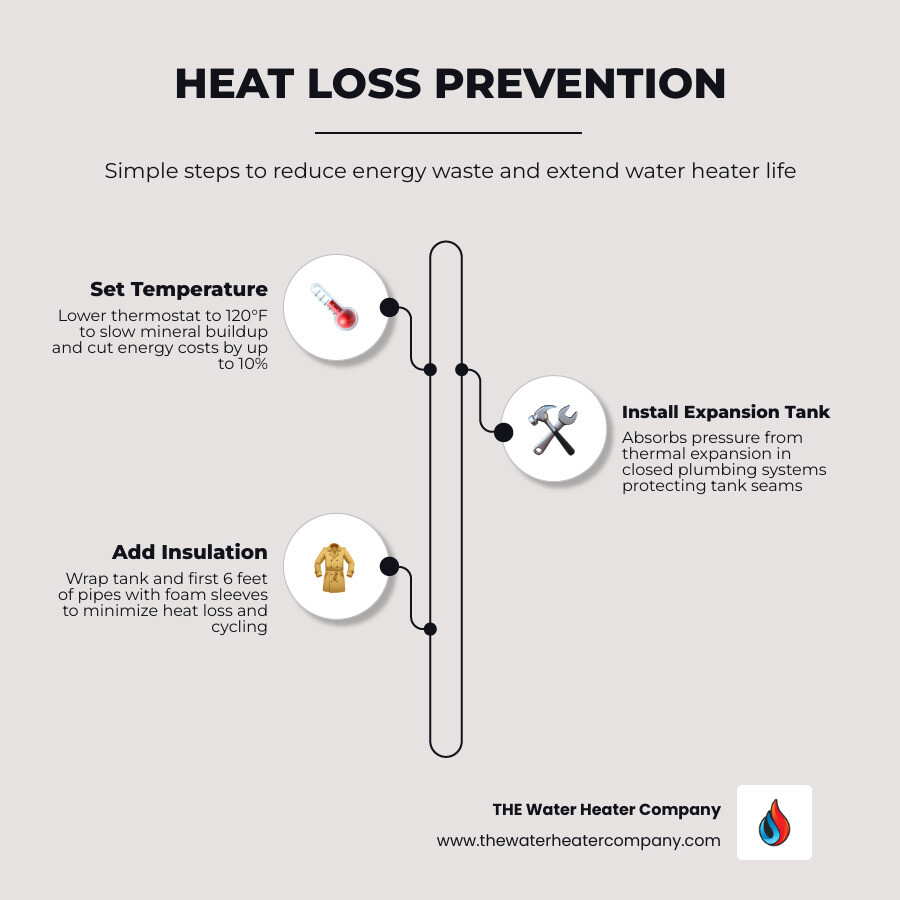
- The 120°F Sweet Spot: Most manufacturers ship units set to 140°F, but 120°F is the industry standard for safety and longevity. It slows down mineral scale formation and can save you up to 10% on energy costs.
- Expansion Tanks: In many Southern California cities, plumbing systems are “closed,” meaning water has nowhere to go when it expands during heating. An expansion tank absorbs this extra pressure, protecting your water heater’s internal seams.
- Insulation: Wrapping your older tank in an insulation blanket and adding foam sleeves to the first six feet of hot and cold water pipes prevents heat loss. This means the heater cycles less often, reducing wear and tear.
How to extend the life of your water heater with water softeners
In Southern California, our water is notoriously “hard.” This means it’s packed with calcium and magnesium. While these minerals aren’t harmful to drink, they are a nightmare for plumbing. Installing a water softener is one of the most effective ways to protect your investment. By removing the minerals before they ever reach the heater, you eliminate the primary cause of tank failure.
Learn more about How Hard Water Affects Your Water Heater and How to Protect It and the specifics of How Hard Water and Chemicals Hurt Your Water Heater to see why filtration is a game-changer.
How to extend the life of your water heater: Tankless descaling
Tankless units are marvels of engineering, but they have tiny passages in their heat exchangers that can easily clog with scale. Descaling (or flushing with a food-grade vinegar solution) is the secret to a 20-year tankless life.
You should also clean the air intake and the water inlet filter every few months to ensure proper flow. For a complete breakdown, read Why Descaling Is the Secret to a Long Tankless Life and our guide on Everything You Need to Know About Tankless Water Heater Maintenance. Keeping these units “happy” ensures you never run out of hot water—see How to Keep Your Tankless Water Heater Happy and Healthy for more.
When to Call a Professional in Southern California
While many maintenance tasks are DIY-friendly, some situations require the expertise of a technician. If you live in Pasadena, Camarillo, or Van Nuys, you know that local building codes and water conditions can be complex.
Call us immediately if you notice:
- Rusty Water: This often indicates the tank is corroding from the inside out.
- Rumbling or Banging Noises: This is usually the sound of “kettling,” where steam bubbles struggle to escape through a thick layer of sediment.
- Leaks: Even a small drip can lead to catastrophic water damage or mold.
- Inconsistent Temperatures: This could be a failing thermostat or a broken dip tube.
Professional diagnostics ensure that you aren’t just putting a bandage on a bigger problem. Furthermore, many manufacturer warranties require proof of professional maintenance to remain valid. Understanding the Top Benefits of Replacing Your Old Water Heater Before It Fails can save you thousands in emergency cleanup costs. If you have a high-end unit, make sure you know How to Maintain Your Southern California Tankless Water Heater to protect that investment.
Frequently Asked Questions about Water Heater Maintenance
What is the average lifespan of a water heater in 2026?
In 2026, a standard tank water heater typically lasts 8–12 years. Tankless models can last 20 years, and heat pump units usually see 10–15 years of service. Proper maintenance, specifically anode rod replacement and flushing, is the “X-factor” that can push these units toward the higher end of those ranges.
How often should I flush my water heater in hard water areas like Santa Clarita?
In areas with high mineral content like Santa Clarita, Santa Ana, and Irvine, we recommend flushing your tank every 6 months. Standard annual flushing may not be enough to prevent the sediment from hardening into a “scale” that is difficult to remove.
Why is the anode rod called a “sacrificial” rod?
It’s called “sacrificial” because it is designed to be destroyed. It is made of a more “active” metal than the steel of your tank. This makes it the preferred target for oxidation. The rod gives its “life” to ensure the tank remains rust-free.
Conclusion
At The Water Heater Company, we take pride in being the trusted authority for Southern California homeowners. From the coastal homes of Santa Barbara to the bustling neighborhoods of Los Angeles and Irvine, our family-owned business is dedicated to keeping your water hot and your stress levels low.
Knowing how to extend the life of your water heater isn’t just about saving money; it’s about the peace of mind that comes with a reliable home. Whether you need a simple annual tune-up, a complex repair, or a high-efficiency replacement, our expert technicians are ready to provide fast, reliable service with the best warranties in the industry.
Don’t wait for a leak to take action. Schedule your professional water heater replacement or maintenance today and let us help you get the most out of your home’s most important appliance.

The Essential’s
Call THE Water Heater Company today to get immediate help with your water needs.
“
-

“Fair Pricing & Expert Service”
Their technician Gonzo, was clearly very competent and more importantly, he took the time and effort to do a really fantastic job.
-
“Fantastic Service!”
THE Water Heater Company understood the situation I was going through. They were able to help me out and get the job done quickly.
-
“Reasonable Pricing”
Kevin did a great job on replacing my old leaky yet still working water heater. He answered all my questions and explained all the details. -
“Quick Response Time”
He was very informative and responsive to my questions and when I am making a huge investment in my home I want to be sure I am going with a company I could count on and would not cut corners. -
“Real Professionals”
Communication was great with the owner and they were very responsive, ensuring a first-class installation and experience.
-
“Great Service”
Not only did he do the service we needed, but checked the whole unit in addition to other waterline components. -
“Professional and Responsive”
They have repaired my water heater, installed a hot water recirculating pump, and now installed a new water heater. -
“Real Professionals”
It took a little over three hours but no management was necessary as the guys were very competent and clearly have been doing this for a long time.