Why Every California Homeowner Needs an Earthquake Preparedness Plan
Following earthquake preparedness tips for California homeowners could be the difference between walking away from a disaster and losing everything. California sits atop nearly 16,000 known earthquake faults, and most residents live within 30 miles of an active one. That’s not a distant risk — it’s a daily reality.
Here are the most important earthquake preparedness steps for California homeowners:
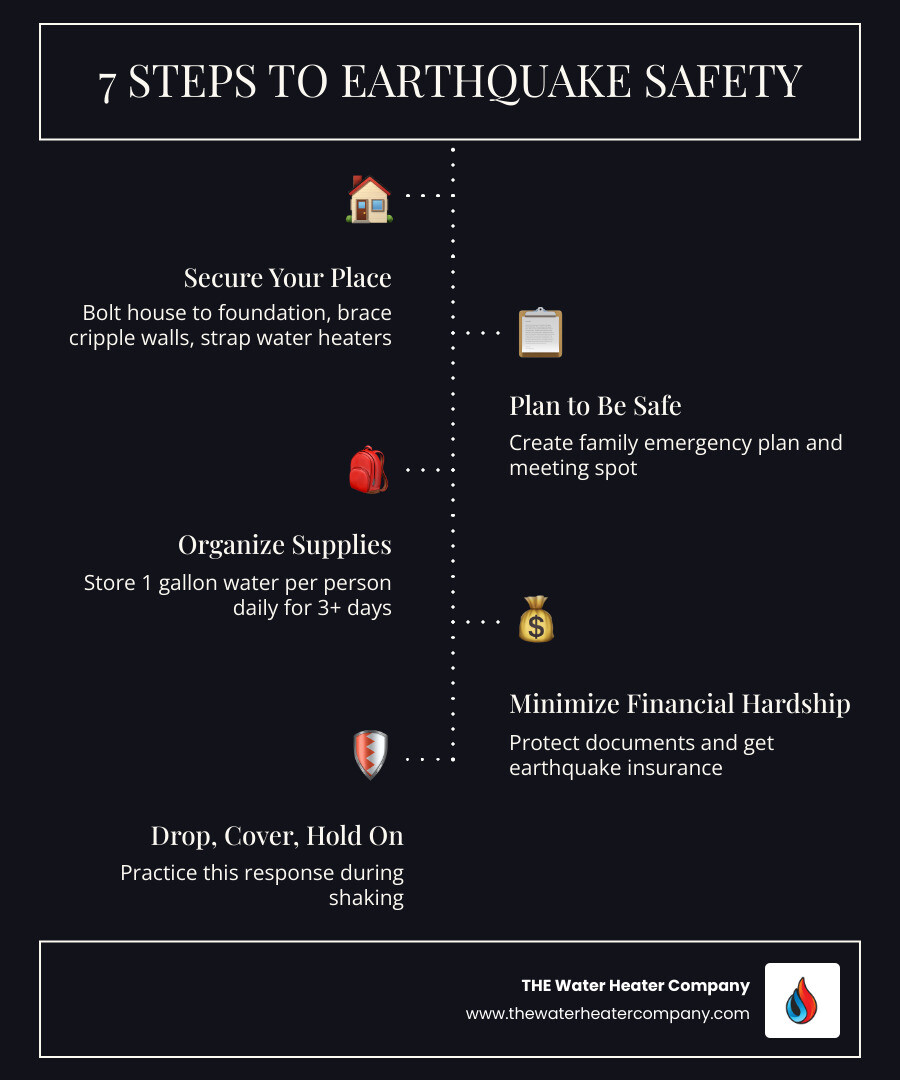
- Secure your home structurally – Bolt your house to its foundation, brace cripple walls, and strap your water heater to wall studs (required by California law)
- Know your home’s vulnerabilities – Homes built before 1980 are especially at risk; check for unreinforced masonry, soft first stories, and pier-and-post foundations
- Build an emergency kit – Store at least 1 gallon of water per person per day for 3 days, plus food, flashlights, first aid supplies, and medications
- Make a family plan – Designate a meeting spot, assign an out-of-city contact, and practice Drop, Cover, and Hold On
- Download early warning tools – The MyShake app can give you 10 to 60 seconds of advance notice before shaking begins
- Protect your finances – Gather important documents in a grab-and-go bag and consider purchasing separate earthquake insurance, since standard homeowners policies don’t cover earthquake damage
- Know post-quake utility procedures – Learn how to safely shut off your gas and water to prevent fires and flooding after a quake
The stakes are real. After the 1989 Loma Prieta earthquake, 16,000 housing units were left uninhabitable, and countless families found themselves displaced without even basic necessities. Since 1971, earthquake-related losses in California have topped $5 billion — and that number keeps climbing.
This guide walks you through everything you need to know: from identifying structural weaknesses in your home to building a family emergency plan, understanding your legal obligations, and protecting your finances. Whether you’ve lived in California your whole life or just moved here, preparation is the one thing you can control.
I’m Anthony Hamilton, Co-Founder and CEO of THE Water Heater Company, and after years of working in Southern California homes, I’ve seen how unbraced water heaters and unprepared plumbing systems can turn a manageable earthquake into a costly disaster. My team and I have put together this complete guide to earthquake preparedness tips for California homeowners so you can protect your home, your family, and your plumbing before the next shake hits.
Understanding Structural Weaknesses in California Homes
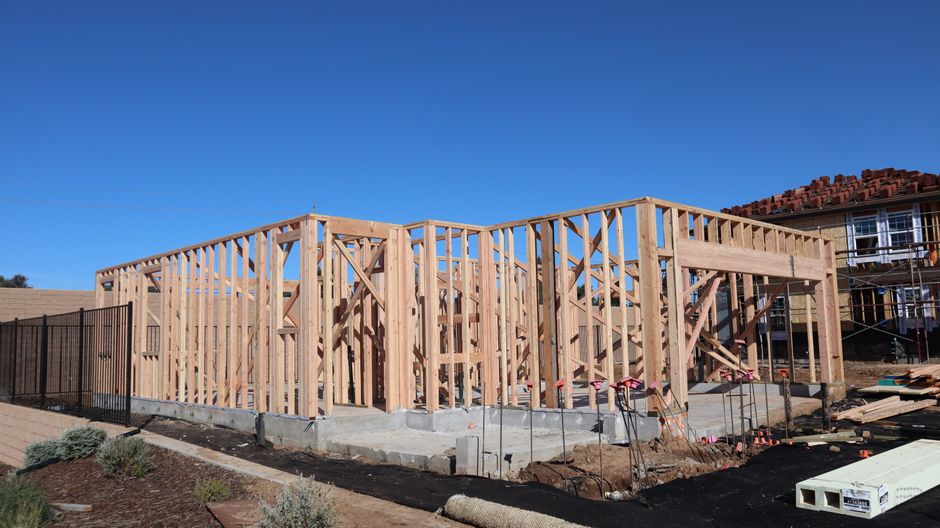
If your home was built before 1980, it may not meet modern seismic building codes. Prior to these updates, homes were often built without the structural reinforcement needed to withstand violent lateral shaking. When the ground moves, a house that isn’t properly anchored or braced can slide off its foundation, collapse, or suffer catastrophic structural failure.
To protect your family and your investment, you must first understand the most common structural vulnerabilities in California residential properties:
- Unbraced Cripple Walls: These are short wood-stud walls enclosing the crawl space beneath a raised foundation. If these walls are not covered with structural plywood panels, they can sway and collapse under seismic pressure, dropping the entire house onto the ground.
- Soft First Stories: This is a common design where a living space is built directly over a garage or has large windows on the ground floor. Without reinforced steel or engineered wood framing, the ground level lacks the lateral strength to support the weight of the upper floor during a quake.
- Unreinforced Masonry (URM): Older brick or stone chimneys, walls, and foundations lack internal steel reinforcement (rebar). They are highly prone to crumbling and collapsing outward onto roofs, yards, or walkways.
- Post and Pier Foundations: Common in older homes, this system uses wooden posts resting on concrete piers. Without continuous concrete footings and structural bracing, these posts can shift or collapse entirely.
- Hillside Homes: Homes built on steep slopes often have support posts of varying heights. Without professional structural engineering and custom retrofitting, these uneven supports are highly vulnerable to twisting and collapsing.
To check if your neighborhood is prone to specific geologic hazards like landslide zones or liquefaction (where solid soil behaves like a liquid during shaking), you can use the California Governor’s Office of Emergency Services (Cal OES) MyHazards tool. This online resource allows you to input your address to see localized hazard maps.
How to Identify Seismic Risks in Your Property
You don’t always need an engineering degree to spot basic structural vulnerabilities. Homeowners can perform a preliminary walk-through of their crawl space and exterior to identify warning signs:
- Check the Mudsill for Foundation Bolts: Look into your crawl space. The mudsill is the horizontal wood beam that rests directly on top of the concrete foundation. In single-story homes, steel expansion bolts should be spaced no more than 6 feet apart (and no more than 4 feet apart in multistory homes) to secure the wood frame to the concrete. If you see no bolts or large square washers, your home is not anchored.
- Inspect Cripple Walls: While in the crawl space, look at the short wood walls. If you see bare wood studs without plywood sheathing covering them, your cripple walls are unbraced.
- Examine Post and Pier Connections: If your home rests on posts and piers, check if they are securely bolted. If the posts simply rest on the concrete piers without metal brackets, the home can easily slide off its supports.
- Look for Chimney Cracks: Inspect your masonry chimney where it meets the house. Look for separation, horizontal cracks in the mortar, or loose bricks. A damaged chimney can easily collapse during even moderate shaking.
Earthquake Preparedness Tips for California Homeowners: Securing Your Water Heater
One of the most dangerous — yet easiest to fix — hazards in any home is an unsecured water heater. A standard 50-gallon water heater weighs roughly 450 to 500 pounds when full. During an earthquake, this heavy cylinder can easily tip over, tearing away from its gas and water lines.
This creates a double disaster: a ruptured gas line can trigger a devastating house fire, while broken water lines can flood your home, destroying your belongings and causing thousands of dollars in water damage.
To prevent this, California Health and Safety Code Section 19211 strictly mandates that all new and replacement water heaters must be braced, anchored, or strapped to resist falling or horizontal displacement due to earthquake motion.
To secure yours properly, you must attach heavy-duty metal strapping kits to your wall studs. You need two straps: one in the upper third of the tank (at least 9 inches below the control valve) and one in the lower third (at least 4 inches above the controls).
For step-by-step instructions on doing this yourself, read our guide on how to Secure Your Water Heater for Earthquakes in 4 Easy Steps.
Legal Disclosures and Retrofitting Programs for CA Properties
California has strict laws regarding seismic safety disclosures during real estate transactions. Under Government Code Sections 8897.1 through 8897.5 and Civil Code Section 1102, if you are selling a home built before 1960 that has a crawl space or raised foundation, you are legally required to deliver a copy of the Homeowner’s Guide to Earthquake Safety booklet to the buyer. You must also disclose any known seismic weaknesses, such as unbolted foundations, unbraced cripple walls, or unreinforced masonry.
Additionally, the Alquist-Priolo Earthquake Fault Zoning Act requires sellers to disclose if a property lies within a designated active fault zone. Failing to make these disclosures can lead to legal liability and financial penalties after a sale.
Retrofitting Resources and Financial Assistance
Fortunately, California homeowners do not have to shoulder the entire burden of seismic retrofitting alone. There are several programs designed to provide financial assistance:
- Earthquake Brace + Bolt (EBB) Program: Jointly run by the California Earthquake Authority (CEA) and the California Governor’s Office of Emergency Services, this program offers grants (often up to $3,000) to help homeowners cover the cost of code-compliant seismic retrofits. This typically involves bolting the house to its foundation and bracing the cripple walls.
- FEMA Hazard Mitigation Grants: Depending on your location and eligibility, federal grants may be available to assist with larger-scale structural retrofits.
- CEA Premium Discounts: If you have earthquake insurance through the CEA and complete a certified seismic retrofit on your older home, you may qualify for a discount of up to 25% on your annual insurance premium.
When hiring a contractor for retrofitting, always ensure they are a licensed, bonded, and insured professional with specific experience in seismic retrofitting. You can verify their license status through the California Contractors State License Board (CSLB).
Essential Earthquake Preparedness Tips for California Homeowners: Before, During, and After
Preparing your physical structure is only half the battle; you must also prepare your family to react quickly when the shaking starts.
Creating a Household Emergency Plan and Disaster Kit
When a major earthquake strikes, emergency services may be overwhelmed, and utilities could be down for days. Your household must be self-sufficient.
Your emergency kit should be stored in an easily accessible “grab-and-go” bag and include:
- Water: At least 1 gallon of fresh drinking water per person (and pet) per day, for a minimum of 3 days.
- Food: A 3-day supply of non-perishable, easy-to-prepare food (and a manual can opener).
- First Aid and Medical Supplies: A fully stocked first-aid kit, plus a 7-day supply of essential prescription medications.
- Tools and Light: Flashlights, a battery-powered or hand-crank NOAA weather radio, extra batteries, a whistle (to signal for help), and a multi-tool.
- Thick-Soled Shoes: Keep a pair of sturdy shoes and a flashlight next to your bed. Most earthquake injuries occur when people step out of bed onto shattered glass or debris.
- Document Protection: Store copies of your birth certificates, passports, insurance policies, mortgage documents, and emergency contact lists in a waterproof, fireproof portable container or a secure cloud drive.
Your family communication plan should designate an out-of-city contact. During a disaster, local cell towers often become congested, but long-distance text messages can frequently still get through. Make sure every family member knows who to text to report their safety.
What to Do During and After Shaking
If you feel shaking or receive an alert from the MyShake app (which can provide a precious 10 to 60 seconds of advance warning), immediately take these steps:
- Drop, Cover, and Hold On: Drop to your hands and knees to protect yourself from falling. Cover your head and neck under a sturdy desk or table. Hold on to your shelter until the shaking stops.
- If You Are in Bed: Stay there, turn face down, and cover your head and neck with a pillow.
- If You Are Near the Coast: If severe shaking lasts 20 seconds or more, immediately initiate tsunami protocol. Walk quickly to higher ground or inland — do not wait for an official warning.
- Expect Aftershocks: Aftershocks are a normal part of the geological process and can continue for hours, days, or even weeks, potentially causing further damage to weakened structures.
Post-Quake Utility Safety and Shutoff Procedures
Once the shaking stops, check your surroundings for hazards. The most immediate threat to your home is often a gas leak, which can lead to fires.
- Check for Gas Leaks: Smell for gas (which smells like sulfur or rotten eggs), listen for a hissing sound, or look at your gas meter to see if the dials are spinning rapidly.
- How to Shut Off Gas: If you suspect a leak, use a wrench to turn the manual valve on your gas meter a quarter-turn so the valve is perpendicular to the pipe. Only shut off your gas if you suspect a leak. Once shut off, only a licensed utility professional should turn it back on. You can find detailed visual steps in our Shutdown Instructions.
- The Power of Earthquake Valves: To completely eliminate the risk of human error during a stressful event, we highly recommend installing a seismic natural gas shutoff valve (commonly called an earthquake valve). These motion-activated valves automatically shut off the flow of natural gas to your home when they detect a magnitude 5.1 or greater earthquake. Read more about how these safety devices work in The Definitive Guide to Earthquake Valve Benefits and explore our installation services on our dedicated Earthquake Valves page.
How Earthquake Insurance Works in California
Many California homeowners mistakenly assume that their standard homeowners insurance policy will cover damage caused by an earthquake. This is not true. Standard policies explicitly exclude earthquake damage, meaning you would have to pay out of pocket to rebuild your home or replace your belongings if a quake strikes.
To protect your home equity, you must purchase a separate earthquake insurance policy. In California, these are primarily offered through the California Earthquake Authority (CEA) or private specialty insurers.
| Feature | Standard Homeowners Insurance | Earthquake Insurance (CEA/Private) |
|---|---|---|
| Dwelling Coverage | Covers fire, wind, theft, and plumbing bursts. | Covers structural damage directly caused by earthquake shaking. |
| Deductibles | Typically a flat dollar amount (e.g., $1,000 to $2,500). | Calculated as a percentage of dwelling limit (typically 5% to 25%). |
| Personal Property | Included up to policy limits. | Optional add-on coverage specifically for earthquake damage. |
| Loss of Use | Covers temporary living expenses if home is uninhabitable. | Optional coverage to pay for rent while your home is being rebuilt. |
Purchasing a separate policy is one of the most effective ways to minimize financial hardship and ensure you have the resources to rebuild your life after a major seismic event.
Frequently Asked Questions About California Earthquake Safety
What are the most critical earthquake preparedness tips for california homeowners?
The most critical steps are securing your home’s structure (bolting the foundation and bracing cripple walls), strapping your water heater to wall studs to prevent fires and flooding, preparing a 3-day emergency supply kit (including 1 gallon of water per person per day), and practicing “Drop, Cover, and Hold On” with your family.
Does standard California homeowners insurance cover earthquake damage?
No. Standard homeowners insurance policies do not cover damage caused by earthquakes. To protect your home and belongings, you must purchase a separate earthquake insurance policy, either through the California Earthquake Authority (CEA) or a private insurer.
Where can I find official seismic hazard maps for my neighborhood?
You can find official seismic hazard maps, fault line locations, and landslide risk zones by visiting the California Governor’s Office of Emergency Services (Cal OES) MyHazards website or checking the California Geological Survey (CGS) interactive map tools online.
Conclusion
When it comes to seismic safety, procrastination is your biggest enemy. Taking proactive steps today to secure your home’s structure, strap your water heater, and prepare your family can prevent minor tremors from turning into life-altering disasters.
At THE Water Heater Company, we are dedicated to keeping Southern California homes safe. From Santa Barbara and Camarillo down to Pasadena, Santa Clarita, Van Nuys, Los Angeles, Santa Ana, and Irvine, our expert technicians specialize in securing water heaters to strict California safety codes and installing automatic seismic shutoff valves.
Protect your home and gain peace of mind before the next big shake. Contact us today to learn more about our professional installation of Earthquake Valves and comprehensive safety inspections.

The Essential’s
Call THE Water Heater Company today to get immediate help with your water needs.
“
-

“Fair Pricing & Expert Service”
Their technician Gonzo, was clearly very competent and more importantly, he took the time and effort to do a really fantastic job.
-
“Fantastic Service!”
THE Water Heater Company understood the situation I was going through. They were able to help me out and get the job done quickly.
-
“Reasonable Pricing”
Kevin did a great job on replacing my old leaky yet still working water heater. He answered all my questions and explained all the details. -
“Quick Response Time”
He was very informative and responsive to my questions and when I am making a huge investment in my home I want to be sure I am going with a company I could count on and would not cut corners. -
“Real Professionals”
Communication was great with the owner and they were very responsive, ensuring a first-class installation and experience.
-
“Great Service”
Not only did he do the service we needed, but checked the whole unit in addition to other waterline components. -
“Professional and Responsive”
They have repaired my water heater, installed a hot water recirculating pump, and now installed a new water heater. -
“Real Professionals”
It took a little over three hours but no management was necessary as the guys were very competent and clearly have been doing this for a long time.