What to Expect From Earthquake Valve Installation (And Why It Matters in Southern California)
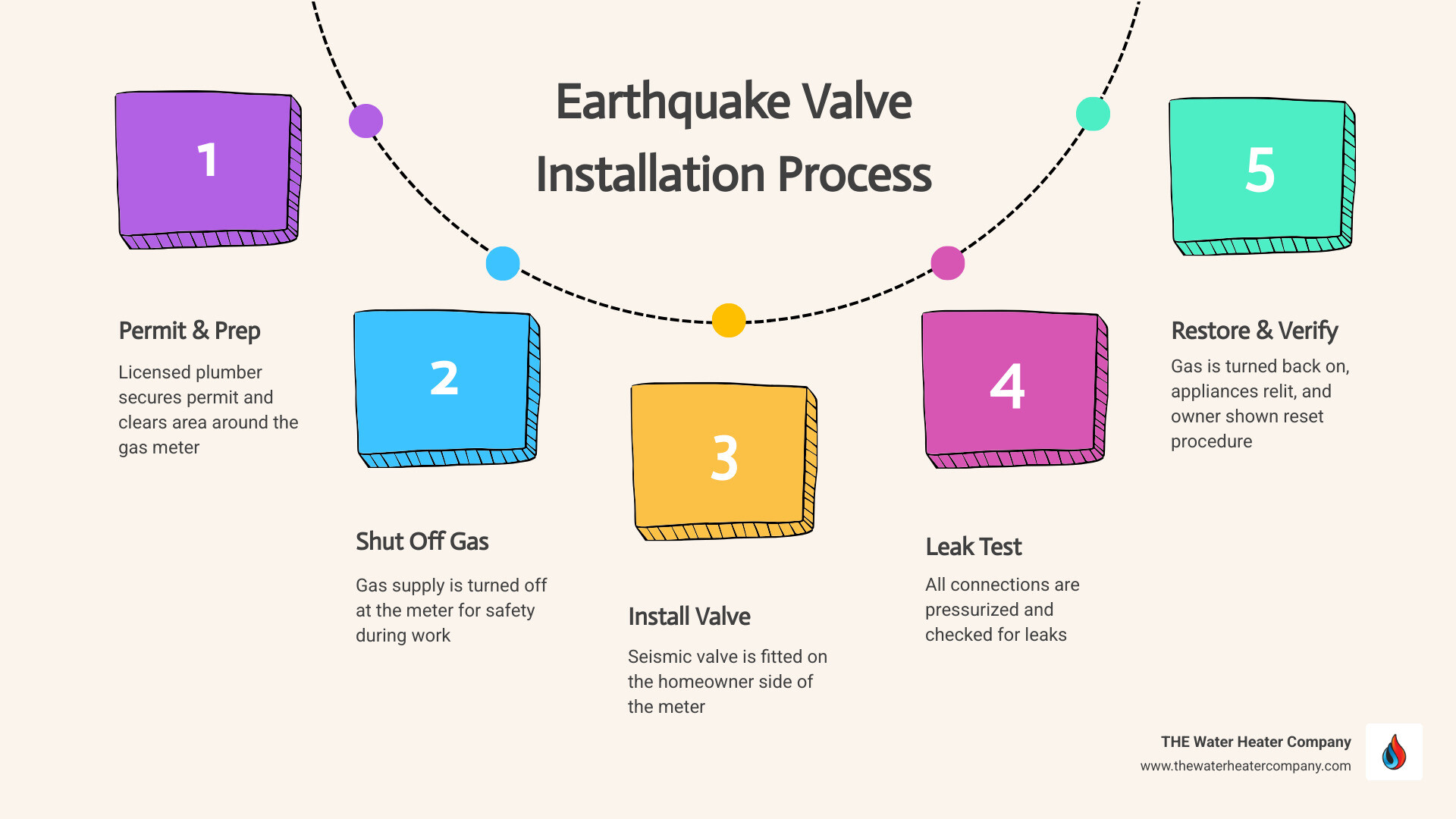
If you’re researching earthquake valve installation what to expect, here’s a quick overview before we dive deeper:
What happens during earthquake valve installation:
- A licensed plumber pulls the necessary permit
- Gas is shut off at the meter
- The valve is fitted on the homeowner’s side of the gas meter
- Connections are tested for leaks
- Gas is restored and appliances are checked
- You receive a walkthrough on how to identify a triggered valve and reset it safely
The whole process typically takes two to four hours for a standard residential installation.
When an earthquake strikes Southern California, the shaking itself is only part of the danger. A ruptured gas line in the aftermath can quietly turn a survivable event into a catastrophe. In fact, roughly 25% of post-earthquake fires are caused by natural gas leaks — and the 1994 Northridge earthquake alone revealed gas leaks in nearly one out of every five buildings where automatic shutoff valves had triggered. That single statistic makes a strong case for having one installed before the next big tremor hits.
The good news is that the installation process is straightforward when you know what to expect — and understanding it ahead of time helps everything go smoothly on the day.
I’m Anthony Hamilton, Co-Founder and CEO of THE Water Heater Company, and over the years I’ve guided countless Southern California homeowners through gas line safety decisions, including everything involved in earthquake valve installation and what to expect at every stage. My goal here is to give you clear, honest information so you can move forward with confidence.
Simple earthquake valve installation what to expect word guide:
Understanding Seismic Gas Shutoff Valves vs. Excess Flow Valves
To understand what happens during your installation, it helps to know exactly what kind of device is being added to your gas line. Homeowners often hear the terms “seismic valve” and “excess flow valve” used interchangeably, but they are actually two distinct devices that operate on completely different principles.
Seismic Gas Shutoff Valves (Earthquake-Actuated Valves)
A seismic gas shutoff valve is a highly specialized mechanical device installed directly on your gas line. It does not require any electricity or batteries to run. Instead, it relies on a beautifully simple, gravity-based mechanical design.
Inside the valve, a small metal ball or pendulum rests balanced on a tiny ring. When an earthquake occurs, the ground shaking generates specific P-waves and S-waves. These valves are carefully calibrated to trigger only when the shaking reaches a magnitude of 5.4 or greater on the Richter scale. When that threshold is crossed, the motion knocks the metal ball off its perch, causing it to fall directly into the path of the gas flow, instantly blocking it.
Because this is a purely mechanical system, it remains 100% operational even if the power grid goes down during a major disaster. It provides 24/7 passive safety, protecting your home whether you are fast asleep or away on vacation. To learn more about how these devices protect your household, check out The Definitive Guide to Earthquake Valve Benefits.
Excess Flow Valves (EFVs)
While a seismic valve responds strictly to ground movement, an excess flow valve (EFV) responds to gas flow dynamics. An EFV measures the velocity and pressure of the gas moving through your pipes.
If a gas line ruptures downstream—perhaps because a water heater tipped over or a main line cracked—the gas will start rushing through the pipe at an extremely high, uncontrolled rate. The EFV senses this sudden surge in flow and automatically snaps shut to prevent a massive leak.
Which One Do You Need?
Ideally, having both styles of protection gives you the ultimate safety net. The seismic valve stops the gas the moment the ground starts shaking violently, even if your pipes haven’t broken yet. The excess flow valve acts as an extra layer of defense against physical line breaks from any cause, seismic or otherwise.
California Gas Valve Rules and Local Compliance
In Southern California, earthquake safety is not just a personal preference—it is often a matter of local law. While there is no single, blanket statewide mandate requiring every single existing home in California to have an earthquake valve, local municipal codes tell a very different story.
The Los Angeles Mandate and Beyond
The City of Los Angeles has led the charge on seismic safety for decades. Under Los Angeles municipal codes, automatic gas shutoff valves are strictly required for:
- All new residential and commercial buildings constructed since September 1, 1995.
- Existing buildings undergoing significant alterations, remodeling, or additions.
- Any residential property when ownership is transferred (during a home sale).
This means if you are buying a home, selling a home, or pulling permits for a major renovation in Los Angeles, Pasadena, or surrounding areas, installing an approved seismic valve is a non-negotiable step to clear escrow or pass building inspections.
Other Southern California cities have adopted similar ordinances to protect their communities. Because local codes vary, it is essential to work with a team that understands the exact regulations in your specific neighborhood. You can read up on the nuances of these laws in our guide, The Law of the Land: California Gas Valve Rules.
Earthquake Valve Installation: What to Expect During the Process
When the day of your installation arrives, knowing the step-by-step process can help put your mind at ease. The installation is a highly technical task that requires working directly with your main utility gas connection, which is why it must always be performed by a licensed professional.
The Boundary of Responsibility: Homeowner vs. Utility Side
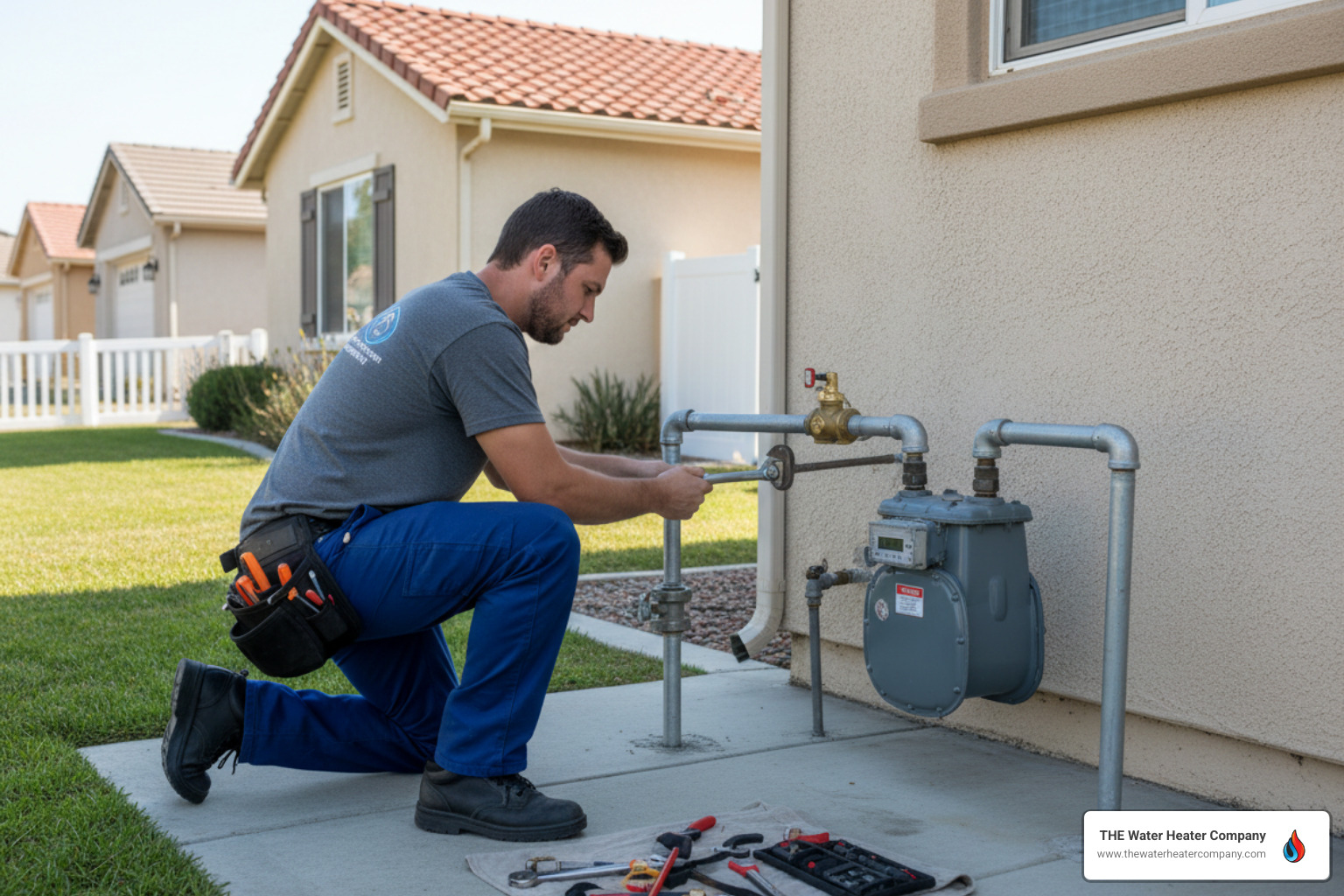
A common point of confusion is where the valve actually goes. Your gas meter assembly is split into two halves: the utility side and the homeowner side.
- The Utility Side: This includes the underground service line, the regulator, and the meter itself. This equipment belongs strictly to the gas utility company (such as SoCalGas). Under CPUC Decision 01-11-068, unauthorized installations on utility-owned facilities are strictly prohibited.
- The Homeowner Side: This is the pipe (often called the house line) that exits the meter and runs directly into your home to supply your water heater, furnace, and stove.
Your earthquake valve must be installed on your house line, right after the meter.
Step-by-Step Installation Walkthrough
When our licensed technician arrives at your home, here is the exact sequence of events:
- Permits and Prep: We ensure all local building permits are secured.
- Gas Shutoff: We turn off the main gas supply at the meter inlet valve to ensure a completely safe working environment.
- Pipe Modification: We carefully cut and thread the existing house line pipe to accommodate the new valve.
- Mounting and Bracing: The valve is mounted. It must be installed perfectly level to ensure the internal steel ball mechanism is balanced correctly. We then install rigid structural bracing to secure the valve to the exterior of your home. This bracing is critical; without it, minor everyday vibrations (like a slamming door or a ball bouncing off the wall) could accidentally trigger the valve.
- Pressure and Leak Testing: Once the valve is secured, we perform a rigorous pressure test and apply a specialized leak-detection solution to every single connection joint to guarantee there are zero gas leaks.
- Restoring Service: We turn the main gas supply back on, carefully purging any air from the lines.
To ensure your entire gas system meets strict local safety standards, we also verify that your other gas appliances are up to code. For instance, you can review standard water heater requirements in our detailed article on Water Heater Installation Codes in California.
How to prepare for earthquake valve installation what to expect
To make the installation process as quick and seamless as possible, there are a few simple ways you can prepare your home before our team arrives:
- Clear the Area: Ensure there is at least a 3-foot clear path around your outdoor gas meter. Remove any overgrown landscaping, stored boxes, or debris. The technician will need ample physical space to work, and the valve itself requires 5 to 6 inches of clear wall space for the reset shaft to operate properly.
- Keep Pets Secured: Since our technicians will be moving between your outdoor meter and indoor gas appliances, please keep your furry family members safely secured in a separate room.
- Plan for a Brief Outage: Your gas will be completely shut off for a portion of the installation. This means your gas-powered water heater, stove, dryer, and fireplace will be temporarily out of service.
If you are ready to schedule your upgrade, you can learn more about our complete range of professional gas line and water heater services on our Services page.
Post-earthquake valve installation what to expect
Once the physical valve is securely in place, the job isn’t quite finished. We take several critical steps to ensure your home is fully functional and safe before we pack up:
- Relighting Pilot Lights: Turning the gas back on means all your gas appliances will need their pilot lights relit. Our technician will personally go through your home to safely relight the pilots on your water heater, furnace, stove, and fireplace.
- Safety Walkthrough: We will walk you through the installation, showing you exactly where the valve is, how to read its status indicator, and what to do if it ever triggers during a tremor.
- Documentation: We provide you with the necessary documentation to prove compliance with local building codes, which is incredibly valuable if you plan to sell your home or need to update your homeowner’s insurance policy.
For quick answers to common homeowner questions regarding our installation processes, browse our FAQs page.
Testing, Maintenance, and Resetting Your Valve
An earthquake valve is a passive safety device, meaning it sits quietly for years waiting to do its job. To make sure it is ready to perform when a real emergency strikes, basic ongoing care is essential.
Checking the Status Indicator
Your valve features a clear status indicator window on the front.
- Green or Silver Bar: The valve is open, and gas is flowing normally.
- Red Bar: The valve has tripped and is completely closed, shutting off the gas supply.
Annual Testing
We recommend inspecting your valve at least once a year. During this visual check, verify that the valve assembly remains perfectly level and free of rust, dirt, or physical damage. You can also test its function by manually tripping the valve (according to the manufacturer’s instructions), verifying that your gas appliances lose supply, and then resetting it.
Securing your gas line is just one part of a complete home safety plan. If you want to make sure your water heater doesn’t tip over and rupture its connections during a quake, follow the steps in our guide, Secure Your Water Heater for Earthquakes in 4 Easy Steps.
How to Reset Your Valve After an Earthquake
If a major earthquake triggers your valve, do not immediately reset it. The valve did its job by shutting off the gas to prevent a fire. Before restoring the gas flow, you must ensure that there are no active leaks in your home.
- Check for Leaks: Smell for gas (the classic “rotten egg” odor) and listen for any hissing sounds. If you suspect a leak, leave the premises immediately and contact emergency services.
- Professional Inspection: We strongly advise having a licensed professional inspect your gas lines and appliances to verify that no pipes cracked or shifted during the shaking.
- Resetting the Valve: Once safety is verified, you can reset the valve. This is typically done using a flathead screwdriver to slowly turn the reset shaft clockwise until the indicator window changes from red back to green/silver.
Frequently Asked Questions about Earthquake Valves
Where should the earthquake valve be installed?
The valve must be installed on your property’s private “house line,” which is the pipe downstream of the gas meter. Under CPUC regulations, you are strictly prohibited from installing any devices on the utility-owned side of the meter.
Can I reset the earthquake valve myself after a tremor?
While it is mechanically possible to reset the valve yourself using a flathead screwdriver on the reset shaft, you should only do so after a qualified professional has thoroughly inspected your home’s gas lines. Resetting a valve when there is an undetected leak inside your walls can lead to catastrophic fires or explosions.
Do earthquake valves require electricity to operate?
No. These valves are entirely mechanical, relying on a balanced steel ball or pendulum mechanism. They require zero electrical power or batteries, ensuring they work flawlessly even during widespread power outages.
Conclusion
Protecting your Southern California home from seismic hazards requires a proactive approach. By pairing a professionally installed earthquake valve with a properly braced water heater, you drastically minimize the risk of post-earthquake fires and gas leaks.
At THE Water Heater Company, we are proud to serve communities across Southern California, including Santa Barbara, Camarillo, Santa Clarita, Pasadena, Van Nuys, Los Angeles, Santa Ana, and Irvine. Our family-owned business is dedicated to keeping your home safe, comfortable, and fully compliant with all local safety codes.
If you are ready to secure your home’s gas lines and water heating systems, contact us today to learn more about our professional Earthquake Valves installation services!

The Essential’s
Call THE Water Heater Company today to get immediate help with your water needs.
“
-

“Fair Pricing & Expert Service”
Their technician Gonzo, was clearly very competent and more importantly, he took the time and effort to do a really fantastic job.
-
“Fantastic Service!”
THE Water Heater Company understood the situation I was going through. They were able to help me out and get the job done quickly.
-
“Reasonable Pricing”
Kevin did a great job on replacing my old leaky yet still working water heater. He answered all my questions and explained all the details. -
“Quick Response Time”
He was very informative and responsive to my questions and when I am making a huge investment in my home I want to be sure I am going with a company I could count on and would not cut corners. -
“Real Professionals”
Communication was great with the owner and they were very responsive, ensuring a first-class installation and experience.
-
“Great Service”
Not only did he do the service we needed, but checked the whole unit in addition to other waterline components. -
“Professional and Responsive”
They have repaired my water heater, installed a hot water recirculating pump, and now installed a new water heater. -
“Real Professionals”
It took a little over three hours but no management was necessary as the guys were very competent and clearly have been doing this for a long time.