Is It Time? How to Know When Should You Replace Your Water Heater
Knowing when should you replace your water heater can save you from a flooded utility room, a cold shower on a busy morning, or an emergency call on the worst possible day. Here’s a quick answer if you need it now:
Replace your water heater if any of the following apply:
- Your tank-style water heater is 10 years old or older
- Your tankless unit is 15 to 20 years old or older
- You notice rust-colored water, rumbling noises, or water pooling around the base
- You’re dealing with lukewarm water even at the highest setting
- Repair costs exceed one-third of what a new unit would cost
- The tank itself is actively leaking — this is always a replacement, not a repair
If none of those apply and your unit is running well, you may just need maintenance — but keep reading, because the signs aren’t always obvious.
Water heaters are one of the most essential — and most overlooked — appliances in any Southern California home. Most homeowners don’t give theirs a second thought until the hot water runs out, or worse, until there’s water spreading across the garage floor. The reality is that most tank water heaters have a lifespan of just 8 to 12 years, while tankless models can last 15 to 20 years. Water heating also accounts for up to 20% of your home’s total energy use, which means an aging, inefficient unit isn’t just a comfort issue — it’s a cost issue too.
The good news is that knowing what to watch for puts you in control. Instead of reacting to a failure, you can plan ahead, choose the right replacement, and even take advantage of rebates and tax credits available in 2026.
I’m Anthony Hamilton, Co-Founder and CEO of THE Water Heater Company, and I’ve spent years in the field helping Southern California homeowners navigate exactly this question — when should you replace your water heater — with honest answers and no pressure. In the sections ahead, I’ll walk you through everything you need to make a confident, informed decision.
Related content about when should you replace your water heater:
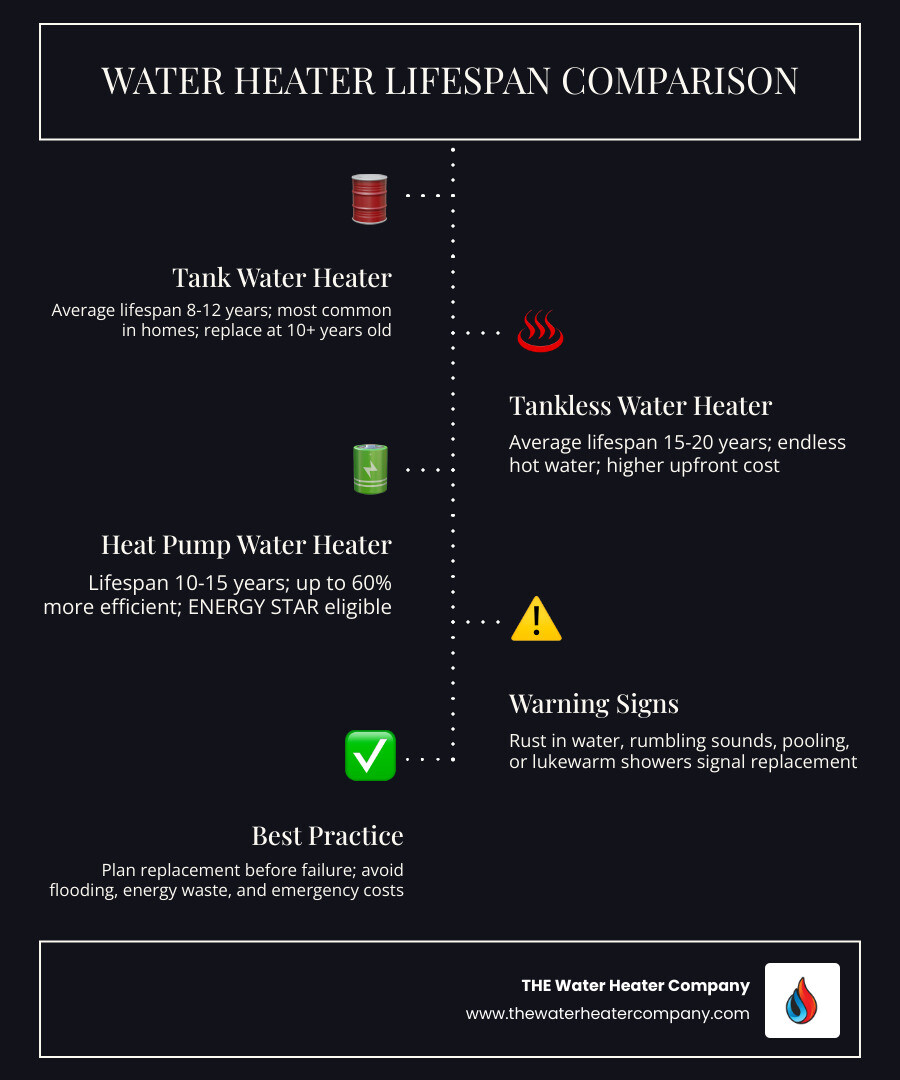
Understanding Water Heater Lifespan: Tank vs. Tankless
To determine when should you replace your water heater, you first need to understand what type of system you have and how long it is designed to last. The technology behind your hot water supply dictates its expected lifespan, efficiency levels, and common failure points.
Traditional Tank Water Heaters
Most homes in Southern California—whether you are in Pasadena, Santa Clarita, or Santa Ana—rely on a standard storage tank water heater. These units work by constantly heating a large volume of water (typically 40 to 50 gallons) so it is ready when you turn on a tap. Because these metal tanks are constantly exposed to water, heat, and pressure, they are highly susceptible to internal corrosion over time.
The typical lifespan of a tank-based water heater is approximately 8 to 12 years. Even with consistent maintenance, the metal tank will eventually degrade. This is why ENERGY STAR recommends replacing your storage water heater if it is more than 10 years old. Proactive replacement is the best way to avoid a sudden, messy rupture.
For a deeper dive into these timelines, read our detailed guide on Don’t Get Left in the Cold: How Long Your Water Heater Really Lasts.
Tankless Water Heaters
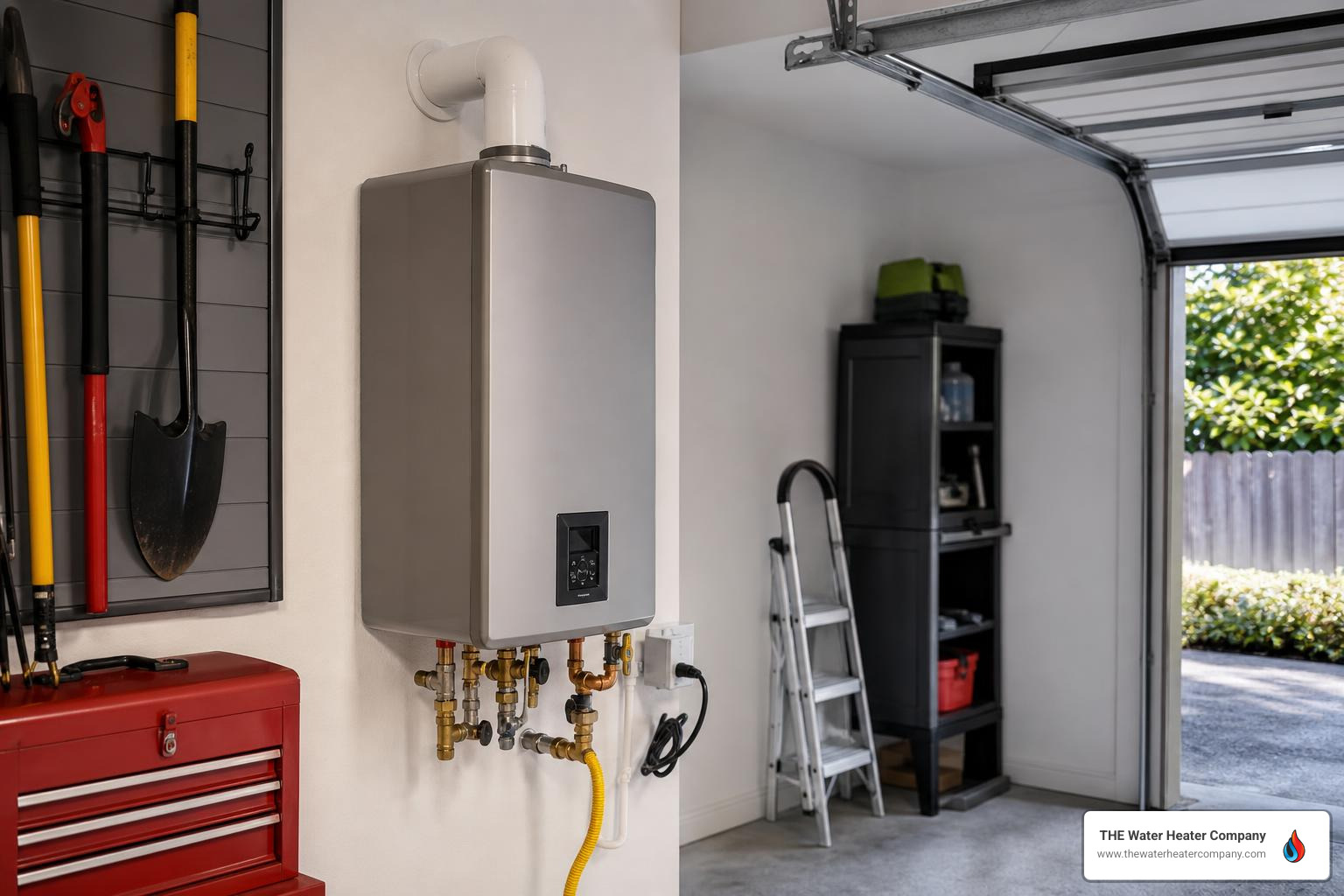
Tankless water heaters, also known as on-demand systems, do not store hot water. Instead, they use high-powered burners or electric elements to heat water instantly as it flows through the unit. Because they lack a large metal storage vessel, they are not prone to the same catastrophic rust-through failures as tank models.
Tankless water heaters have a longer life expectancy of 15 to 20 years. While they require regular descaling to prevent mineral buildup (especially in hard water areas like Los Angeles and Irvine), their core components last significantly longer, making them an excellent long-term investment.
Heat Pump (Hybrid) Water Heaters
Heat pump water heaters are a highly efficient alternative to standard electric tanks. They pull heat from the surrounding air and transfer it to the water. These advanced systems have a typical lifespan of about 13 years and offer massive energy savings, though they require specific clearance space and ventilation to operate effectively.
| Water Heater Type | Average Lifespan | Primary Failure Mode | Efficiency Level |
|---|---|---|---|
| Traditional Tank | 8 to 12 Years | Internal tank corrosion / Rust-through | Standard |
| Tankless (On-Demand) | 15 to 20 Years | Scale buildup / Heat exchanger wear | High |
| Heat Pump (Hybrid) | 10 to 15 Years | Compressor wear / Fan failure | Ultra-High |
Determining the Age of Your System
If you moved into your home recently, you might not know how old your water heater is. Knowing the exact age of your unit is a critical piece of the puzzle when deciding whether to invest in a repair or commit to a replacement.
To find the age of your system, look for the manufacturer’s label on the side of the tank. This sticker contains the model number and the serial number. While some modern manufacturers print the manufacture date clearly on the label, most encode this information within the serial number.
For example, a serial number might start with a letter followed by several numbers (e.g., “A16123456”). In many common coding systems:
- The letter represents the month (A = January, B = February, C = March, etc.).
- The next two digits represent the year (16 = 2016).
If you cannot easily decode the serial number, you can search the manufacturer’s website or consult with a professional technician to verify the exact date. Knowing this number helps you avoid spending money on a system that is already past its prime.
To learn more about decoding these numbers and determining if your unit is past its prime, check out All About How Old Is Too Old for a Water Heater?.
When Should You Replace Your Water Heater? Key Warning Signs
Waiting for your water heater to fail completely is a risky strategy. A failing water heater often gives off several warning signs before it breaks down entirely or causes water damage. By learning to recognize these red flags, you can schedule a stress-free replacement on your own terms.
Here are the most common warning signs that indicate your water heater is nearing the end of its life:
- Rust-Colored or Discolored Water: If you turn on the hot water tap in your bathroom or kitchen and notice a rusty, brown, or yellowish tint, it is a strong indicator of internal corrosion. If the discoloration only occurs when running hot water (and the cold water remains clear), the rust is coming from inside your water heater tank, not your main water lines.
- Unusual Noises (Rumbling, Popping, or Banging): As water heaters age, sediment from hard municipal water supplies settles to the bottom of the tank. Over time, this sediment hardens into a thick crust. When the burner heats the water, bubbles of steam become trapped beneath this sediment layer. As they escape, they create loud popping, rumbling, or cracking sounds. This sediment buildup forces the system to work harder, accelerating wear and tear.
- Active Leaks and Moisture: Any standing water, dampness, or slow dripping around the base of your water heater is an immediate cause for concern. While some leaks may stem from loose valves or connections that can be repaired, moisture pooling around the bottom of the tank itself usually indicates a microscopic fracture in the inner metal lining. Once a tank begins to leak from the body, it cannot be patched; replacement is the only solution.
- Lukewarm Water and Poor Recovery Time: If your showers are turning cold much faster than they used to, or if the unit takes hours to recover after a single load of laundry, the heating elements or burners are failing. In tank models, this can also be caused by a broken dip tube, which allows cold incoming water to mix directly with the hot water leaving the tank.
For a comprehensive checklist of these warning signs, read our article Don’t Get Left in the Cold: How to Spot a Dying Water Heater.
How Age Affects When Should You Replace Your Water Heater
Even if your water heater seems to be running fine, age alone is a major factor in determining when should you replace your water heater.
Once a traditional tank-style water heater crosses the 10-year threshold, its internal components have endured a decade of constant thermal expansion and contraction. The sacrificial anode rod—which is designed to attract corrosive elements and rust away so your tank doesn’t—is likely completely depleted. Without a functioning anode rod, the corrosive minerals in your water attack the steel walls of the tank directly.
Proactively replacing a water heater that is past its expected lifespan is a smart preventative measure. It allows you to research your options, schedule the installation at a convenient time, and choose a highly efficient model without the pressure of an active plumbing emergency.
To understand the long-term benefits of making a planned upgrade, explore the Top Benefits of Replacing Your Old Water Heater Before It Fails.
Evaluating Performance Issues: When Should You Replace Your Water Heater?
Performance issues don’t just affect your comfort; they also impact your utility bills. As sediment builds up and components wear down, your water heater loses its efficiency.
An aging system has to run longer and consume more gas or electricity to heat the same amount of water. If you notice your monthly energy bills climbing steadily without a corresponding increase in hot water usage, your water heater is likely the culprit. Upgrading a failing, decade-old water heater to a modern high-efficiency model can cut your water heating costs by 20% to 30% annually, helping the new unit pay for itself over time.
Repair vs. Replacement: Making the Right Decision
When your hot water system acts up, the primary question is: Should I repair it or replace it entirely? Making the wrong call can lead to throwing good money after bad on an appliance that is destined to fail anyway.
To make a cost-effective decision, we use a simple framework based on age, the nature of the issue, and the overall cost of the repair:
- The One-Third Rule: If the cost of the repair exceeds one-third of the cost of a brand-new water heater installation, and the unit is more than 8 years old, replacement is almost always the more sensible financial choice.
- The Nature of the Failure: Minor issues on a relatively young system (under 8 years old)—such as replacing a faulty thermostat, a broken heating element, a thermocouple, or a dripping Temperature and Pressure (T&P) relief valve—are absolutely worth repairing. However, if the tank itself is leaking, or if there is severe corrosion on the bottom fittings, repairs are impossible, and replacement is required.
- Frequency of Repairs: If you find yourself calling a technician more than once or twice a year to keep your system running, those repair bills will quickly add up to the cost of a new system. It is better to invest that money into a brand-new unit with a fresh warranty.
For a detailed breakdown of this decision-making process, refer to our guide: Should I Repair or Replace My Water Heater?.
Proactive Maintenance to Extend Lifespan
While every water heater must eventually be replaced, consistent preventative maintenance can help you get the absolute maximum lifespan out of your system.
- Annual Tank Flushing: We highly recommend flushing your water heater tank at least once a year. This process drains the water from the bottom of the tank, washing away loose sediment and mineral deposits before they can harden into a heat-blocking crust.
- Anode Rod Inspections: Have a professional inspect your sacrificial anode rod every 2 to 3 years. If the rod is heavily corroded or depleted, replacing it is a simple, cost-effective way to add several years to your tank’s lifespan.
- Water Filtration and Softening: Southern California is notorious for hard municipal water. Installing a whole-home water filtration or water softening system protects your water heater from aggressive scale accumulation, keeping it running efficiently for longer.
Upgrading for Energy Efficiency and Rebates
If you decide that replacement is the right path, you have an opportunity to upgrade to a much more efficient system. Modern technology has made massive leaps in energy conservation over the last decade.
By upgrading to an ENERGY STAR certified model, you can drastically reduce your household’s energy footprint:
- ENERGY STAR natural gas storage and tankless units use about 10% less energy than standard gas models, saving you money from day one.
- ENERGY STAR certified electric heat pump water heaters are incredibly efficient, saving a household of four more than $330 per year on their electric bills compared to a standard electric water heater.
Additionally, there are excellent financial incentives available in 2026 to help offset the cost of upgrading. Federal tax credits, local utility rebates, and regional environmental programs offer substantial savings for homeowners who choose energy-efficient heat pump or tankless systems.
To learn more about the installation process and how to maximize these efficiency benefits in our service area, check out Water Heater Installation in Southern California.
Frequently Asked Questions about Water Heater Replacement
What are the consequences of waiting too long to replace a water heater?
Waiting for your water heater to fail completely before replacing it can lead to severe consequences. The most common risk is a catastrophic tank rupture, which can release dozens of gallons of pressurized hot water into your home in minutes. This leads to costly floor damage, drywall ruin, and mold growth.
Furthermore, when a system fails suddenly, you are forced to make a rushed decision. Instead of taking the time to research energy-efficient models, apply for rebates, or schedule a convenient installation, you may end up accepting whatever unit is immediately available to restore hot water to your home.
For more details on the risks of delayed replacement, see Everything You Need to Know About Water Heater Replacement Services in Los Alamitos.
Is it better to switch from a traditional tank to a tankless water heater?
Switching from a traditional tank to a tankless system offers several incredible benefits, including an endless supply of hot water, a much smaller physical footprint, and lower monthly utility bills. Because tankless systems only heat water on demand, they do not suffer from the standby energy losses associated with keeping a large tank hot 24/7.
However, a tankless conversion requires careful planning. These systems often require larger gas lines, specialized venting, or upgraded electrical circuits. To ensure safe operation and long-term reliability, it is critical to avoid cut-rate installations that do not meet local building codes.
To learn more about the importance of high-quality installation practices, read about The Real Cost of Cheap Water Heater Installations.
How does hard water affect my water heater’s lifespan in Southern California?
Southern California is known for having moderately hard water. The high concentration of calcium and magnesium minerals in our water supply poses a constant challenge to water heaters.
When hard water is heated, these minerals crystallize and settle out of the water, creating a thick layer of scale inside the tank or heat exchanger. This scale acts as an insulator, forcing your water heater to run longer and hotter to heat the water. Over time, this extra thermal stress leads to premature component failure, tank cracking, and a significant drop in efficiency. Regular flushing and home water filtration systems are highly recommended to combat these local water conditions.
Conclusion
Determining when should you replace your water heater doesn’t have to be a guessing game. By keeping a close eye on the age of your system, watching for warning signs like rust-colored water or slow leaks, and comparing repair costs against the age of your unit, you can make a smart, proactive decision that protects your home and your budget.
At THE Water Heater Company, we are proud to serve Southern California communities across Santa Barbara, Camarillo, Santa Clarita, Pasadena, Van Nuys, Los Angeles, Santa Ana, and Irvine. As a local, family-owned business, we are committed to providing honest diagnostics, professional installations, and top-tier maintenance to keep your home comfortable and safe.
If you suspect your water heater is nearing the end of its useful life, don’t wait for a costly emergency to make the decision for you. Contact us today to schedule a professional evaluation, and let our expert team help you find the perfect hot water solution for your home.
For professional assistance with your upgrade, visit our Water Heater Replacement service page.

The Essential’s
Call THE Water Heater Company today to get immediate help with your water needs.
“
-

“Fair Pricing & Expert Service”
Their technician Gonzo, was clearly very competent and more importantly, he took the time and effort to do a really fantastic job.
-
“Fantastic Service!”
THE Water Heater Company understood the situation I was going through. They were able to help me out and get the job done quickly.
-
“Reasonable Pricing”
Kevin did a great job on replacing my old leaky yet still working water heater. He answered all my questions and explained all the details. -
“Quick Response Time”
He was very informative and responsive to my questions and when I am making a huge investment in my home I want to be sure I am going with a company I could count on and would not cut corners. -
“Real Professionals”
Communication was great with the owner and they were very responsive, ensuring a first-class installation and experience.
-
“Great Service”
Not only did he do the service we needed, but checked the whole unit in addition to other waterline components. -
“Professional and Responsive”
They have repaired my water heater, installed a hot water recirculating pump, and now installed a new water heater. -
“Real Professionals”
It took a little over three hours but no management was necessary as the guys were very competent and clearly have been doing this for a long time.