What Happens If You Don’t Flush Your Water Heater — And Why It Matters for Your Home
What happens if you don’t flush your water heater is something most Southern California homeowners never think about — until a cold shower or a spike in the energy bill forces the question. Here’s the short answer:
If you skip flushing your water heater, you can expect:
- Sediment buildup — Minerals like calcium and magnesium settle at the bottom of your tank over time, forming a thick layer of sludge
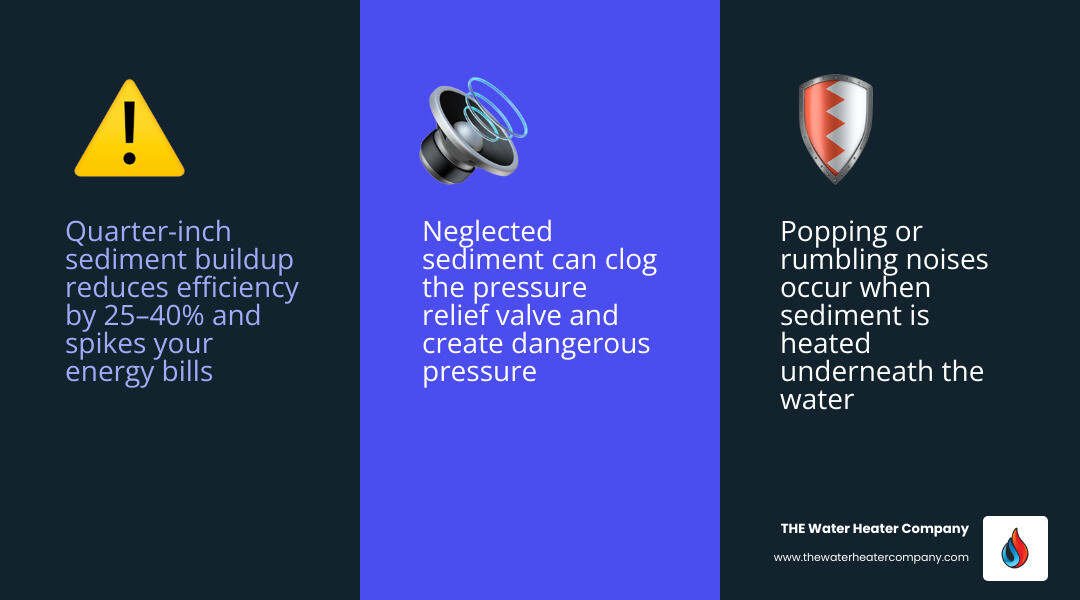
- Higher energy bills — That sediment acts as insulation between the burner and the water, forcing your unit to work harder; a quarter-inch of buildup alone can reduce efficiency by 25–40%
- Strange noises — Popping, rumbling, or banging sounds are a sign that sediment is being heated underneath the water
- Rusty or cloudy water — Corrosion from neglected sediment can contaminate your hot water supply
- Shorter lifespan — A well-maintained water heater can last 12 years or more; without flushing, you may face early replacement in as few as 8 years
- Reduced hot water capacity — Compacted sediment takes up real space inside your tank, meaning less hot water for your household
- Safety risks — Sediment can clog the pressure relief valve, creating a dangerous pressure buildup inside the tank
Most of these problems build slowly and quietly — which is exactly what makes skipped maintenance so costly in the long run.
I’m Anthony Hamilton, Co-Founder and CEO of THE Water Heater Company, and after years working in the field and serving thousands of Southern California homeowners, I’ve seen what happens if you don’t flush your water heater — from minor efficiency loss all the way to full tank failure that could have been avoided with one simple annual step. In this guide, I’ll walk you through every consequence of skipping this maintenance task and exactly what you can do about it.
What happens if you dont flush your water heater?
When we talk about the health of your plumbing system, we often focus on the pipes we can see. But inside your water heater, a chemical process is happening every single day. As water is heated, minerals like calcium carbonate and magnesium salts naturally precipitate out of the liquid. These minerals are heavier than water, so they sink to the bottom.
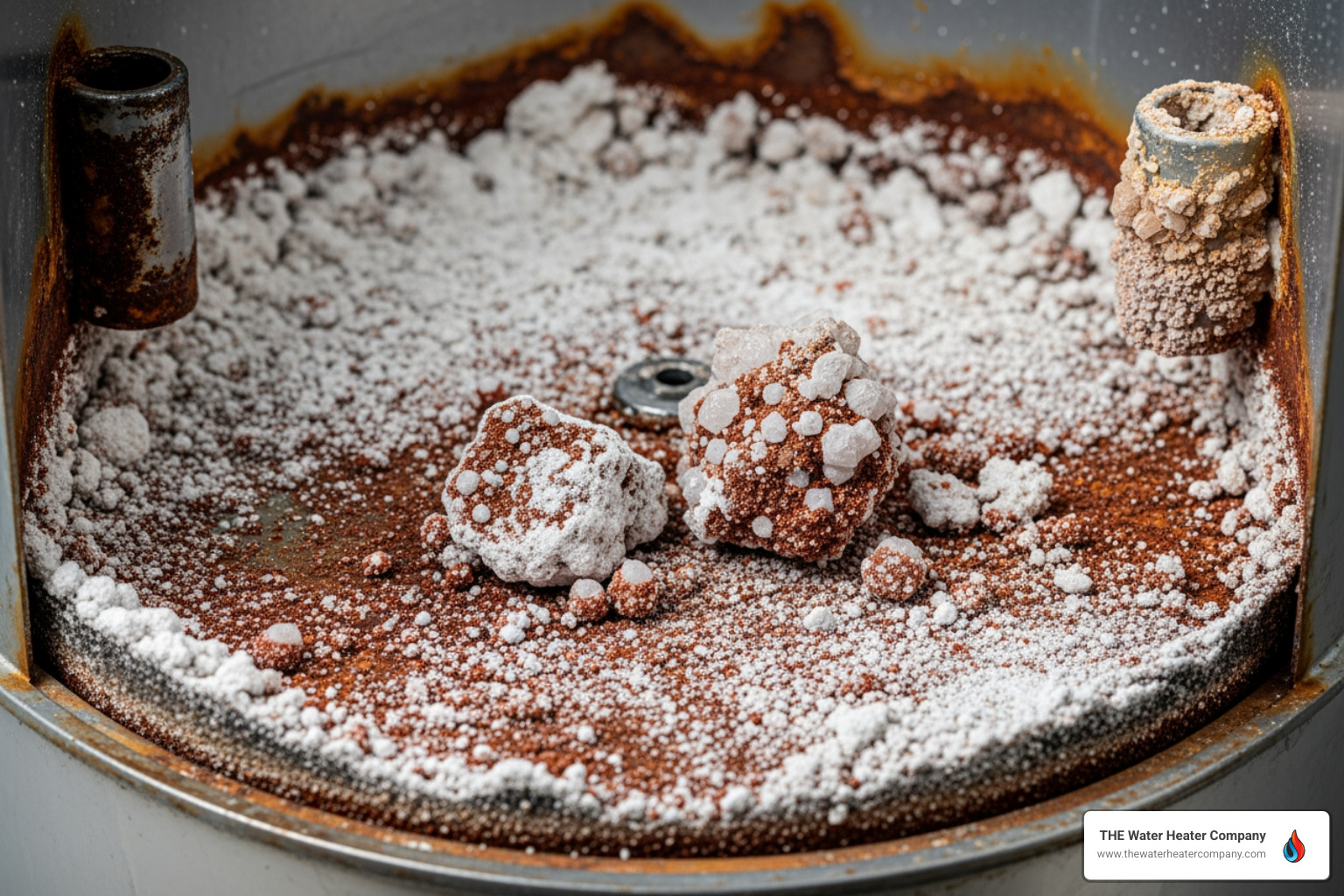
If you never perform a flush, this “snowfall” of minerals eventually turns into a thick, rocky layer of sludge. This isn’t just a bit of dirt; it’s a physical barrier that wreaks havoc on your system. The Importance of Flushing Your Water Heater and How Often You Should Do It cannot be overstated, especially in Southern California where hard water is a common reality for residents from Santa Barbara to Irvine.
The Cost of Efficiency Loss
The U.S. Department of Energy has noted that even a quarter-inch of sediment can reduce your system’s efficiency by 25% to 40%. In a gas-powered tank, the burner is located at the bottom. When sediment sits on that bottom floor, the burner has to heat the sediment before it can even begin to heat the water. This leads to massive energy bills and puts the metal tank under extreme thermal stress.
Tank Corrosion and Internal Rust
Sediment doesn’t just sit there; it traps moisture against the tank’s steel walls and can actually bury the anode rod—the component designed to protect your tank from rusting. When the anode rod is buried in “sludge,” it can’t do its job. This leads to internal rust and, eventually, a catastrophic leak. Don’t Get Left in the Cold: How Long Your Water Heater Really Lasts often depends on whether you’ve allowed this corrosion to take root.
Warning Signs Your System Needs Immediate Attention
Your water heater is actually quite communicative; you just need to know what to listen and look for. If you’ve been wondering what happens if you dont flush your water heater, your ears might give you the first clue.
Rumbling and Popping Noises
Have you ever heard a sound like popcorn popping or a low rumbling coming from your utility closet? That isn’t “ghosts” in the pipes. It is actually the sound of steam bubbles escaping from underneath the heavy layer of sediment at the bottom of the tank. As the water trapped under the sludge boils, it “pops” through the layer, which can eventually crack the protective glass lining of your tank.
Cloudy or Rusty Water
If your hot water looks “milky” or has a reddish-brown tint, it’s a clear indicator of sediment or active corrosion. This is one of the primary Signs You Need a Water Heater Repair. This sediment can also migrate into your faucets and showerheads, clogging the aerators and reducing your home’s water pressure.
Inconsistent Temperatures and Reduced Capacity
If you find that your showers are getting shorter or the water never seems to get as hot as it used to, sediment is likely the culprit. In a 50-gallon tank, several inches of compacted sediment can displace gallons of water, effectively turning your large heater into a much smaller one. When performance drops this significantly, you have to ask: Should I Repair or Replace My Water Heater?
Maintenance Requirements for Different Systems
Not all water heaters are created equal. Depending on whether you have a traditional tank or a modern tankless unit, the consequences of skipping maintenance look a bit different.
| Feature | Tank-Style Water Heater | Tankless Water Heater |
|---|---|---|
| Primary Issue | Sediment/Sludge Accumulation | Limescale on Heat Exchanger |
| Risk of Neglect | Tank Corrosion & Leaks | System Shutdown & Error Codes |
| Maintenance Task | Draining & Flushing | Chemical Descaling |
| Frequency | Once a year (Standard) | 6-12 months (Hard Water) |
In Southern California, our water is notoriously “hard,” meaning it contains high levels of dissolved minerals. Whether you are in Pasadena or Santa Clarita, Tank vs Tankless Water Heaters both require a proactive approach. How to Maintain Your Southern California Tankless Water Heater involves specific steps to combat the local water profile.
Scale buildup and what happens if you dont flush your water heater (tankless)
Tankless units don’t have a big vat to collect sludge, but they do have a heat exchanger with very narrow passages. Hard water creates “scale”—a hard, crusty mineral coating—inside these passages. Why Descaling is the Secret to a Long Tankless Life is simple: if you don’t descale, the unit will eventually overheat, throw error codes, and stop providing hot water entirely.
Sediment compaction and what happens if you dont flush your water heater (tank-style)
For traditional tanks, the biggest threat is sediment compaction. Over years of neglect, the loose “sand” at the bottom can harden into something resembling concrete. This layer destroys the efficiency of the heating elements in electric models and can lead to bacterial growth, including sulfate-reducing bacteria that create a “rotten egg” smell. Learning How to Prevent Sediment Buildup in Your Water Heater for Better Performance is the best way to avoid this sludge layer.
How to Safely Flush Your Water Heater
If you’re feeling handy, you can attempt a flush yourself, but safety should always be your first priority. The water inside your tank can be 140 degrees or hotter—enough to cause severe burns instantly.
- Turn off the Power: For gas heaters, turn the dial to “Pilot.” For electric heaters, shut off the breaker.
- Shut off the Water: Close the cold water inlet valve.
- Connect a Hose: Attach a standard garden hose to the drain valve at the bottom and run it to a floor drain or outside.
- Open the TPR Valve: Carefully open the Temperature and Pressure Relief valve to allow air in so the water can flow out.
- Drain and Flush: Open the drain valve. To really get the sediment out, we recommend the “cold-water stir”—briefly turning the cold water supply back on to swirl the sediment around so it can be flushed out.
- Check the Discharge: Keep flushing until the water coming out of the hose is crystal clear.
For those with tankless systems, Everything You Need to Know About Tankless Water Heater Maintenance involves a circulation pump and food-grade white vinegar to dissolve scale. If you’ve never done this before, or if your unit is more than five years old and has never been serviced, a professional inspection is highly recommended to avoid damaging the components.
Frequently Asked Questions
How often should I flush my water heater in May 2026?
As we look at the current water quality reports for May 2026, we still recommend a baseline of once per year. However, if you live in a particularly hard water area like Camarillo or Santa Ana, or if you have a large household with high hot water usage, you should consider flushing every six months. Following The Homeowner’s Guide to Water Heater Flushing Frequency will help you stay on track.
Can flushing an old or neglected water heater cause leaks?
This is a very real concern. In some neglected tanks, the sediment actually acts as a “plug” for small pinhole leaks that have developed due to corrosion. When you flush that sediment away, you might “un-plug” a leak. If your heater is over 10 years old and has never been flushed, it’s best to have a professional evaluate it first.
Does a clear flush mean my tank is clean?
Not necessarily. This is a “false security” trap. If you haven’t flushed in five years and the water comes out clear immediately, it often means the sediment has compacted into a solid block that the water is simply flowing over. In these cases, a professional descaling or a specialized cleaning tool is needed to break up the hardened scale.
Conclusion
Understanding what happens if you dont flush your water heater is the first step toward saving money and ensuring your family always has a reliable supply of hot water. From avoiding the “rumble” of sediment to preventing a thousand-dollar replacement, a little bit of maintenance goes a long way.
At THE Water Heater Company, we are proud to be the trusted local authority for Southern California homeowners. Whether you need a routine flush, a complex descaling for a tankless unit, or an emergency Water Heater Repair, our expert team is ready to help. We serve the following communities with pride:
- Santa Barbara
- Camarillo
- Santa Clarita
- Pasadena
- Van Nuys
- Los Angeles
- Santa Ana
- Irvine
Don’t wait for your water heater to start complaining. Contact us today to schedule your annual maintenance and keep your home running smoothly!

The Essential’s
Call THE Water Heater Company today to get immediate help with your water needs.
“
-

“Fair Pricing & Expert Service”
Their technician Gonzo, was clearly very competent and more importantly, he took the time and effort to do a really fantastic job.
-
“Fantastic Service!”
THE Water Heater Company understood the situation I was going through. They were able to help me out and get the job done quickly.
-
“Reasonable Pricing”
Kevin did a great job on replacing my old leaky yet still working water heater. He answered all my questions and explained all the details. -
“Quick Response Time”
He was very informative and responsive to my questions and when I am making a huge investment in my home I want to be sure I am going with a company I could count on and would not cut corners. -
“Real Professionals”
Communication was great with the owner and they were very responsive, ensuring a first-class installation and experience.
-
“Great Service”
Not only did he do the service we needed, but checked the whole unit in addition to other waterline components. -
“Professional and Responsive”
They have repaired my water heater, installed a hot water recirculating pump, and now installed a new water heater. -
“Real Professionals”
It took a little over three hours but no management was necessary as the guys were very competent and clearly have been doing this for a long time.