Why Your Water Heater Making Strange Noises Matters More Than You Think
If you’ve ever wondered about water heater making strange noises what it means, here’s a quick answer before we dive deeper:
| Sound | Most Likely Cause | Urgency |
|---|---|---|
| Popping or rumbling | Sediment buildup at the bottom of the tank | Moderate — schedule a flush |
| Banging or knocking | Water hammer from pressure surges | Moderate — check pressure and pipes |
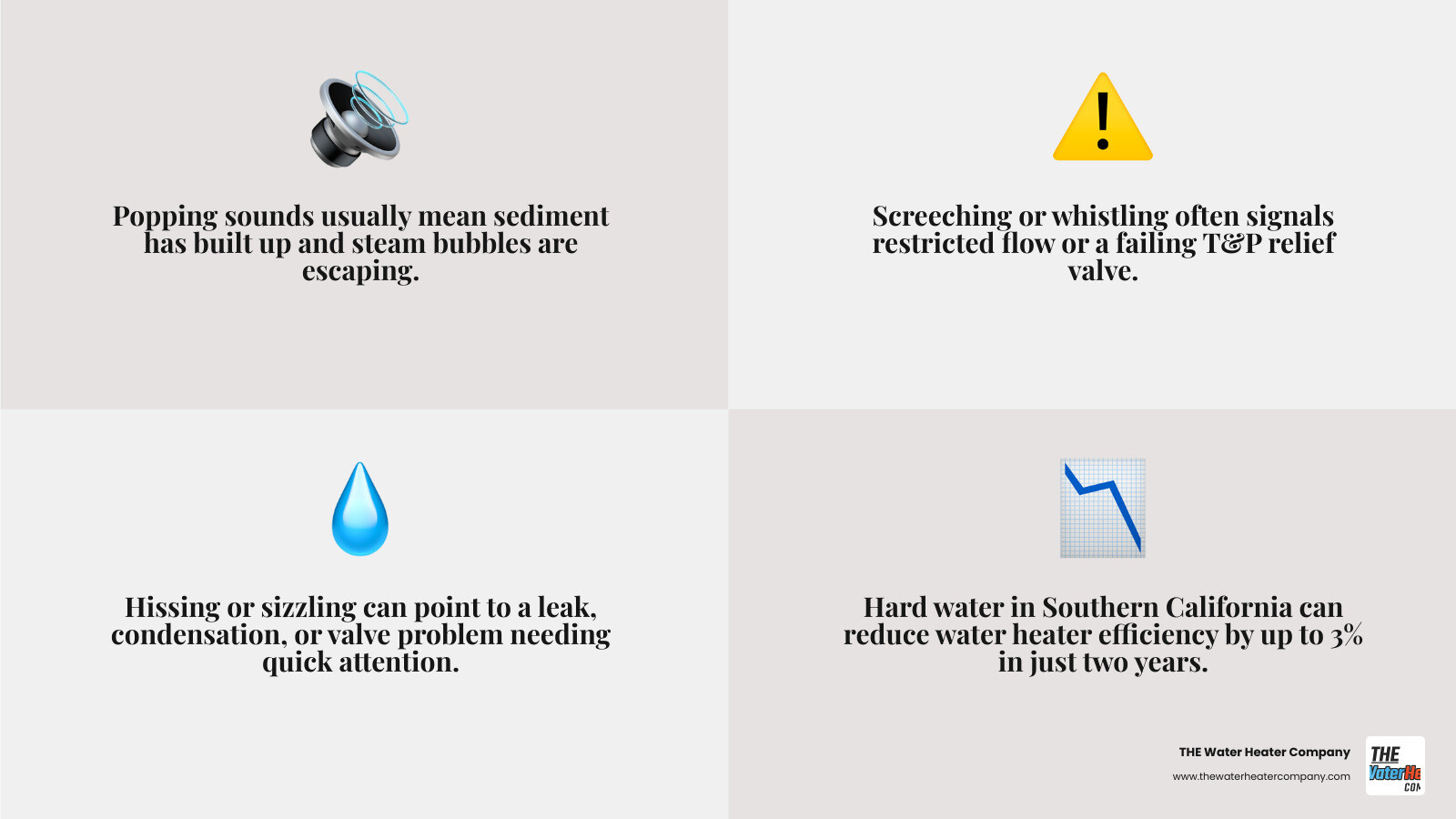
| Hissing or sizzling | Leak, condensation, or valve issue | High — inspect immediately |
| Screeching or whistling | Restricted flow or failing T&P valve | High — call a professional |
| Ticking or clicking | Normal thermal expansion in pipes | Low — usually harmless |
| Humming | Vibrating heating element (electric) or combustion air issue (gas) | Low to moderate |
Your water heater is not a silent appliance — and that’s okay. A few minor sounds during a heating cycle are completely normal. But when those sounds change, get louder, or start happening at odd times, your system is trying to tell you something important.
In Southern California, hard water is one of the biggest culprits. Minerals like calcium and magnesium dissolve into your water supply and gradually settle inside your tank. Over time, that sediment hardens, forces your heater to work harder, and starts making noise. A Pacific Northwest National Laboratory study found that hard water alone dropped a gas water heater’s efficiency from 70.4% to 67.4% in just two years — and that’s before the sounds even begin.
Ignoring those sounds can mean higher energy bills, premature tank failure, or worse — a leak you didn’t see coming.
This guide walks you through exactly how to diagnose what you’re hearing, step by step, so you know whether it’s a quick fix or time to call in a pro.
I’m Anthony Hamilton, Co-Founder and CEO of THE Water Heater Company, and after years working in the field across Southern California homes, I’ve heard just about every variation of a water heater making strange noises and what it means — from harmless ticking to the kind of screeching that signals a pressure problem you don’t want to ignore. Whether you’re dealing with a traditional tank or a tankless system, the diagnostic steps ahead will help you find answers fast.
Water heater making strange noises what it means terms simplified:
- how old is too old for a water heater
- rusty water from your hot water tap what to do
- signs your water heater needs repair or replacement
Deciphering Your Water Heater Making Strange Noises What It Means
When your water heater begins to sound like a science experiment gone wrong, it is performing its own version of acoustic diagnostics. In our years of servicing homes from Santa Barbara down to Irvine, we have learned that these sounds are rarely random. Instead, they are direct indicators of physical and chemical changes occurring inside the appliance.
A sudden increase in operating volume—such as a jump of 10 to 15 decibels—often precedes mechanical failure. If your system is operating above 65 decibels (measured at about three feet away), there is a high probability of internal obstructions or severe pressure imbalances.
The underlying problem is that internal friction and thick mineral layers dramatically reduce heat transfer. When your burner or electric elements have to heat through a thick barrier of stone before they even reach the water, your system experiences a severe drop in efficiency. In fact, heavy sediment buildup can force a water heater to work up to 20% harder, driving up your monthly utility bills. To understand the long-term impact of these minerals, take a look at our guide on How Hard Water and Chemicals Hurt Your Water Heater.
Popping and Rumbling: Water Heater Making Strange Noises What It Means for Sediment
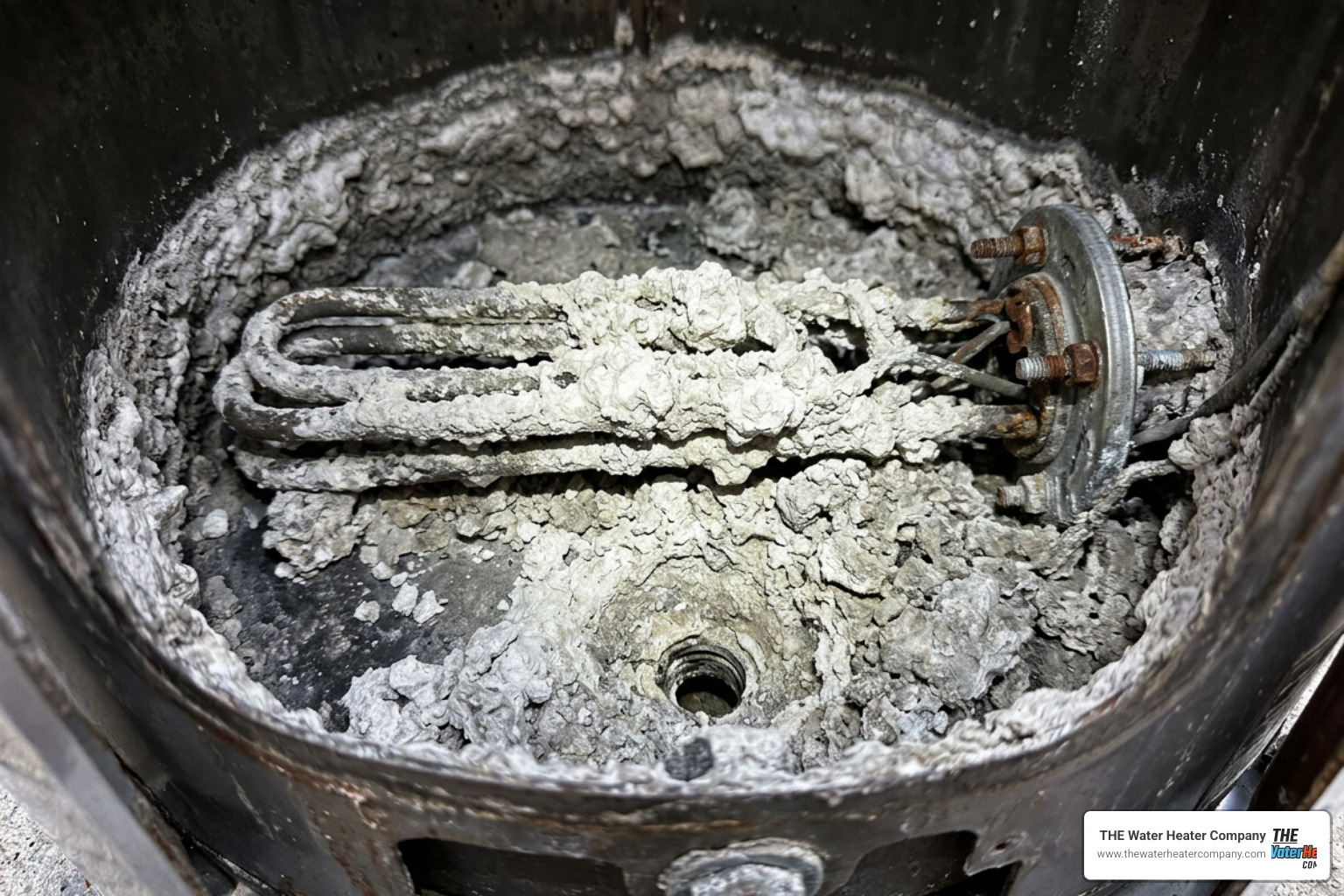
If you hear a distinct popping, cracking, or deep rumbling sound, you are listening to the effects of hard water scale. As Southern California water is heated, dissolved calcium carbonate and magnesium precipitate out of the liquid. These minerals settle at the very bottom of the tank, creating a hardened, crusty barrier directly over the gas burner or surrounding the lower electric heating element.
But how does this create a popping sound?
- Water becomes trapped in pockets beneath this hardened mineral layer.
- The burner heats the bottom of the tank, causing the trapped water to boil rapidly and turn to steam.
- This superheated steam pocket expands until it violently bursts through the crust of sediment to escape into the main tank.
This process is known in the industry as “kettling” because it mimics the boiling action of a tea kettle. The deep rumbling you hear is the sound of these steam bubbles collapsing and shifting large plates of mineral scale around the bottom of your tank. To prevent this from degrading your system, read our expert tips on How to Prevent Sediment Buildup in Your Water Heater for Better Performance.
Screeching and Whistling: Water Heater Making Strange Noises What It Means for Pressure
A high-pitched screeching, whistling, or singing sound is almost always an indicator of restricted water flow or extreme pressure. Water heaters are designed to operate under a balanced flow. If a valve is partially closed, or if mineral scale has narrowed the internal piping, water is forced through a tiny opening at incredibly high velocity, creating a whistling effect.
The most critical component to check when you hear this sound is your Temperature and Pressure (T&P) Relief Valve. This safety valve is designed to open and release water if internal pressures exceed 150 PSI or temperatures surpass 210°F. If the T&P valve is failing, loose, or partially blocked by mineral scale, it may whistle or screech as it struggles to hold back or safely vent the pressure. This is a clear warning sign that should never be ignored. For more details on identifying these critical warning signs, see our breakdown of Signs You Need a Water Heater Repair.
Banging, Hissing, and Ticking Sounds
Other common sounds include:
- Banging or Knocking (Water Hammer): This sharp, rhythmic thumping occurs when a faucet or appliance valve closes suddenly, sending a shockwave back through your plumbing system. These shockwaves can measure over 300 PSI—more than five times the normal 40 to 60 PSI of a standard residential system—which can damage joints and deform your water heater tank over time.
- Hissing or Sizzling: On a gas water heater, this is often caused by condensation dripping onto the hot burner assembly. On an electric model, however, a persistent sizzling sound usually means the lower heating element is completely buried in sediment, causing the water immediately surrounding the element to flash boil into steam.
- Ticking or Clicking: This is typically the result of thermal expansion. As hot water flows through your pipes, the metal or plastic expands and rubs against the wooden framing of your home. It can also be caused by heat trap nipples inside the inlet and outlet connections, which use small internal balls to prevent heat loss; their movement is entirely normal and harmless.
| Noise Type | Primary Cause | Potential Consequence If Ignored |
|---|---|---|
| Popping / Kettling | Steam escaping from beneath hardened mineral scale | Tank overheating, metal fatigue, and tank cracking |
| Deep Rumbling | Heavy sediment shifting during heating cycles | Reduced hot water capacity and severe efficiency loss |
| High Screeching | Restricted water control valves or high-velocity flow | Strain on plumbing joints and restricted hot water delivery |
| Screaming / Whistling | Failing or active T&P relief valve | High-pressure buildup and potential tank rupture |
| Sharp Banging | Water hammer (pressure shockwaves in pipes) | Broken pipe fittings, leaks, and damaged tank seams |
| Sizzling | Condensation on gas burner or buried electric elements | Burnt-out heating elements or corroded burner assemblies |
| Ticking / Clicking | Thermal expansion of pipes or movement of heat traps | Minor cosmetic noise; rarely poses a safety risk |
How to Diagnose Water Heater Noises in 5 Easy Steps
Before you attempt to diagnose your water heater, safety must be your absolute priority. Water heaters combine high-voltage electricity or combustible gas with high-temperature, pressurized water. Always turn off the power source (the circuit breaker for electric models or the gas control valve for gas models) if you suspect a major leak or pressure issue.
Step 1: Identify the Sound and Its Timing
The first step is to listen closely to the frequency, volume, and timing of the noise.
- Does the noise only happen during a recovery cycle? If you hear popping or rumbling only after someone takes a shower or when the burner kicks on, the issue is almost certainly sediment buildup.
- Does the noise happen when faucets are turned off? If a loud bang echoes through the house right when the washing machine or dishwasher finishes filling, you are dealing with water hammer.
- Is the noise constant? Continuous hissing or whistling suggests an active leak or a valve that is constantly venting pressure.
Step 2: Determine the Power Source and System Type
How your system is powered changes how it behaves and the types of noises it can make:
- Gas Water Heaters: These units rely on a burner at the bottom of the tank. Sediment acts as an insulator, trapping heat and causing the metal bottom of the tank to overheat, leading to loud popping and booming sounds.
- Electric Water Heaters: These systems use upper and lower heating elements that extend directly into the water. If the lower element is buried in sediment, it will produce a distinct sizzling or buzzing sound.
- Heat Pump (Hybrid) Water Heaters: These systems utilize a compressor and fan assembly, naturally producing a consistent low-level ambient hum of about 45 to 55 decibels. However, grinding, clicking, or loud rattling from a hybrid unit indicates fan or compressor component wear.
- Tankless Water Heaters: Because they do not store water, they do not suffer from traditional tank rumbling. However, restricted flow from mineral scale inside the narrow heat exchanger can cause a high-pitched whining or whistling sound during operation.
Step 3: Check the Water Pressure and Valves
High water pressure is a silent killer for plumbing systems. Use a simple pressure gauge on an outdoor hose bib to check your home’s PSI. It should ideally sit between 40 and 60 PSI. If your pressure is above 80 PSI, it puts immense stress on your water heater and worsens water hammer.
Next, inspect the T&P relief valve located on the top or side of your tank. Look closely at the discharge pipe connected to it. If you hear a faint whistling or see water dripping from this pipe, the valve is attempting to vent excess pressure or temperature, or the valve itself has failed due to mineral buildup.
Step 4: Inspect for External Leaks or Moisture
Walk around your water heater and inspect the base of the tank, the pipe connections, and the valves for any signs of moisture, rust, or pooling water. A hissing sound accompanied by water pooling around the base of the unit is a major warning sign.
Corrosion on the outer jacket of the tank or around the fittings indicates that water is slowly escaping, which can quickly lead to a catastrophic tank failure. If you discover active pooling or have lost hot water entirely, read our urgent guide on What to Do If Your Water Heater Is Leaking or You Have No Hot Water.
Step 5: Evaluate the Age and Lifespan of the Unit
The age of your system plays a massive role in your diagnostic process. A traditional tanked water heater typically has a lifespan of 8 to 12 years (averaging about 10 years in Southern California due to our water quality). If your tank is over a decade old and has developed persistent, loud rumbling or popping sounds that do not improve after maintenance, the metal has likely suffered thermal fatigue, and the unit is nearing the end of its useful life.
Conversely, a tankless water heater can last up to 20 years with proper maintenance. If your tankless system is making noise, it is highly likely that a professional descaling cycle can completely restore it to quiet, efficient operation. To learn more about what to expect from your system’s lifespan, check out Don’t Get Left in the Cold: How Long Your Water Heater Really Lasts.
Preventive Maintenance: How to Keep Your System Quiet
The single most effective way to prevent and eliminate water heater noises is regular preventive maintenance. By establishing a routine, you can protect your system from the damaging effects of hard water scale and ensure it operates silently.
For standard tank water heaters, we recommend flushing the tank at least once a year—and up to twice a year in areas of Southern California with exceptionally high mineral content.
Here is how a standard sediment flush is performed:
- Turn off the power supply (breaker for electric, pilot/off for gas) and shut off the cold water inlet valve.
- Connect a standard garden hose to the drain valve at the bottom of the tank and run the other end to a safe drainage location.
- Open a hot water faucet upstairs to prevent a vacuum from forming, then slowly open the drain valve.
- Let the water drain completely. Once empty, briefly turn the cold water inlet valve back on in short bursts to stir up and wash out any remaining sediment at the bottom of the tank.
- Close the drain valve, disconnect the hose, refill the tank completely before turning the power back on, and purge any remaining air from the hot water faucets.
If your system has not been flushed in several years, the sediment may have hardened into a thick, solid plate. In these cases, a simple flush may not be enough, and a professional de-liming treatment or manual scraping may be required. For a deeper look at timing and step-by-step instructions, see The Homeowner’s Guide to Water Heater Flushing Frequency and The Importance of Flushing Your Water Heater and How Often You Should Do It.
Maintenance for Tankless and Heat Pump Systems
Tankless water heaters require a slightly different maintenance approach. Because they use high-efficiency copper heat exchangers with narrow passages, scale builds up quickly on the interior walls, restricting water flow and causing whistling or whining noises. To clear this, tankless systems must be flushed with a food-grade descaling solution or virgin white vinegar using a specialized pump kit. For a comprehensive care plan, refer to our guide on How to Keep Your Tankless Water Heater Happy and Healthy.
For heat pump water heaters, regular maintenance includes cleaning the air filter located on top of the unit. A clogged filter restricts airflow to the evaporator coil, forcing the compressor to work harder and significantly increasing the operating noise of the fan. Keeping this filter clean ensures the unit stays within its normal 45 to 55-decibel operating range. You can explore more general maintenance tips in our comprehensive Water Heater Maintenance 101.
When to Call a Professional Plumber in Southern California
While checking your water pressure or performing a basic annual flush are excellent DIY tasks, there are several scenarios where attempting to fix a noisy water heater yourself can be dangerous.
You should immediately call a professional plumber if:
- You smell gas or suspect a gas leak: If you hear a hissing sound near the gas connection or burner assembly accompanied by a rotten egg smell, immediately leave the home, shut off your gas main, and call for emergency assistance.
- The T&P relief valve is actively leaking or whistling: Because this valve is your system’s primary defense against a high-pressure explosion, any malfunction should only be handled by a licensed professional. Never attempt to cap, plug, or tighten a whistling T&P valve.
- The noise persists after a thorough flush: If your tank continues to pop or rumble after you have flushed it, the sediment has likely hardened into a solid mass, or the tank’s glass lining has begun to crack.
- You suspect an electrical component failure: Buzzing, clicking, or humming on electric models often points to faulty thermostats or shorted heating elements that require professional diagnostic tools to safely replace.
Working with a licensed specialist ensures that your system is repaired safely, up to local Southern California plumbing codes, and without voiding your manufacturer’s warranty. For more clarity on what is true versus what is a misconception when it comes to your system, check out our guide on 5 Common Myths About Water Heaters Debunked.
Frequently Asked Questions About Noisy Water Heaters
Is a popping water heater dangerous?
In the short term, a popping water heater is not an immediate explosion hazard, but it is a sign of significant stress on the system. The hardened sediment layer causes the bottom of the tank to overheat, which leads to thermal expansion stress. Over time, this constant overheating and cooling causes the metal tank to fatigue and the protective glass lining to crack. Once the glass lining is compromised, water comes into direct contact with the steel tank, leading to rapid corrosion, leaks, and eventually, a ruptured tank.
Why does my water heater only make noise at night?
This is a very common observation for homeowners. During the day, ambient household noise (TVs, traffic, conversations) easily masks the sounds of your water heater. At night, when the house is silent, those sounds become highly audible. Additionally, hot water demand drops significantly overnight. When the water heater finally kicks on to perform a recovery cycle in the quiet hours of the early morning, the popping and rumbling sounds of steam escaping the sediment layer seem much louder and more disruptive.
Can a noisy water heater increase my energy bills?
Yes, absolutely. When a thick layer of mineral scale covers your heating elements or the bottom of your tank, it acts as an insulating blanket. Heat cannot transfer efficiently from the burner or element into the water. As a result, your system must run significantly longer to heat the exact same amount of water, consuming up to 20% more energy. Over time, this drop in efficiency translates directly into higher monthly utility bills.
Conclusion
A noisy water heater is your system’s way of asking for attention. Whether it is a gentle ticking from thermal expansion, a loud pop from Southern California’s notorious hard water sediment, or a high-pitched whistle warning of pressure buildup, listening to your system is the key to preventing costly water damage and premature system failure.
If your water heater is making strange noises and you want to ensure it is diagnosed safely and accurately, we are here to help. At THE Water Heater Company, we are proud to be a local, family-owned Southern California business dedicated to providing fast, reliable, and expert service. We serve communities across Los Angeles, Pasadena, Irvine, Santa Ana, Santa Barbara, Camarillo, Santa Clarita, and Van Nuys, bringing specialized expertise in repairs, maintenance, and advanced water filtration.
Don’t wait for a minor noise to turn into a major headache. Contact us today to schedule our professional water heater repair services and restore peace, quiet, and efficiency to your home.

The Essential’s
Call THE Water Heater Company today to get immediate help with your water needs.
“
-

“Fair Pricing & Expert Service”
Their technician Gonzo, was clearly very competent and more importantly, he took the time and effort to do a really fantastic job.
-
“Fantastic Service!”
THE Water Heater Company understood the situation I was going through. They were able to help me out and get the job done quickly.
-
“Reasonable Pricing”
Kevin did a great job on replacing my old leaky yet still working water heater. He answered all my questions and explained all the details. -
“Quick Response Time”
He was very informative and responsive to my questions and when I am making a huge investment in my home I want to be sure I am going with a company I could count on and would not cut corners. -
“Real Professionals”
Communication was great with the owner and they were very responsive, ensuring a first-class installation and experience.
-
“Great Service”
Not only did he do the service we needed, but checked the whole unit in addition to other waterline components. -
“Professional and Responsive”
They have repaired my water heater, installed a hot water recirculating pump, and now installed a new water heater. -
“Real Professionals”
It took a little over three hours but no management was necessary as the guys were very competent and clearly have been doing this for a long time.