Call 877-798-7487 to speak with a live local agent today

Rheem Tankless Water Heater Error Codes: The Ultimate Troubleshooting Guide

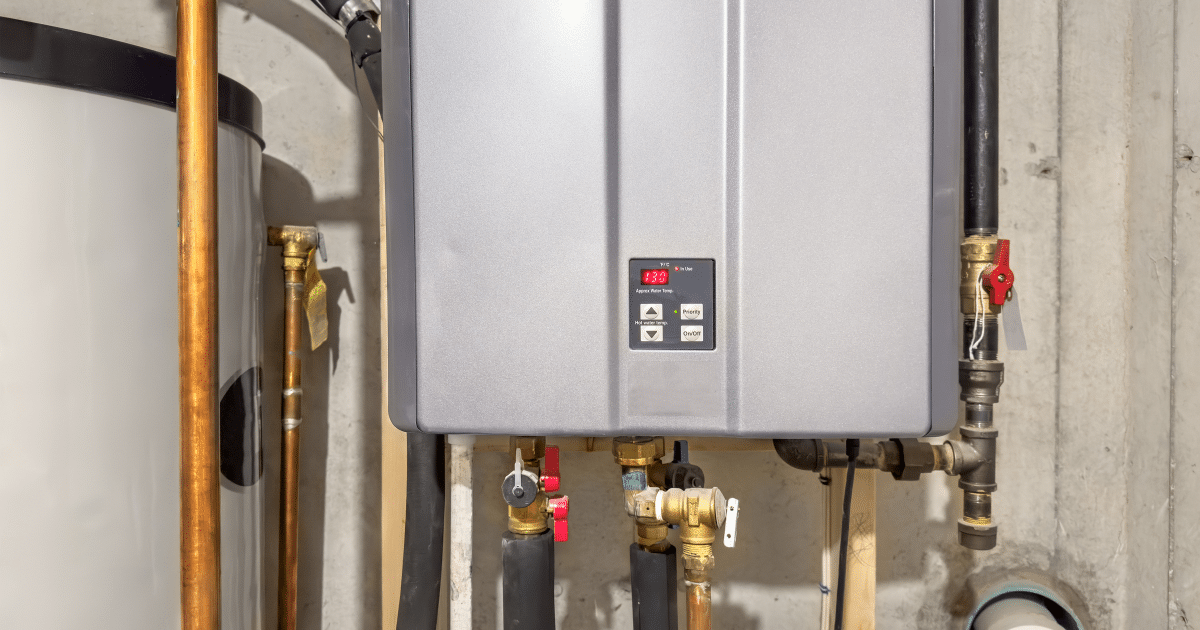
Encountering a flashing error code on your Rheem tankless water heater can be frustrating, especially when it interrupts your hot shower. Modern Rheem tankless units—including the latest smart, Wi-Fi-enabled models—are equipped with self-diagnostic systems designed to protect the appliance and keep your home safe.

While some minor issues can be cleared with simple maintenance like cleaning a filter or resetting the unit, others indicate complex mechanical faults. This comprehensive guide breaks down every common Rheem tankless error code, what it means, and exactly what steps to take next.

Complete Rheem Tankless Error Code Matrix

Use this scannable chart to identify the error code flashing on your digital remote or built-in controller.

Error Code What It Means Recommended Action
00 Continuous combustion (exceeding 1 hour) Check for leaking hot water fixtures or a continuous circulation pump.
05 Imperfect or incomplete combustion Clean the air inlet filter and inspect exhaust vents for obstructions.
10 False flame detection Call a technician to inspect the control board and flame rod.
11 No ignition / Ignition failure Ensure the gas supply valve is open; check the igniter wiring.
12 Flame failure (flame lost during operation) Verify adequate gas pressure; clean carbon build-up off the flame rod.
13 Gas supply or gas valve malfunction Check gas line pressure. Typically requires professional gas valve calibration.
14 Overheat wrap fault / Thermal fuse tripped Safety Risk: The unit is overheating. Turn off water and power; call a pro.
15 Boiling safety device / Inlet temp sensor fault Check for scaling inside the heat exchanger; scale causes localized boiling.
16 Over-temperature warning Outgoing water is too hot. Flush the system to remove mineral scale.
21 Air intake filter switch malfunction Ensure the front panel and air filter doors are properly seated and clean.
24 Water flow control valve or switch fault Check wiring to the flow sensor; may require a sensor replacement.
29 Heat exchanger outlet temp too low / Clogged neutralizer Clean the condensate neutralizer filter and check drain lines for blockages.
31 Water inlet temperature sensor fault Check sensor wiring connections or test sensor resistance with a multimeter.
32 Outgoing water temperature sensor fault Inspect and clean the sensor; replace if it fails to read temperature accurately.
33 Heat exchanger outlet temperature sensor fault Professional diagnostics required to test the sensor and control board.
35 Improper thermistor connections / Fan motor issue Ensure all wiring harnesses are securely attached to the main circuit board.
51 Gas inlet solenoid valve fault Requires a certified technician to test valve voltage and replace if faulty.
52 Modulating gas solenoid valve fault Call a specialist to test and replace the modulating gas valve.
61 Combustion fan motor failure Verify the fan spins freely and isn’t blocked by debris; check fan motor wiring.
70 / 72 Remote control communication fault Disconnect and reconnect remote wiring; reset the controller.
71 Gas inlet solenoid valve control fault Circuit board error relating to gas control; requires professional replacement.
88 Maintenance reminder (Combustion hours reached) The system needs to be flushed with a descaling solution to remove hard water scale.

Deep Dive: The Most Common Rheem Error Codes

Error Code 11 or 12: Ignition & Flame Failures

These are the most frequent codes homeowners encounter. They mean your system is trying to fire up but cannot light or maintain a flame.

  • The Cause: Often caused by a closed gas valve, an empty propane tank, or a dirty flame rod.

  • The DIY Fix: Double-check that your household gas supply is turned on. If it is, a technician will need to clean the carbon buildup off the internal flame rod.

Error Code 14: Thermal Fuse Tripped

Code 14 is a critical safety code. It indicates that the physical body of the heat exchanger has reached dangerous temperatures, prompting the thermal fuse to break to prevent a fire or total system meltdown.

  • The Cause: Heavy mineral scale buildup inside the unit forces it to work twice as hard to heat water, causing extreme internal temperatures.

  • The Action: Do not attempt to bypass this fuse. Turn off the water and gas supply immediately and call a certified technician.

Error Code 88: Time to Flush

If your tankless unit is flashing “88”, don’t panic. This isn’t a mechanical breakdown; it is an automatic maintenance alarm telling you that the system has logged a high number of combustion hours and is due for a flushing. Failing to flush the system soon will result in more severe efficiency drops and overheating codes.


How to Reset a Rheem Tankless Water Heater

Sometimes, an error code is a temporary glitch caused by a brief power surge or minor drop in gas pressure. You can attempt to clear the code with a simple system reset:

  1. Turn off all hot water faucets inside the home.

  2. Press the ON/OFF button on your digital remote control to turn the unit off.

  3. Wait approximately 1 to 2 minutes.

  4. Press the ON/OFF button again to turn the system back on.

  5. Open a hot water tap to see if the error code returns.

Important Safety Note: If a code reappears immediately or trips repeatedly, do not continue resetting the unit. Repetitive resetting can bypass safety diagnostics and cause permanent, expensive damage to your heat exchanger.


Need Professional Rheem Service? We Can Help!

Attempting to repair internal gas lines, electrical circuit boards, or venting systems on your own can be highly dangerous and will instantly void your manufacturer warranty.

THE Water Heater Company is a family-owned and operated team of tankless specialists. If you are in our service area and dealing with a stubborn error code, don’t risk a DIY headache. Give our team a call today, and we’ll have your hot water restored safely, efficiently, and quickly!
How Much Does a Tank Water Heater Replacement Cost in Southern California?

If you’re researching “how much does it cost to replace a water heater” in California, you’ve come to the right place. Prices online can be confusing and misleading, often showing national averages that are not applicable to your local area or outdated prices that are not aligned with reality in 2025.

In reality, the cost to replace a water heater in Southern California (Santa Barbara, Ventura, Los Angeles, and Orange Counties) ranges between $2,000 and $9,000, depending on size, type, and Building & Safety Code requirements.

Quick Answer

  • 30-gallon gas water heaters: $2,200 – $4,000
  • 40-gallon gas water heaters: $2,200 – $4,000
  • 50-gallon gas water heaters: $2,200 – $4,000
  • 75-gallon gas water heaters: $3,500 – $5,500
  • 100-gallon gas water heaters: $5,500 – $8,000
  • 30-gallon electric water heaters: $2,200 – $3,500
  • 40-gallon electric water heaters: $2,200 – $3,500
  • 50-gallon electric water heaters: $2,200 – $3,500
  • 80-gallon electric water heaters: $5,000 – $9,000
  • 50-gallon Hybrid Heat Pump water heaters: $4,500 – $7,000
  • 65-gallon Hybrid Heat Pump water heaters: $5,500 – $8,000
  • 80-gallon Hybrid Heat Pump water heaters: $6,500 – $9,000

Cost by Size: California-Specific Pricing

How Much Does It Cost to Replace a 30-Gallon Gas Water Heater in California?

Expect $2,200 – $4,000 for a professional installation. This is the most common size water heater for apartments, condominiums, and manufactured homes.

How Much Does It Cost to Replace a 40-Gallon Gas Water Heater in California?

Expect $2,200 – $4,000 for a professional installation. This is the most common size in smaller single-family homes.

How Much Does It Cost to Replace a 50-Gallon Gas Water Heater in California?

Expect $2,200 – $4,000 for a professional installation. This is the most common size in medium-sized single-family homes.

How Much Does It Cost to Replace a 75-Gallon Gas Water Heater?

Expect $3,500 – $5,500 for a professional installation. This size is common in larger single-family homes with high hot water demands, and it is often paired with a recirculation pump to reduce wait times for hot water.

How Much Does It Cost to Replace a 100-Gallon Gas Water Heater?

Expect $5,500 – $8,000 for a professional installation. This size is typical in the largest single-family homes with very high hot water demands and is nearly always paired with a recirculation pump. The increased cost is not only due to the higher unit price but also because the size and weight require 2–3 technicians to safely perform the installation and handle the added complexity.

How Much Does It Cost to Replace an Electric Water Heater in California?

30-Gallon Electric Water Heater

Expect $2,200 – $3,500. Common in apartments and condominiums.

40-Gallon Electric Water Heater

Expect $2,200 – $3,500. Common in smaller single-family homes.

50-Gallon Electric Water Heater

Expect $2,200 – $3,500. Common in medium-sized single-family homes.

80-Gallon Electric Water Heater

Expect $5,000 – $9,000. Used in larger single-family homes with high hot water demands, often paired with a recirculation pump.

How Much Does It Cost to Install a Heat Pump Water Heater in California?

50-Gallon Hybrid Heat Pump Water Heater

Expect $4,500 – $7,000. Energy-efficient but requires additional electrical and space considerations. Because recovery rates are lower, many homes need a larger capacity tank when converting to heat pump technology.

65-Gallon Hybrid Heat Pump Water Heater

Expect $5,500 – $8,000. Same considerations as above — larger capacity helps offset slower recovery.

80-Gallon Hybrid Heat Pump Water Heater

Expect $6,500 – $9,000. Best suited for large families. Recovery rates are lower than gas, so sizing correctly is essential.

Why California Water Heater Costs Are Higher Than National Averages

– Ultra-Low NOx Requirement: California law requires ultra-low NOx gas water heaters, which cost more than standard models sold in most other states.
– Strict Building & Safety Codes: Permits, earthquake strapping, expansion tanks, venting, drain pans, and gas line upgrades are all required. California leads the nation in safety and building regulations, which add cost but protect homeowners.
– Correcting Past Non-Compliance: Many older units were never installed to code. When replaced, contractors must not only meet today’s requirements but also fix what was missed 8–12 years ago.

What’s Included in a Professional Installation

  • Full Building & Safety Code compliance
  • Permits and inspection
  • Ultra-low NOx compliant equipment
  • Earthquake bracing and safety strapping
  • Expansion tank, drain pan, and drain lines where required
  • Code-compliant gas line and venting
  • Professional labor (typically 4–8 hours) by licensed, certified, insured technicians
  • Removal and proper disposal of the old unit

Warning: Quotes Outside This Range

If you receive a quote below these ranges, here’s what to question:
– Cheap materials: Off-brand or low-quality water heaters and components that won’t last as long.
– Cheap labor: Unskilled or unlicensed workers cutting corners.
– Code violations: In the trades, this is called a “changeout” or “swapout.” The contractor simply replaces the unit “as-is” without bringing it up to current code. While it might work temporarily, it’s unsafe, non-compliant, won’t last as long, and can cause problems at inspection or resale.

If you receive a quote above these ranges, it may include premium services, extended warranties, or additional upgrades. Always ask for a breakdown of what’s included. And never work with a contractor who won’t provide a written quote (paper or digital) before starting the project.

Repair vs. Replace: When to Upgrade

  • Age: 8–12+ years old
  • Rust-colored water
  • Leaks or puddling
  • Rumbling or popping noises
  • Rising repair costs
  • Rust around seams of the tank

Final Takeaway

In Southern California, expect to pay between $2,200 and $9,000 for a water heater replacement, depending on size, type, code compliance needs, and installation complexity.

Anything much lower than this is usually a sign that corners are being cut. Anything much higher should include premium equipment, upgrades, or warranties.

For peace of mind, safety, and long-term performance, make sure your water heater installation is done in accordance with the California Plumbing Code, using quality equipment and skilled labor.

The Real Cost of Cheap Water Heater Installations

Water Filtration 101: A Breakdown of Carbon, Reverse Osmosis, UV, and Ion Exchange Systems

In Southern California, concerns about water quality range from hard water and chlorine taste to heavy metals and trace pharmaceuticals. With so many different filtration systems on the market, understanding which technology addresses your specific water issues is the first step toward getting clean, healthy water.

At The Water Heater Company, we specialize in whole house and point of use water treatment solutions. We are here to break down the four leading filtration technologies: Activated Carbon, Reverse Osmosis, UV Disinfection, and Ion Exchange. By understanding how each system works and its specific strengths, you can choose the right one for your home.

Activated Carbon Filtration: The Taste and Odor Expert

Activated Carbon is one of the most common and versatile forms of water filtration. It is often the first stage in more complex systems due to its effectiveness against common nuisance contaminants.

How it Works

Carbon filtration relies on a process called adsorption. Activated carbon has a massive internal surface area created by tiny pores. As water passes through the filter media, contaminants chemically bond or “stick” to the surface of the carbon granules or block. This makes it highly effective (up to 99%) for removing chlorine and chloramines (used as disinfectants in municipal water), volatile organic compounds (VOCs), pesticides, herbicides, and components that cause bad taste and odor. It is less effective against dissolved inorganic contaminants, minerals, or microbial organisms.

Maintenance Profile

Filters typically last 6 to 12 months for under sink models, or 12 to 24 months for whole house systems, depending on water quality and usage. The replacement cartridges are generally affordable, keeping the maintenance cost low, typically between $30 and $100 per filter. This ease of maintenance makes carbon a popular foundational filter.

Reverse Osmosis (RO): The Comprehensive Purification System

Reverse Osmosis is widely regarded as one of the most thorough methods for producing high purity drinking water. It is typically installed as a point of use system under the kitchen sink.

How it Works

RO works by applying pressure to force water through a semipermeable membrane. This membrane has extremely small pores, acting as a barrier that allows tiny water molecules to pass through while blocking larger contaminant molecules. The rejected impurities are then flushed down the drain as wastewater.

  • Primary Contaminant Removal: RO is highly effective, often removing 94% or more of contaminants, including Total Dissolved Solids (TDS), salts, heavy metals (like lead and arsenic), fluoride, and nitrate.
  • Maintenance Profile: The crucial RO membrane lasts approximately 2 to 5 years, but the pre and post carbon filters need replacement every 6 to 12 months. Annual maintenance and filter replacement costs for a point of use RO system range from $100 to $200 per year, plus the cost of the membrane every few years, placing maintenance cost in the moderate to high range.

UV Disinfection (Ultraviolet): The Microbial Killer

UV systems do not filter water physically; instead, they disinfect it. This technology is a critical component for addressing biological contaminants, especially for homes on private well water or those concerned about waterborne pathogens.

How it Works

Water flows through a chamber containing an ultraviolet light bulb. The UV light attacks the DNA of microorganisms, rendering them inert and unable to reproduce. Since the UV light does not use chemicals, it does not alter the taste or odor of the water.

  • Primary Contaminant Removal: UV is extremely effective (over 99.99% removal) against microbial contaminants, including bacteria, viruses, and protozoa (like Giardia and Cryptosporidium). UV must be paired with a pre-filter, such as sediment or carbon, because murky water reduces the UV light’s effectiveness.
  • Maintenance Profile: The UV lamp must be replaced annually, even if it has not burned out, because the bulb’s effectiveness at sterilizing microbes degrades over time. Maintenance costs are low, primarily covering the cost of the replacement UV bulb, which ranges from $20 to $100 annually.

Ion Exchange: The Water Softening Specialist

Ion Exchange is a targeted treatment process most famously used for water softening, which is highly beneficial for protecting your plumbing and appliances from corrosive scale buildup.

How it Works

This system uses resin beads that carry a positive charge, typically sodium ions. As hard water containing positively charged calcium and magnesium ions passes over the resin, the resin exchanges the unwanted hard minerals with the more innocuous sodium ions. This removes the hardness minerals that cause scale.

  • Primary Contaminant Removal: This system is extremely effective (greater than 99% removal) at eliminating hardness minerals (Calcium and Magnesium), which are the culprits behind scale buildup on fixtures and inside water heaters.
  • Maintenance Profile: The resin media itself can last 5 to 10 years before replacement, but it requires regular regeneration (recharging the resin with a salt solution). Maintenance costs are moderate, including annual professional servicing and the ongoing cost of salt for regeneration (approximately $60 to $240+ annually).

Choosing the Right System for Your Southern California Home

The best filtration system is one tailored to your specific water quality problems and usage goals, which always begins with professional water testing. To help guide your decision, consider your primary concern:

  • For taste, odor, and chlorine removal from municipal water, or general purification: A whole house Activated Carbon filter is highly effective and offers the lowest maintenance cost, typically running $80 to $245 annually.
  • For protecting plumbing, water heaters, and appliances from scale buildup (hard water): An Ion Exchange Water Softener is the only reliable option. Its annual maintenance runs moderately higher, factoring in salt and periodic professional service.
  • For the highest purity drinking and cooking water (removing lead, TDS, and fluoride): A Reverse Osmosis system is the most effective choice, although its membrane replacement makes it the highest maintenance commitment.
  • For treating well water or high risk biological contamination: A UV Disinfection system, preceded by a carbon filter, is necessary for pathogen removal.

For many Southern California homes, the ideal solution is a combination system. For instance, pairing a whole house Ion Exchange Water Softener with an under sink Reverse Osmosis unit provides comprehensive protection and purified drinking water.

Trust The Water Heater Company for Water Quality Solutions

Deciding on the right water filtration system should start with professional water testing to determine exactly what you need to remove. We will test your water, diagnose your specific issues, and recommend a customized whole house or point of use filtration system that ensures clean, healthy, and soft water throughout your Southern California home.

Call The Water Heater Company today at (877) 798-7487 to schedule your professional water quality assessment!

Instant Hot Water? How Tankless Water Heaters Eliminate Waiting Time

If you live in Southern California, you know that waiting for the shower to warm up is a frustrating daily ritual. That frustrating cold slug of water is a common consequence of relying on an outdated storage tank water heater. Not only does this waiting period waste precious time, but it also wastes significant water, a critical concern in our arid climate.

The solution that many Los Angeles, Ventura, and Orange County homeowners are choosing is a modern tankless water heater. These systems have revolutionized how we access hot water by providing it virtually instantly and continuously, eliminating the problems associated with traditional storage tanks.

At The Water Heater Company, we are the local authority on water heating systems. With decades of experience serving Southern California, we specialize in the professional installation, replacement, and repair of tankless water heaters. We are committed to helping you understand the technology and benefits of making the switch to on demand hot water.

The Problem with Traditional Tank Water Heaters

To understand the appeal of the tankless system, you first need to recognize the inherent inefficiencies of the conventional storage tank.

Standby Heat Loss

A traditional water heater holds a large, preheated supply of water in a tank. To ensure that water is ready when you turn on the faucet, the unit must constantly expend energy to maintain the temperature, even when no one is home or asleep. This continuous energy consumption is known as standby heat loss, and it translates directly into higher utility bills.

The Finite Supply Problem

A storage tank system can only deliver the amount of hot water held within the tank’s finite capacity. Once the supply is exhausted by simultaneous demands like laundry, running a dishwasher, and showering, you are forced to wait. The tank must then refill with cold water and spend significant time reheating the entire volume, leading to frustrating cold showers during peak usage times.

The Waiting Game

Even when the tank has hot water, that water must travel from the tank, often located in a garage or utility closet, through many feet of cold pipes to your fixture. The water already sitting in those pipes must be pushed out and wasted down the drain before the newly heated water arrives. This creates the frustrating delay you experience every morning.

The Tankless Revolution: How On Demand Systems Work

Tankless water heaters, often called on demand water heaters, fundamentally change the process of heating water. They eliminate the need for a storage tank entirely, saving space and providing hot water only when you need it.

Instantaneous Heating Mechanics

When you turn on a hot water tap, cold water does not flow into a tank. Instead, it travels directly through a powerful heating unit where a flow sensor detects the demand. A high capacity gas burner or electric element instantly fires up, heating the water as it passes through a specialized heat exchanger. The water is heated to the desired temperature and delivered immediately to the fixture. When the faucet is turned off, the heating process stops instantly.

The Solution for Endless Hot Water

Because tankless units heat water continuously as it flows, they provide an unlimited supply of hot water. You no longer have to worry about running out during busy mornings or family gatherings. Multiple appliances and fixtures can draw hot water simultaneously without affecting the temperature or volume. This continuous performance is a major quality of life improvement for any Southern California home.

Eliminating the Wait with Recirculation

While a tankless system eliminates the standby loss and the finite supply problem, the waiting time for hot water to travel through long pipes can still exist. However, tankless units are perfectly paired with a hot water recirculating system, such as those by Grundfos, to truly achieve instant hot water at the tap.

A recirculating system keeps a loop of hot water running near your fixtures. By installing this alongside your tankless unit, the minute you turn on the hot water, the water in the pipe is already hot, completely eliminating the frustrating wait and saving gallons of water every day. This combination is highly recommended by The Water Heater Company for maximum comfort and water conservation.

Key Benefits for Southern California Homeowners

The switch to tankless is more than just a convenience; it is a smart financial and environmental choice, especially in the Southern California region.

Superior Energy Efficiency

Tankless water heaters are remarkably energy efficient because they only use power when you demand hot water. By eliminating standby heat loss, tankless systems can be up to 34% more energy efficient than conventional models. This reduction in gas or electricity consumption results in noticeable and lasting savings on your monthly utility bills. For environmentally conscious homeowners, reduced energy use also means a smaller carbon footprint.

Significant Space Savings

In many California homes where square footage and storage are at a premium, the space occupied by a bulky traditional tank is valuable. Tankless units are compact and typically wall mounted, often fitting neatly into a small utility closet, garage wall, or even an exterior location. This design frees up significant floor space that was previously dedicated to an appliance.

Longer Lifespan and Reliability

While the initial investment for a tankless system is higher, the long term value is undeniable. Traditional tank heaters typically last 8 to 12 years before corrosion and leaks necessitate a full replacement. Tankless systems, with proper annual maintenance and descaling, routinely last 15 to 25 years or more, making them a superior long term investment.

Improved Water Quality

Tankless systems do not utilize an anode rod, which is a sacrificial metal component found in tanks designed to attract corrosion. By eliminating this rod, tankless systems reduce the risk of metal contamination that can sometimes affect water taste and quality in older tank models.

Why Professional Installation is Essential

The complexity of a tankless water heater installation requires expertise far beyond that of a simple tank swap. The Water Heater Company technicians are factory trained and authorized to install leading brands like Noritz and Rinnai. Proper installation in Southern California requires meticulous attention to:

  • Venting Requirements: High efficiency gas units must be correctly vented, often requiring complex piping through the roof or wall.
  • Gas Line Sizing: Tankless gas heaters draw significantly more gas than a tank, often requiring an upgrade to your home’s existing gas line to ensure proper fuel delivery.
  • California Code Compliance: All installations must meet the latest state and local plumbing codes for seismic bracing, gas connections, and safety devices.

Our certified team manages every aspect of the process, ensuring a seamless, code compliant installation that maximizes your system’s efficiency and warranty coverage.

Schedule Your Tankless Consultation Today

If you are tired of wasting water and money while waiting for your home to get hot water, it is time to upgrade to a modern tankless system. The Water Heater Company is your trusted local authority for all tankless solutions in Los Angeles, Ventura, and Orange Counties.

Call The Water Heater Company today at (877) 798-7487 to schedule your comprehensive home assessment and discover the endless hot water experience.

5 Common Myths About Water Heaters—Debunked!

Water heaters can feel like a mystery, right? Are tankless systems always better? Do you really need to flush your tank regularly? With all the conflicting advice out there—from neighbors, online searches, and big-box stores—it’s no wonder homeowners feel confused. 

Today, we’re cutting through the noise and setting the record straight on some of the most common water heater myths. 

Myth #1: “Tankless Water Heaters Are Always Better” 

Reality check: While tankless water heaters are energy-efficient and space-saving, they’re not ideal for every home. 

  • What to know: Tankless systems provide endless hot water, but they’re more expensive upfront and can be less effective with high simultaneous water demand. Traditional tanks are budget-friendly upfront but may consume more energy over time. 

A small household will benefit from a tankless system, but a family of five taking morning showers at the same time may experience inconsistent water temperatures. 

Myth #2: “You Don’t Need to Maintain a Water Heater” 

Reality check: Like any other appliance, water heaters need regular care to function efficiently and last longer. 

  • What to know: Flushing your water heater helps remove sediment buildup, which can lead to inefficiency and a shorter appliance lifespan. 

Homeowners in areas like Southern California with hard water are especially prone to sediment issues, making maintenance even more critical. 

Pro tip: Add water heater flushing to your annual home maintenance checklist. 

Myth #3: “Bigger Tanks Mean Better Performance” 

Reality check: The size of your water heater should match your household’s needs—not bigger for the sake of bigger. 

  • What to know: An oversized tank wastes energy, while an undersized tank can run out of hot water when you need it the most. 

A two-person condo may only need a 30-gallon tank, while a family of six might require an 80-gallon system. Choosing the right size saves energy and keeps everyone happy. 

Myth #4: “Water Heaters Last Forever” 

Reality check: No water heater lasts forever, even with proper care. 

  • What to know: The average lifespan of a tank water heater is 8–12 years, while tankless models can last 15–20 years with consistent maintenance. 

Replacing your water heater near the end of its lifecycle prevents unexpected breakdowns, costly repairs, or even water damage from leaks.  

Mark your calendar for regular inspections, so you’re never caught off guard. 

Myth #5: “You Can Install or Repair a Water Heater Yourself” 

Reality check: DIY water heater installation or repairs might seem simple, but they can lead to safety risks and costly mistakes. 

  • What to know: Professional installation ensures proper venting, pressure relief valves, and compliance with local building codes. 

A DIY installation gone wrong can void your warranty or cause dangerous flooding, carbon monoxide leaks, and leave you with expensive repairs. 

Save yourself the headache and call in the experts from the start. 

Make the Right Choice for Your Home 

At THE Water Heater Company, we know that every home is unique. That’s why we don’t push one-size-fits-all solutions. Instead, we focus on educating homeowners, evaluating your specific needs, and guiding you to the best water heater choice for your home and budget. 

Understanding these common myths can help you avoid costly mistakes and get the most from your water heater. If you’re not sure what’s right for your home, don’t wait until there’s an issue. 

Call THE Water Heater Company at (877) 798-7487 today for expert advice and professional service. You deserve a water heater that keeps your home running smoothly. 

What Size Water Heater Do I Need for My Home?

Tired of Running Out of Hot Water? You’re Not Alone.

Maybe it’s a cold shower that hits mid-lather. Or you’ve noticed your energy bills creeping up without explanation. Either way, you might be wondering: What size water heater do I actually need for my home?

If you’re feeling unsure, you’re in the right place. This guide is designed to walk you through the basics so you can choose a water heater that fits your home, your family, and your lifestyle, without guesswork or pressure.

Why Size Matters (And Not Just for Comfort)

The size of your water heater impacts more than just how long your showers can last. It also affects:

  • Energy efficiency

  • Monthly utility bills

  • System performance and lifespan

  • Overall home comfort

If your system is too small, you’ll run out of hot water when you need it most. Too large, and you’ll waste money heating water you don’t use. Let’s break down how to find that just-right fit.

1. Start with Household Size

How many people live in your home?
This is one of the easiest ways to estimate your hot water needs.

For traditional tank water heaters:

  • 1–2 people: 30–40 gallons

  • 2–3 people: 40–50 gallons

  • 3–4 people: 50–60 gallons

  • 5+ people: 60–80 gallons

If you’re considering a tankless water heater, it’s not about gallons—it’s about flow rate, which we’ll explain next.

2. Consider Your Hot Water Habits

Do you regularly run the dishwasher while someone showers? Maybe your household takes back-to-back showers in the morning or has a large soaking tub. These peak usage patterns matter when choosing the right size.

Think about:

  • Multiple fixtures running at once

  • Large tubs or multi-head showers

  • Busy times of day with high demand

The key is understanding your home’s peak water usage.

3. Know the Type of Water Heater You’re Considering

Different water heater types require different sizing methods.

Traditional Tank Water Heaters

  • Store hot water in a tank

  • Sized by storage capacity in gallons

  • Must meet your highest daily demand

Tankless Water Heaters

  • Provide hot water on demand

  • Sized by flow rate, or how much hot water is needed at once

  • Measured in gallons per minute (GPM)
  • Provides an endless stream of hot water that never runs out

Here’s a basic idea of flow rates for common fixtures:

  • Shower: 2.5 GPM

  • Kitchen faucet: 1.5 GPM

  • Washing machine: 3.0 GPM

If you typically run a shower, the kitchen sink, and the washing machine at the same time, your tankless unit should support a flow rate of at least 7–8 GPM. Homes with three or more bathrooms may need 8–10 GPM.

4. Count Fixtures and Appliances

The more fixtures and appliances you use at once, the greater your demand for hot water. Here are some typical flow rates:

  • Standard showerhead: 2.5 GPM

  • Kitchen faucet: 1.5 GPM

  • Dishwasher: 1–2 GPM

  • Washing machine: 2.5–3 GPM

Tankless systems need to handle the combined flow rate during peak usage. For traditional tank systems, choose a tank size that can handle your busiest water usage periods.

5. Consider Energy Efficiency Goals

Looking to save on energy bills? Choosing the right size water heater plays a big part. A system that’s too large may use more energy than necessary, while one that’s too small can struggle to keep up and run less efficiently.

If efficiency is important to you, look for ENERGY STAR® certified models. These high-efficiency systems—available in both tank and tankless options—can help lower your long-term utility costs.

Sizing Recap: Tank vs. Tankless

Traditional Tank Water Heaters

  • 1–2 people: 30–40 gallons

  • 2–3 people: 40–50 gallons

  • 3–4 people: 50–60 gallons

  • 5+ people: 60–80 gallons

Tankless Water Heaters

  • Sizing based on GPM (gallons per minute)

  • Two to three fixtures at once: 6–8 GPM

  • Three or more bathrooms: 8–10 GPM

  • Southern California’s mild groundwater temperatures help boost tankless efficiency

When to Rethink Your Water Heater Size

If you’re not sure your current water heater is the right size, here are a few signs it might be time to reassess:

  • Running out of hot water during showers

  • A growing or shrinking household

  • A unit that’s over 10–15 years old

  • A desire to switch to a more energy-efficient option

Even if your current system is still working, it may not be working for you. Choosing the right size can improve comfort and reduce costs.

How THE Water Heater Company Can Help

Choosing the right size water heater can feel overwhelming—but it doesn’t have to be. At THE Water Heater Company, we specialize in evaluating each home’s unique needs and guiding homeowners to the best solution to fit their specific needs.

Here’s what you can expect:

  • Personalized consultations: We assess your household’s water usage and recommend the right size

  • Trusted brands and expert installation: We work with both tank and tankless systems

  • Clear, upfront pricing and warranties

  • Local, experienced professionals serving Los Angeles, Ventura, Orange, and Santa Barbara counties

Ready to Find the Right Water Heater for Your Home?

Let’s make sure you’re never left in the cold—or stuck paying more than you should.

Call THE Water Heater Company today at (877) 798-7487 to schedule your professional consultation.

We’ll help you find the perfect system for your home, your family, and your budget.

The Energy-Efficient Water Heater: A Green Home Essential

Are you looking to reduce your carbon footprint and save money on your energy bills? Look no further than the energy-efficient water heater! In this blog post, we will explore the benefits of these green home essentials and provide you with tangible tips to address common issues you may encounter.

Selecting the Right Size

One of the most important factors in maximizing energy efficiency is choosing the right-sized water heater for your home. Oversized heaters waste energy by constantly reheating water that is not being used. Undersized heaters, on the other hand, may struggle to meet your hot water demands. To determine the appropriate size, consider factors such as the number of occupants, peak usage times, and your daily hot water needs.

Insulating Your Water Heater

Proper insulation can significantly reduce heat loss and improve the overall efficiency of your water heater. Insulating the tank and pipes can help retain heat, allowing your unit to work less and consume less energy. Check with your manufacturer for recommended insulation materials and installation guidelines.

Regular Maintenance and Inspections

Maintaining your energy-efficient water heater is crucial for optimal performance. Regularly inspect the unit for leaks, sediment buildup, or any signs of wear and tear. Flushing the tank annually helps remove accumulated sediment, which can affect efficiency. Additionally, consider scheduling professional maintenance to ensure your water heater operates at its peak efficiency.

Utilizing Timers and Temperature Controls

Installing timers and temperature controls can help you optimize energy usage by programming your water heater to operate only when needed. For example, setting the timer to turn off during hours when hot water is not required, such as overnight, can result in significant energy savings. Similarly, adjusting the temperature to a lower setting can also reduce energy consumption.

Exploring Renewable Energy Options

If you’re looking to take your energy efficiency to the next level, consider exploring renewable energy options for heating your water. Solar water heaters, for instance, utilize the sun’s energy to heat water, making them an eco-friendly and cost-effective choice. Research local incentives or consult with a professional to determine the feasibility and benefits of renewable energy solutions in your area.

By implementing these tips, you can make the most of your energy-efficient water heater and contribute to a greener, more sustainable future. Remember, small changes can have a big impact!

For more information on energy-efficient water heaters and sustainable plumbing solutions, contact THE Water Heater Company. Our team of experts is dedicated to providing you with top-notch service and helping you make informed decisions for your home.

Most Common Problems With Tankless Water Heaters

What Are the Most Common Problems With Tankless Water Heaters?

As advanced and convenient as they are, all tankless water heaters are susceptible to problems as they experience wear and tear. No appliance is without the risk of fault throughout its lifetime. Unlike traditional tank water heaters, tankless water heaters come with their own set of common problems.

Tankless water heaters offer excellent energy efficiency, space-saving in the property, and the potential to save money. Those benefits can be undermined by certain issues, however, so it’s important to understand what common problems are and how to avoid or resolve them.

Overload

Every tankless water heater has a flow rate capacity that should give you a good idea of how much hot water can be used simultaneously. If you go over that capacity, then you could overload the system and cause problems. This is a common issue because many homeowners don’t realize that tankless water heaters have limitations for simultaneous hot water usage.

If your tankless water heater is overloaded, then you might find that some of the users are getting hot water and others aren’t. In some cases, a system overload can lead to the heater shutting down entirely.

The best way to prevent a system overload is to understand your heater’s capacity and how many different appliances can use it at the same time. If you’re running into a consistent issue, however, call a professional. You may need to consider upgrading your heater or even getting a second heater to make up the deficit.

Cold Water Sandwich Effect

You may not be familiar with the term “cold water sandwich”, but if you live in a home where back-to-back showers are frequent, you will likely be familiar with the sensation.

A cold water sandwich is when one person finishes showering and another person gets in right after. The water starts off hot but soon turns cold for a few seconds up to a minute before starting to heat up again.

This happens because when the shower is turned off, the water is no longer heated, but there’s still some hot water in the pipes. This hot water comes out first before the cold water follows. The tankless water heater will be working to get the water heated back to a normal temperature, so it shouldn’t be cold for too long.

This effect isn’t so much an issue with your heater as it is part of its design. While tankless heaters are known for quick heat times, the fact that hot water cannot be stored makes it impossible for the system to ensure hot water immediately after it has been turned off and turned on again.

However, if you notice that these cold spells during your shower are longer than a minute or so, you may be experiencing other issues, and it would be wisest to consult a professional.

Mineral or Sediment Buildup

The water heater and the pipes could be susceptible to becoming blocked partially or fully due to a buildup of minerals or sediment. Systems with iron pipes and components can rust and lead to iron sediment building up throughout. Meanwhile, homes with hard water could see minerals like calcium and magnesium resulting in a scale buildup.

Over time, these minerals and sediment can become stuck in place, leading to a gradually growing buildup that narrows the passage that the water moves through. This can affect the pressure and temperature of the water and make it potentially unsafe.

If you are experiencing problems relative to buildup, you’ll need to call a professional to flush your system. This should be a part of your regular annual maintenance so as to avoid more damaging issues caused by mineral or sediment buildup.

Flame or Ignition Failure

“My tankless water heater doesn’t get hot enough”. This may be a question you are asking, it could be that the flame fails to hold or ignite, then it is likely due to an electrical issue or a gas line issue. Either way, your heater will be unable to heat the water. First, check to see if your propane tank is low or if your gas supply has been cut due to a late bill.

If your gas supply is fine, see that your water and gas valves are fully open, and open them if they aren’t. If this doesn’t help, then you should get in touch with a professional who is qualified to work safely with gas appliances, as the issue could be anything from regulator failure to an undersized gas line and could pose dangers to your home.

Call THE Water Heater Company Today

Dealing with hot water appliances can be dangerous, so if you’re uncomfortable with any step of troubleshooting or maintaining your tankless water heater, contact a professional right away. Our experts at THE Water Heater Company can safely handle any issues you’re experiencing and offer you the right tankless water heater services for your needs.