The Homeowner’s Guide to Water Heater Flushing Frequency
How Often Should You Flush Your Water Heater? (Quick Answer)
How often should you flush your water heater depends on a few key factors, but here’s the short version:
| Situation | Recommended Frequency |
|---|---|
| Standard use, average water quality | Once per year |
| Hard water areas (like most of Southern California) | Every 6 months |
| Gas water heater, normal use | Once per year |
| Gas water heater, hard water or heavy use | Every 6 months |
| Tankless water heater, average water quality | Every 12 months |
| Tankless water heater, hard water | Every 6 months |
Most plumbers agree: once a year is the baseline. But if you live in a hard water region — and much of Southern California qualifies — every six months is the smarter call.
Think about how much work your water heater does every single day. Hot showers, clean dishes, laundry — it never really gets a day off. And yet, for most homeowners, the water heater is the appliance they think about least, right up until something goes wrong.
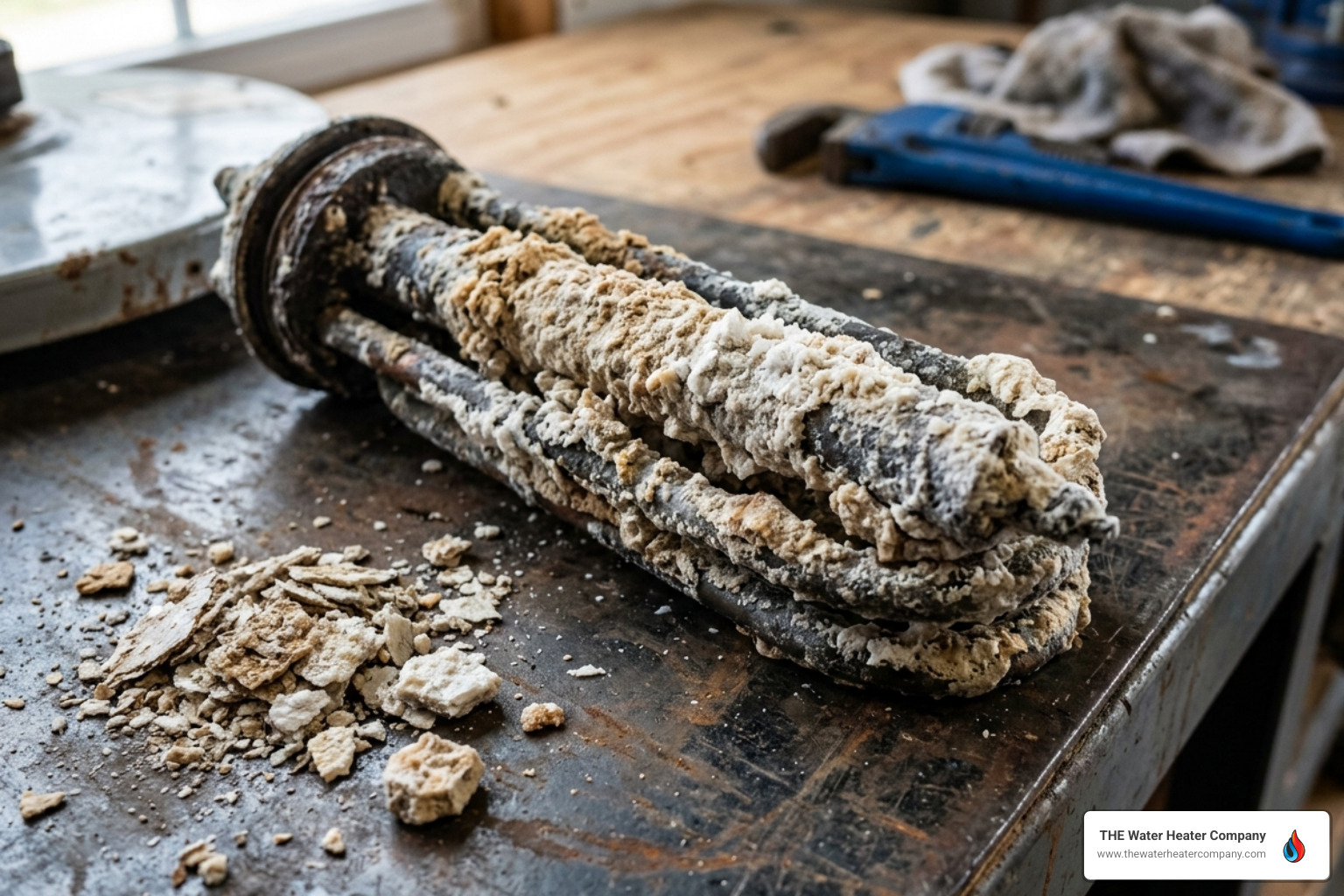
The problem? Over time, minerals from your water supply — calcium, magnesium, and other dissolved solids — sink to the bottom of your tank and harden into sediment. That layer of buildup forces your system to work harder than it should, quietly driving up your energy bills and wearing down your tank from the inside out. In Southern California, where hard water is the norm rather than the exception, this process happens faster than most homeowners realize.
The good news is that regular flushing is one of the simplest and most effective things you can do to protect your water heater. It takes about 30 minutes, it can add years to your system’s life, and it costs almost nothing compared to an early replacement.
This guide covers everything you need to know — how often to flush, why it matters, how to do it safely, and when it’s smarter to call a professional.
I’m Anthony Hamilton, Co-Founder and CEO of THE Water Heater Company, and I’ve spent years in the field helping Southern California homeowners get more life out of their water heaters — including knowing exactly how often should you flush your water heater based on your specific water conditions and system type. Let’s walk through what the research, the industry, and real-world experience all point to.
Determining How Often Should You Flush Your Water Heater
When we look at maintenance standards for April 2026, the general consensus among plumbing experts is that an annual flush is the bare minimum for any residential storage tank. However, “standard” advice doesn’t always account for the unique challenges we face in Southern California.
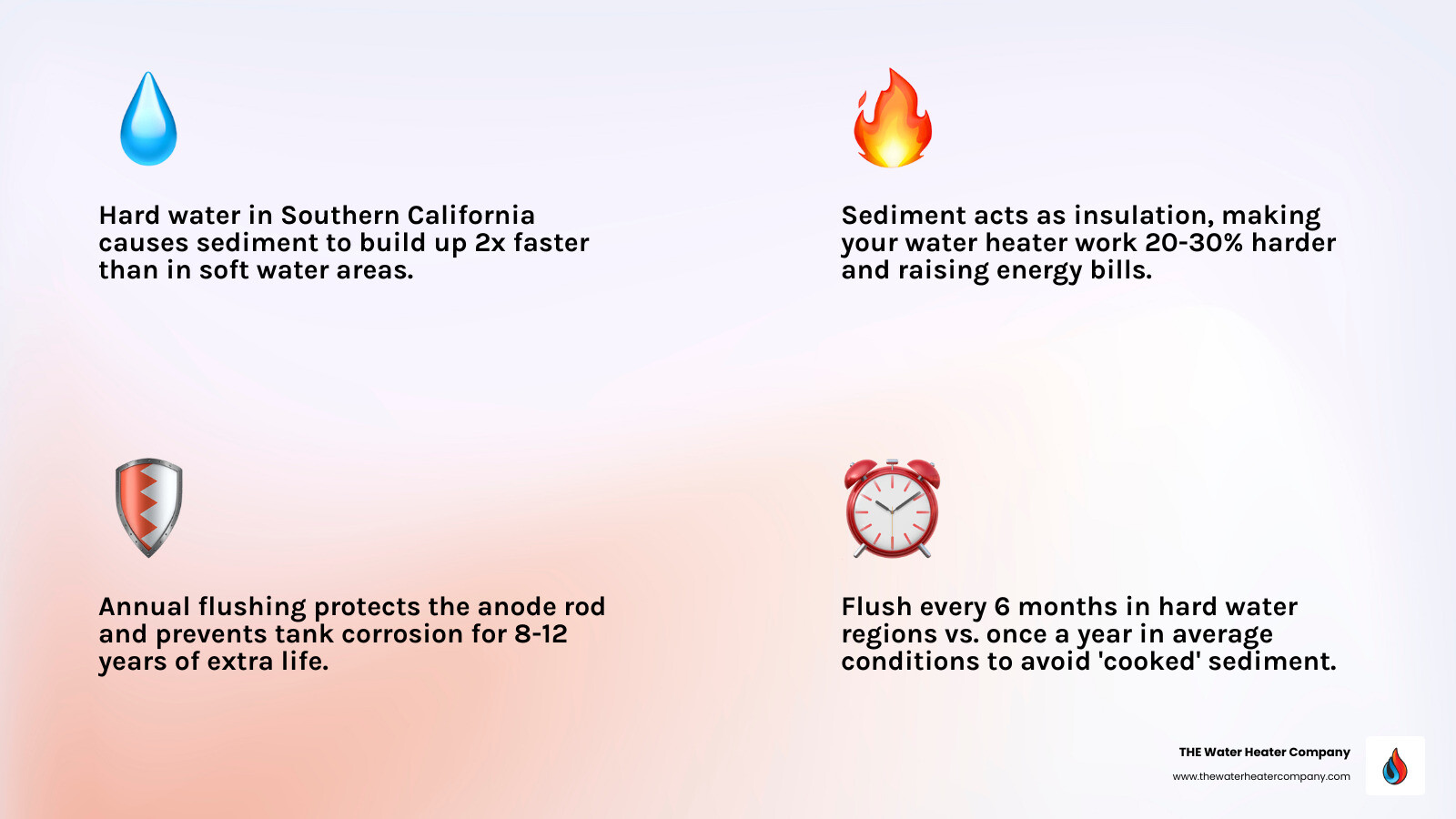
Water quality plays a massive role in determining your maintenance schedule. In areas with high mineral content, sediment accumulates much faster. If you are in a region with particularly hard water, we recommend increasing that frequency to every six to nine months. This proactive approach prevents the sediment from “cooking” into a solid mass at the bottom of your tank, which is much harder to remove later.
The type of energy your unit uses also matters. Gas water heaters typically require more frequent attention than electric ones. Because the burner is located at the bottom of the tank, it has to heat through the sediment layer to reach the water. This creates high-stress “hot spots” that can damage the tank’s glass lining.
| Heater Type | Normal Water Frequency | Hard Water Frequency |
|---|---|---|
| Gas Water Heater | Every 12 Months | Every 6 Months |
| Electric Water Heater | Every 12 Months | Every 6-9 Months |
For those looking for the best performance, More info about our specialized services can help you determine the exact needs of your specific model.
Why Regular Flushing is Essential for Southern California Homes
In Southern California, the water coming into our homes is often rich in calcium and magnesium. While these minerals are safe to drink, they are the natural enemies of your water heater. As water is heated, these minerals precipitate out and settle at the bottom of the tank.
This sediment acts as an insulator. Imagine trying to boil a pot of water with a thick piece of foam sitting between the flame and the pot — that’s exactly what sediment does. Your heater has to run longer and hotter to achieve the same water temperature, which leads to:
- Reduced Efficiency: Your energy bills climb because the unit is struggling to transfer heat.
- Tank Corrosion: Sediment can trap moisture against the steel tank, leading to rust.
- Anode Rod Depletion: The anode rod is a “sacrificial” piece of metal designed to rust so your tank doesn’t. Heavy sediment buildup can accelerate the depletion of this rod, leaving your tank defenseless.
Regular flushing removes these mineral deposits, effectively “resetting” the system’s efficiency. Research shows that consistent draining and flushing can extend the lifespan of a conventional water heater by three to five years. Without this care, a tank that should last 15 years might fail in just seven or eight.
To further protect your investment, many homeowners find that Learn more about water filtration and conditioning is the best way to stop sediment before it even enters the heater.
Signs Your System Needs Immediate Attention
Sometimes, your water heater won’t wait for its scheduled annual check-up to tell you it’s struggling. Knowing the warning signs can save you from an unexpected cold shower or, worse, a flooded garage.
Recognizing when to flush your water heater in Pasadena or Irvine
If you live in Pasadena, Irvine, or the surrounding areas, keep an ear out for “kettling.” This is a distinct rumbling, popping, or banging sound coming from the tank. It happens when water gets trapped underneath a layer of sediment, turns to steam, and “pops” through the debris. It’s not a ghost; it’s a sign that your heater is working way too hard.
Other red flags include:
- Rusty or cloudy water: This indicates that either sediment is being stirred up or the tank is starting to corrode.
- Lukewarm temperatures: If your showers aren’t as hot as they used to be, sediment might be burying your heating elements or burner.
- Slow recovery time: If it takes hours for the hot water to return after one person showers, the tank’s capacity is likely being displaced by inches of gunk.
If you notice these issues, it is often best to Schedule a professional water heater repair to ensure the internal components haven’t been permanently damaged.
How often should you flush your water heater if you have hard water?
In Santa Clarita and other high-mineral areas, limescale is a constant battle. Hard water contains high concentrations of dissolved minerals that form a “scale” on surfaces. Inside a water heater, this scale can coat the heating elements (in electric models) or the bottom of the tank (in gas models).
If you have hard water, you shouldn’t wait for noises to start. Flushing every six months is the industry-standard recommendation for these conditions. For homeowners tired of the constant maintenance required by traditional tanks in hard water areas, you might Explore high-efficiency tankless water heater options which, while still requiring maintenance, don’t suffer from the same “tank-bottom” sediment accumulation issues.
Step-by-Step Guide to Flushing Your Tank
If you’re a DIY enthusiast, flushing a standard tank is a manageable task. However, it involves high temperatures and pressurized water, so safety is the top priority.
Safety precautions for how often should you flush your water heater
Before you touch a single valve, you must address the energy source.
- For Electric Heaters: Turn off the power at the circuit breaker. If you run an electric heater without water in the tank, you will burn out the upper heating element in seconds.
- For Gas Heaters: Turn the gas valve to the “Pilot” setting. This keeps the pilot light on but ensures the main burners won’t kick on while the tank is empty.
Always use a hose rated for hot water. Standard garden hoses can soften and burst when exposed to the 120°F+ temperatures inside your tank. To prevent burns, we recommend turning the heater off several hours (or even the night before) to let the water cool down.
To understand the specific components of your system better, you can Discover our tank water heater solutions for diagrams and expert advice.
The flushing and refilling process
- Shut off the water: Close the cold water inlet valve (usually located at the top of the heater).
- Connect the hose: Attach your hose to the drain valve at the bottom and run the other end to a floor drain or the driveway.
- Open a faucet: Open a hot water faucet somewhere in the house (like a bathtub). This allows air into the system so the tank can drain faster — like “glugging” a bottle of water.
- Drain: Open the drain valve on the water heater.
- Flush: Once the tank is empty, turn the cold water inlet valve back on in short bursts. This “stirs up” the remaining sediment at the bottom so it can flow out the hose. Continue until the water runs clear.
- Refill: Close the drain valve and remove the hose. Turn the cold water supply back on fully. Keep the hot water faucet in the house open until water flows steadily without air pockets (hissing sounds).
- Power Up: Only when the tank is completely full should you turn the power or gas back on.
If the water never seems to run clear, or if the drain valve is clogged with “chunky” sediment, it may be time to View our water heater replacement services.
Frequently Asked Questions about Maintenance
Does a tankless water heater need flushing?
Yes! This is a common misconception. While tankless units don’t have a big tank to collect “mud,” they do have a heat exchanger with very narrow passages. In Southern California, calcium and magnesium will “scale” onto these passages, eventually choking the flow and causing the unit to overheat and shut down.
Tankless units require a “descaling” process, usually involving a pump and a food-grade acid like white vinegar to dissolve the minerals. We recommend this every 12 months, or every 6 months in severe hard water areas. If you have one of our premium units, you can Learn about Navien systems specifically to see their recommended maintenance intervals.
Can I flush an old water heater that hasn’t been maintained?
This is where things get tricky. If a water heater hasn’t been flushed in 10 years, the sediment might actually be the only thing keeping the tank from leaking. Over time, microcracks can form in the tank’s lining, and sediment “plugs” those holes. When you flush that sediment away, you might find that the tank begins to leak immediately.
If your unit is over a decade old and has never been touched, we recommend caution. You should Consult our experts in Santa Barbara or your local service area before attempting a DIY flush on a neglected system.
What tools do I need for a DIY flush?
You don’t need a professional’s van to do a basic flush, but having the right tools makes the job safer:
- A heavy-duty garden hose (rated for hot water).
- A flat-head screwdriver (to open most drain valves).
- A bucket (to catch the initial “test” flow).
- Gloves and eye protection (to protect against splashes).
Before you start, it’s always a good idea to Check our latest specials and rebates — sometimes a professional maintenance visit is more affordable than you think, especially when we can perform a full safety diagnostic at the same time.
Conclusion
Understanding how often should you flush your water heater is the first step toward a more efficient, longer-lasting home. For most of us in the Southern California area — from the coastal homes of Santa Barbara to the busy neighborhoods of Los Angeles and Irvine — a six-month to one-year schedule is the key to avoiding costly disasters.
At THE Water Heater Company, we pride ourselves on being the local experts who understand the specific water challenges of our community. Whether you need a routine flush in Santa Ana or a complex tankless descaling in Van Nuys, we are here to help.
Don’t wait for your water heater to start making noise. Take control of your home’s efficiency today and Get a fast water heater quote today for maintenance or a system upgrade. We’re ready to ensure your hot water stays flowing for years to come!